Wine

Tawse and Redstone prove Niagara wine’s a natural

Tawse and Redstone prove Niagara wine’s a natural

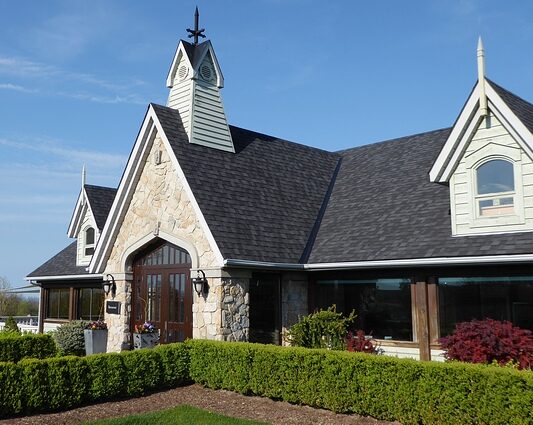
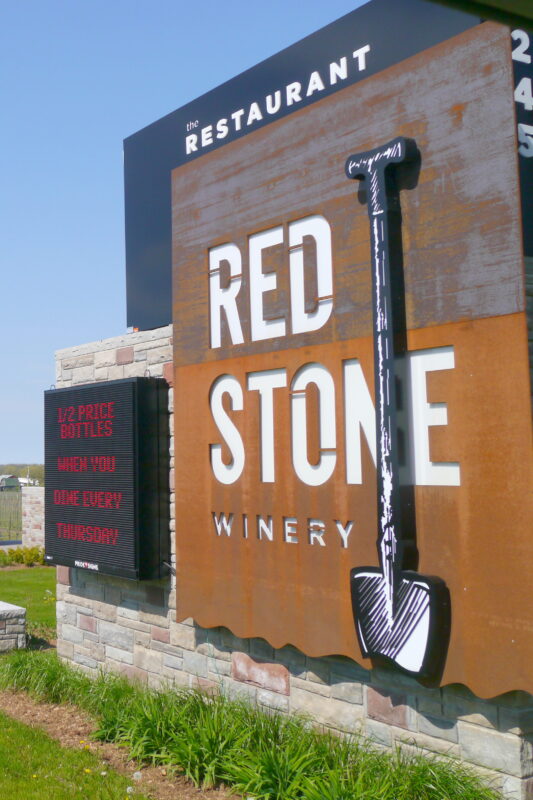
Toronto financier Moray Tawse is a lifelong lover of both red and white Burgundy. A happenstance tasting of a great Chardonnay from an obscure (and now defunct) Niagara winery changed his real estate shopping plans back in 2001. Rather than seeking out vineyards to buy in Burgundy, he turned his attention to the fledgling Twenty Valley, which comprises vineyards in Beamsville, Vineland, and Jordan in the town of Lincoln and extends eastward to the city of St. Catharines. A wine geek's heaven, this region is a patchwork of different soils and subsoils. The Twenty Valley chicken clearly crossed the road because it preferred the terroir on the other side. Now Twenty Valley is home to more than 50 wineries. (For details, see Niagara's Twenty Valley...Read More
Inniskillin icewines hit the sweet spot

Inniskillin icewines hit the sweet spot

Like many wine drinkers, we've always thought of icewine as an after-dinner treat. But if Inniskillin (www.inniskillin.com) has its way, we'll be drinking it with dinner as well. As Debi Pratt told us when we toured the property, icewine makes an excellent, if somewhat extravagant, table wine. Inniskillin is another pioneer in the Niagara wine region. It was founded in 1975 by Austrian-born Karl Kaiser and Canadian Donald Ziraldo. “Karl said, 'If I'm going to live in a new country, I'm going to drink the wines of my new country,'” Pratt told us. Ziraldo had actually planted Riesling, Chardonnay, and Gamay vines the year before at his commercial nursery. But when Inniskillin launched, the winery relied heavily on two winter-hardy French hybrid grapes, Vidal Blanc...Read More
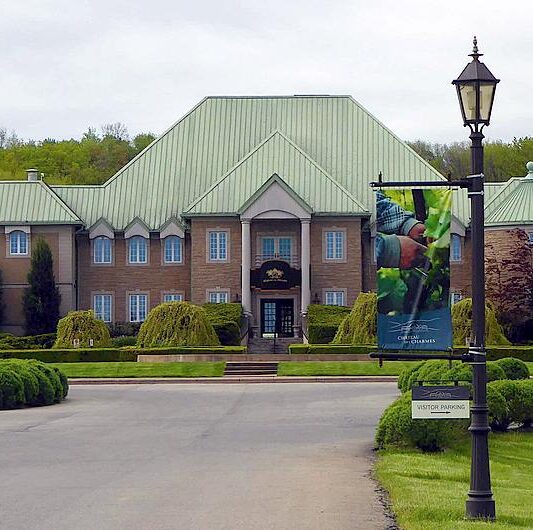
Château des Charmes: French connection pioneers

Château des Charmes: French connection pioneers

vqaontario.ca We couldn't visit the Niagara wine country without paying homage to Château des Charmes (fromtheboscfamily.com/chateau-des-charmes). In 1978, founder Paul-Michel Bosc planted the first all-vinifera commercial vineyard in the region. He was determined to prove that the grapes of Burgundy and Bordeaux could flourish in cold-climate Niagara. Bosc represents the fifth generation of family winemakers. Raised in Algeria, he earned a degree in viticulture and oenology from the University of Burgundy. After evacuation to France at the end of the Algerian war in the 1960s, he took his young family to Canada. Unlike some Niagara pioneer wineries, Château des Charmes remains a family operation. It has expanded to four vineyards covering 280 acres (110 ha). They lie in the Four Mile Creek and St. David's...Read More
Niagara Peninsula: the next great foodie destination

Niagara Peninsula: the next great foodie destination

We went for the wine, but we stayed for the food. Serious winemaking with vinifera grapes began in the Niagara Peninsula in 1975. When we last visited about 15 years ago, Niagara icewines were world class and table wines were making tremendous strides. An Ontario wine dinner in Toronto last fall (hungrytravelers.com/ontario-wine-country-becomes-world-player) convinced us that Niagara has matured as an important producer of good wines. So in late May we packed up the car and drove across Massachusetts and upstate New York. We spent a week exploring this bucolic peninsula that sits about an hour's drive east of Toronto. Most of the wineries lie in a band of soils and climatic conditions between the limestone ridge of the Niagara escarpment and the south shore of...Read More
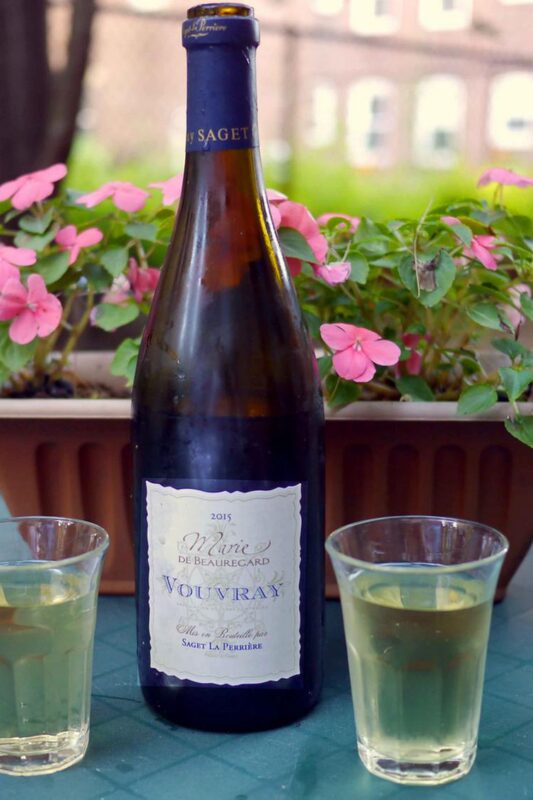
On a hot day, good Vouvray lifts a salade Niçoise

On a hot day, good Vouvray lifts a salade Niçoise

The mercury was pushing 95°F (35°C) and the dew point was well into the sticky zone. When we brought a chilled bottle of Vouvray to checkout at the wine shop the clerk sighed. “Hooray for Vouvray!” she said. To which we could only add, “Amen.” Chenin Blanc doesn't get a lot of respect in the wine world. It makes naturally sweet, loosey-goosey wines that go well in picnic baskets. But a good Vouvray, like the 2015 Marie de Beauregard from Saget La Perrière, shows how polished Chenin Blanc can become. The chalk and flint of the soils from the vineyards in La Roche Corbon outside Vouvray city come through quickly on the nose. Pears and acacia honey dominate the first tastes, followed by a hint...Read More
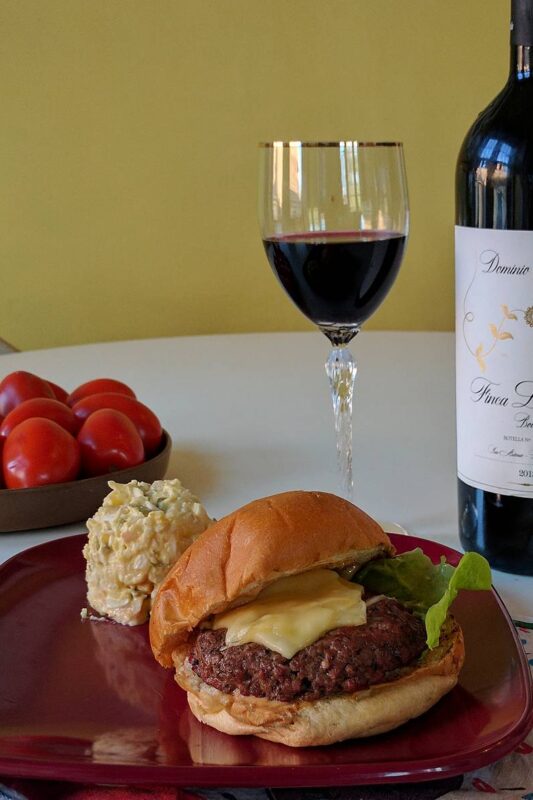
Finca La Beata shows Bobal at its meatiest

Finca La Beata shows Bobal at its meatiest

Regular readers know we've been doing a survey of Bobal wines from the Utiel Requena region of Valencia. As we contemplated a dish to eat with the 2013 “Finca La Beata Bobal” from Dominio de la Vega (dominiodelavega.com), we faced a quandary. The sheer weight of the bottle signaled a Very Important Wine. (Empty, it clocks in at 1.2 kg/2.7 lb.) When it arrived at our door, the weather was cold and dank; now it's hot and steamy. Based on the other Bobal wines, we suspected that it would cry out for very beefy beef. But steamy summer is not the time for rabo de toro, the classic Spanish braise of oxtail. Then we remembered that Andalucían superchef Dani García used oxtail in the scrumptious...Read More
Venusto infuses Bobal charm with modern discipline

Venusto infuses Bobal charm with modern discipline

As we work our way through some exciting wines from D.O. Utiel Requena in Valencia, Spain, we were pleased to try the flagship red from Bodegas Vibe called Venusto. Early in 2015, this new winery took over the land and facilities from a previous winery heavily invested in international grapes. Winemaker Juan Carlos Garcia changed that focus immediately. His attention is riveted on Tardana, a local white grape, and Bobal, the red signature of the D.O. Judging by the 2015 Venusto, Garcia found the sweet spot with his first release. He is making an intense, spicy, well-structured Bobal that is extremely food-friendly. Fermented on the skins for four days to pick up saturated color, it pours as deep black cherry liquid with a nice viscosity...Read More
Biserno wines burnish the potential of Cabernet Franc

Biserno wines burnish the potential of Cabernet Franc

As a young man, the Marchese Lodovico Antinori (above) helped revolutionize Italian winemaking with his Bordeaux-blend powerhouse wines from Ornellaia. But he had more surprises in store. After selling Ornellaia, he became intrigued about the potential for Cabernet Franc in the region around Bolghieri. So he acquired a 99-year lease on land that had been growing wheat and olives in nearby Bibbona. Here, he and his brother Piero, established the Tenuta di Biserno estate (www.biserno.it/tenuta-di-biserno/). The unique microclimate and mixture of clay and stony soils at the property let the brothers concentrate on different Bordeaux varietals than Lodovico had at Ornellaia. Between 2001 and 2005, the Tenuta di Biserno planted more than 120 acres. Cabernet Franc was the principal grape, but more than 10 percent...Read More
Old vine Bobal complements hearty pork paella

Old vine Bobal complements hearty pork paella

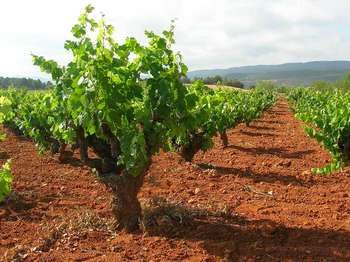
The Viticultores de SanJuan bodega is owned by the Valsangiacomo family (above), which represents the fifth generation of family winemaking that began in Switzerland in 1831. Built in 1960, the winery in the village of San Juan Bautista, about 60 kilometers west of Valencia, Spain. The vines range from 60 to 80 years old. Since there was always a market for blending wines and grape concentrate, traditional growers in the Utiel Requena region never had reason to rip out their old Bobal vines. Vineyards tend to be broad pieces of open acreage supporting bush-style vines grown without irrigation. As the region began to focus more on quality of grapes rather than quantity through the DOP Utiel-Requna, these ancient vines (right) proved a huge asset. The...Read More
M Rosé d’Anjou is perfect with seaside lobster roll

M Rosé d’Anjou is perfect with seaside lobster roll

Wine is subtle, wine is complex, wine can even be a transcendent experience. But sometimes wine is just a pleasant drink that harmonizes with the mood of the day. That's the way we think of rosés from Anjou. Located in the Angers region in Beaulieu-sur-Layon, Château de la Mulonnière (www.chateaumulonniere.com) is one of those historic estates that's been making exceptional wines for more than 150 years. The house produces two levels—the old-vine production labeled under the full name, and the entry-level wines under the “M” label. Try level rosé works for us. We took a bottle of the 2015 M Rosé d'Anjou with us to the Lobster Pool in Rockport, Massachusetts, on a recent balmy day. Conveniently, this excellent lobster shack with outdoor tables on...Read More