Wine

Pouilly-Fumé complements asparagus-prosciutto risotto

Pouilly-Fumé complements asparagus-prosciutto risotto

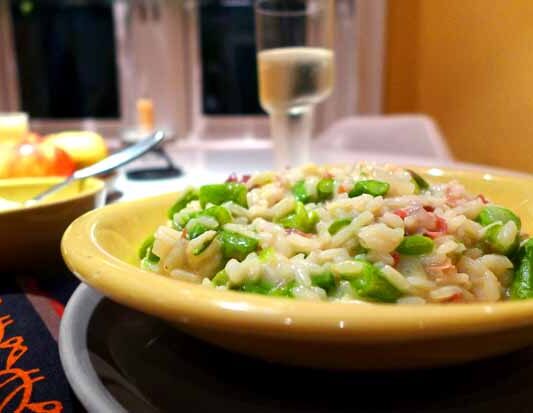
We sang the praises of Sancerre a few weeks ago, lauding its round fruit combined with tart minerality. We are continuing to welcome the spring and summer seasons with other Loire Valley wines. Sancerre's sister Sauvignon Blanc wine, Pouilly-Fumé, certainly has a strong family resemblance. With a bit flintier taste than Sancerre and a haunting smokiness, Pouilly-Fumé pairs wonderfully with asparagus. We had a couple of bottles of Saget La Perrière 2013 on hand when we acquired up a nice bundle of just-picked asparagus from the Connecticut River farms in Hadley, Massachusetts. We immediately thought of our favorite risotto treatment for the vegetable. That recipe was created for Pinot Grigio, so it uses San Daniele prosciutto and Grana Padana cheese. It's easy to adapt the...Read More

Utiel Requena wines conjure tastes of northeast Spain

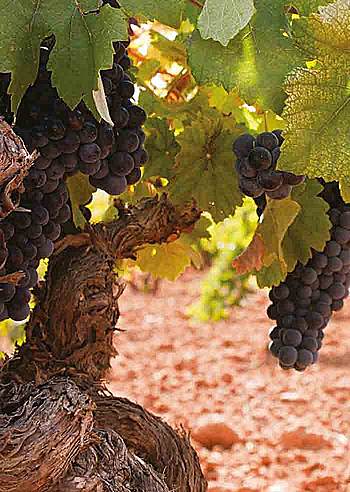
We're convinced that there is nothing like taste to evoke memories of place. A sip of wine will call back the flavor of the food, the sun on our faces, the wobbly leg of the cafe table, and the street life around us. We're just starting to taste several wines from the Utiel Requena region in the northwest corner of the autonomous region of Valencia. As we taste, we're reliving trips to Catalunya, Aragón, Valencia, and the Balearic Islands. In addition to speaking variants of Catalan, these regions feature cuisines that pair very well with the Bobal wines of Utiel Requena. We'll be enjoying them with some of our favorite dishes. As shown in this photo just below, D.O. Utiel Requena sits in the rain...Read More

Compelling CARO marries Mendoza and Bordeaux

In November, we wrote about the CARO Amancaya blend of Malbec and Cabernet Sauvignon as a bargain big red. (See this post.) On a cold and rainy March weekend, we decided it was time to dust off a bottle of that wine's big brother. The 2013 CARO is a 50/50 blend of Malbec grown in Mendoza's Lujan de Cayo district (above, courtesy of Bodegas CARO) and Cabernet Sauvignon grown in the adjoining Uco Valley. The CARO wines are a joint project between Nicolas Catena and the Barons de Rothschild. In this top wine of the collaboration, intense Argentine fruit meets Bordeaux-style winemaking to great effect. It retails for $50-$60. We pondered what would pair well with such a voluptuous red and decided that grilled steak...Read More
Vino Nobile di Montepulciano re-emphasizes terroir

Vino Nobile di Montepulciano re-emphasizes terroir

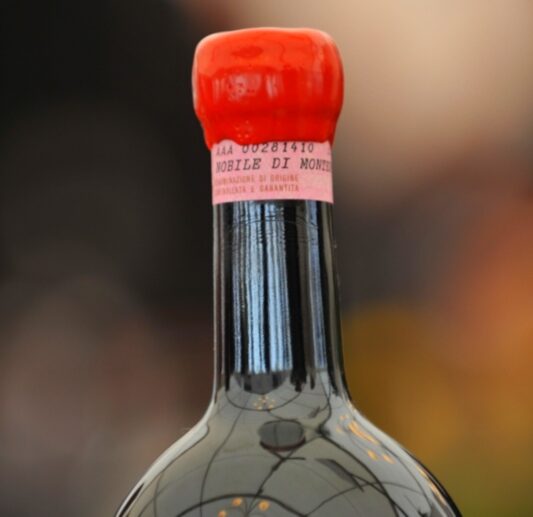
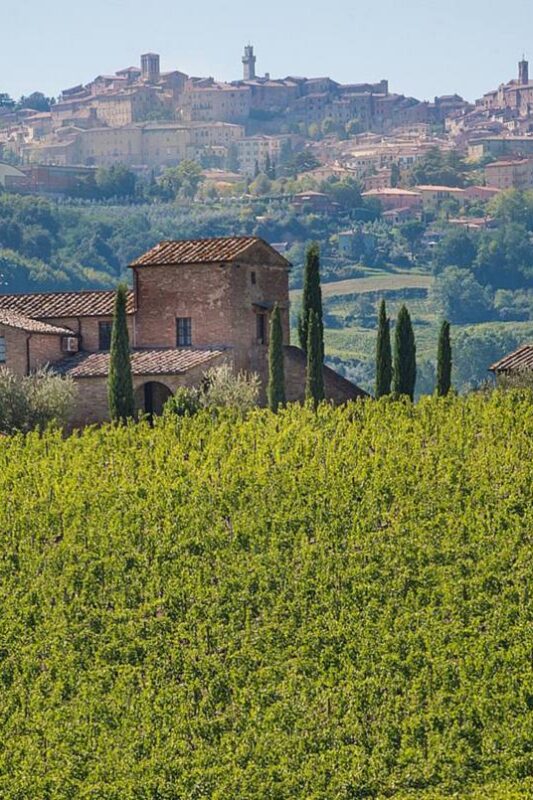
Judging by the wines from the nine producers who visited Boston, Montepulciano winemakers have returned to native Tuscan blending grapes. DOCG rules permit up to 30 percent non-Sangiovese grapes in Vino Nobile. In truth, more than half the wines I tasted were more than 90 percent Sangiovese. And those producers blending in other grapes have largely stopped using Merlot. Instead, they opt for Canaiolo (which softens the acidity of Sangiovese), Colorino (which provides color and structure), and Mammolo (which gives a velvety violet note). Since each producer presented three to five wines between the technical tasting and a dinner, my full tasting notes would be overkill here. Suffice it to say that Montepulciano superstars Boscarelli (poderiboscarelli.com), Dei (cantinedei.com), and Poliziano (www.carlettipoliziano.com)—along with Antinori-owned La Braccesca—continue...Read More
Reassessing rich reds of Vino Nobile di Montepulciano

Reassessing rich reds of Vino Nobile di Montepulciano

Less oak, more Sangiovese. In a nutshell, that's the good news about the latest releases of Vino Nobile di Montepulchiano. Having just celebrated the 50th birthday of the D.O.C., the wine makers of Vino Nobile are converging toward a distinctive modern style. Nine leading producers visited Boston on a tour just ahead of ProWein in Dusseldorf and Vinitaly in Verona. Following on the heels of glowing coverage in Wine Enthusiast and Wine Spectator, it was a chance for the small region to shine without the distraction of comparisons to Tuscany's other major Sangiovese areas: Chianti, Brunello di Montalcino, and even Morellino di Scansano. Traditionally known in the Montalcino area as Prugnolo Gentile, the Sangiovese grape is almost ideally suited to the clay and sandy soils...Read More
Valpolicella Classico matches chocolate-spiked ragù

Valpolicella Classico matches chocolate-spiked ragù

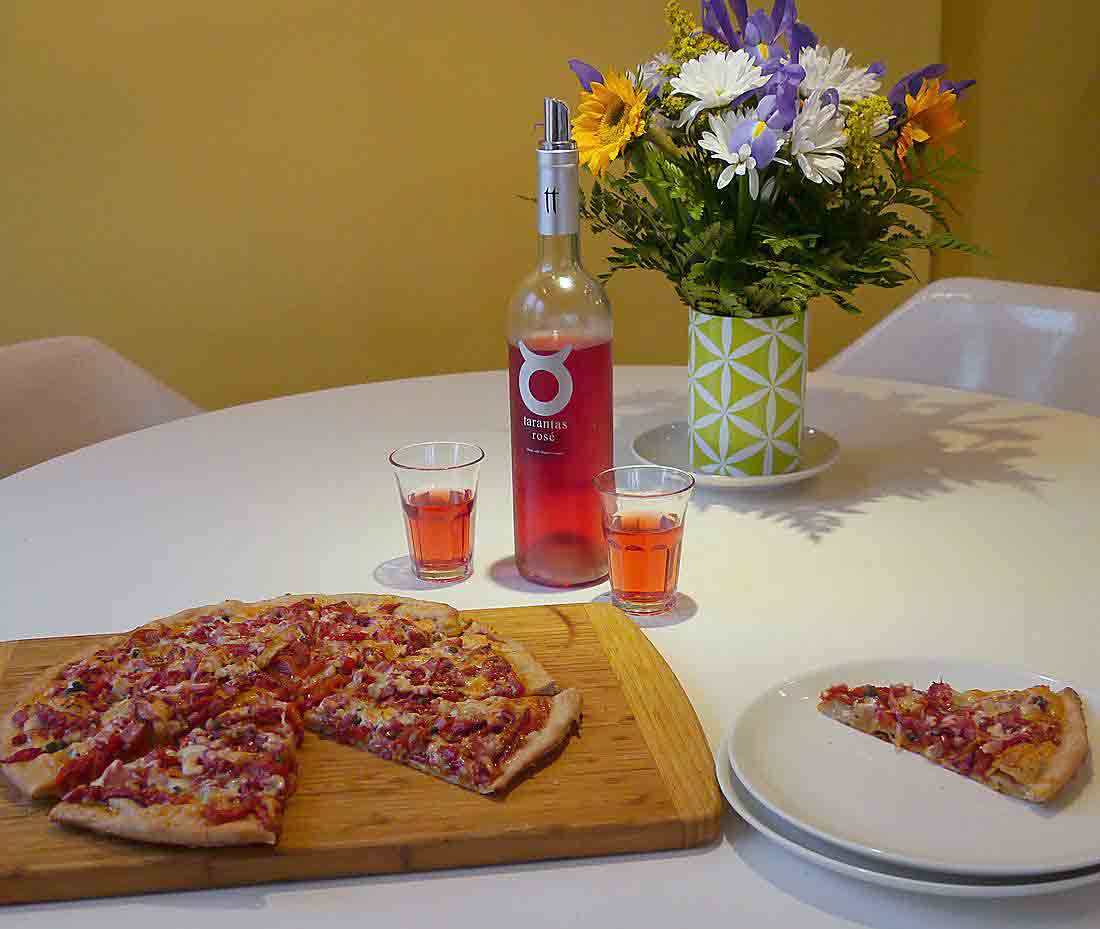
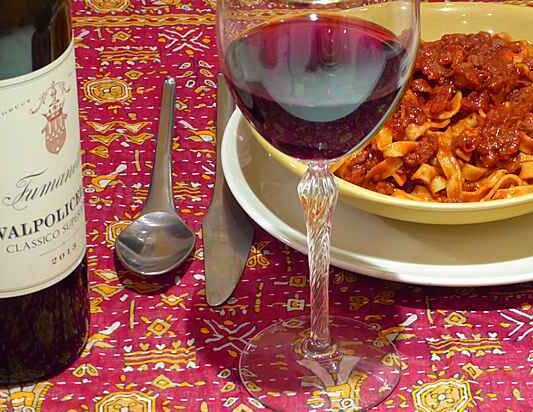
We discovered a Fumanelli Valpolicella Classico Superiore 2013 nestled among bigger reds in our limited wine storage. Not having a lot of room to hold wine means drinking bottles when they're ready. With the 2014 already in the market, we figured this welterweight red was ready to go. But what dish would do it justice? The Marchesi Fumanelli family (www.squarano.com) has been making top-flight Valpolicella wines since 1470 at their estate just outside Verona. Perhaps the age of the vineyards (up to 40 years) accounts for the clean flavor and deep fruit expression. The blend has a backbone of 40 percent each of Corvina and the bigger clusters of Corvinone. The rest is Rondinella, which deepens the color and gives the wine more body. The...Read More
Limestone mountains loom over Jerzu vines

Limestone mountains loom over Jerzu vines

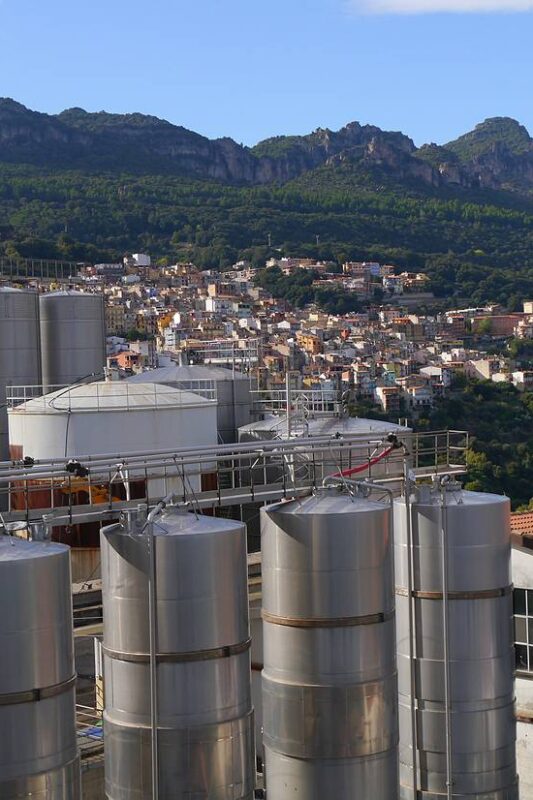
Famed for its local strain of Cannonau, the vineyards of Jerzu grow in a massive natural amphitheater scooped out of the side of a limestone range. The basin ascends from sea level to 750 meters, and the soils are all a mix of soft limestone and crumbly schist. The photo above shows the ridge and the hillside village of Jerzu. The industrial site in the foreground is the Antichi Poderi Jerzu cooperative (www.jerzuantichipoderi.it/en/), which produces 1.8 million bottles a year. The predominance of limestone subsoil at Jerzu means that the vines have to live with scarce water that drains away underground. This drainage carves out great cavern systems for spectacular spelunking. On the outskirts of nearby Ulassai, the Grotta di Su Marmuri (www.grottasumarmuri.it) is open...Read More
Mamoiada and its wines evoke primal power

Mamoiada and its wines evoke primal power

The little community of Mamoiada sits at the foot of the two highest mountain ranges on Sardinia, the Gennargenti and the Supramonte. It is known for two powerful forces: ancient vines of Cannonau and atavistic carnival masks. The most famous masks are the Mamuthones, shown here. The pre-Christian figures perform in ritual ceremonies that mark the turn of the agricultural calendar from the dark of winter toward the season of spring growth. The parade through Mamoidada predates Lenten carnivals. Men dressed in these shaggy black sheepskins with primitive wooden black masks dance slowly through town, each laden with more than 30 kilos of bronze bells. The figures appear first on January 17, the feast of Sant' Antonio Abate, when the people of Mamoiada dance around...Read More
Design and wine shine at Hotel Su Gologone

Design and wine shine at Hotel Su Gologone

Hotel Su Gologone is a destination for design fans as well as wine-lovers. The whitewashed stucco walls and terracotta floor tiles serve as a blank canvas for an explosion of color. Potted geraniums and bright folk art dot every corner of the sprawling property. Bougainvillea crawls up the walls, its blossoms dangling overhead. Immense fig trees provide shade to outdoor patios and dining areas. The guest rooms, which range €121–€287 per night, are virtual galleries of local crafts—hand-loomed bed coverings, ancient pottery, brightly glazed ceramic folk art, furniture fashioned from local juniper wood, charmingly naïf paintings. Su Gologone began in 1967 as a small restaurant serving food next to the mountain spring by the same name. Since the location was remote, the family opened a...Read More
High-altitude Cannonau wines exude lush fruit

High-altitude Cannonau wines exude lush fruit

Nearly three-quarters of Sardinia's Cannonau vineyards grace the steep slopes of Nuoro province. These half-wild uplands are a world apart from the sybaritic beach towns along the coast. They're also vastly different from Sardinia's lowland vineyards famed for the white Vermentino Remnants of the Nuragic culture from the Bronze Age persist in the hills, including two dialects of the ancient Sardinian language, which edges out Italian as a first language in some villages. The archaic Sardinians (1800bc-ad200) were adept architects, erecting more than 1,000 tall stone towers. Judging from the archaeological evidence, they also made wine. Rome never conquered Sardinia beyond the coast. Cicero called the mountainous interior “Barbaria.” In Sardinian, it's Barbagia. With vineyards as high as 700 meters, Barbagia is home to the...Read More