recipe

Jumping ship for a taste of the port

Jumping ship for a taste of the port

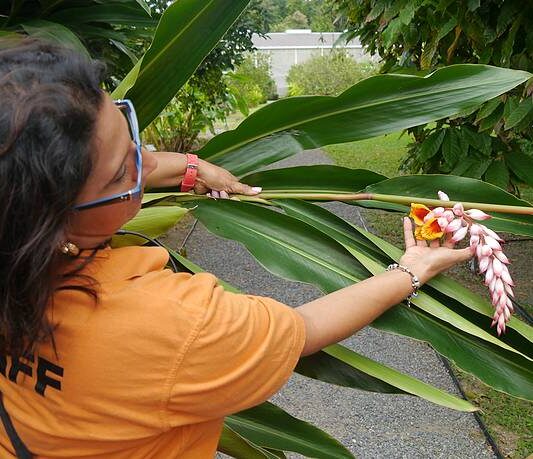
When Oceania Cruises (oceaniacruises.com) culinary director Kathryn Kelly designs the culinary shore excursions for Marina and her sister ships, she asks herself one essential question. “Where would I like to go if I had one day in this port?” she says. In Europe, the answer might be a visit to a winery or a three-star restaurant. In the western Caribbean, culinary expeditions are more likely to focus on local foods and foodways. Arboretum looks to future of Roatán food We joined Kelly for the “Honduran Farm & Ocean to Table Experience.” This shore excursion on the island of Roatán starts at the Blue Harbor Tropical Arboretum (blueharbortropicalarboretum.com). The plantings on this 160-acre property represent most of the economically significant plants of the growing zone, including...Read More
What to buy in a Nassau grocery store

What to buy in a Nassau grocery store

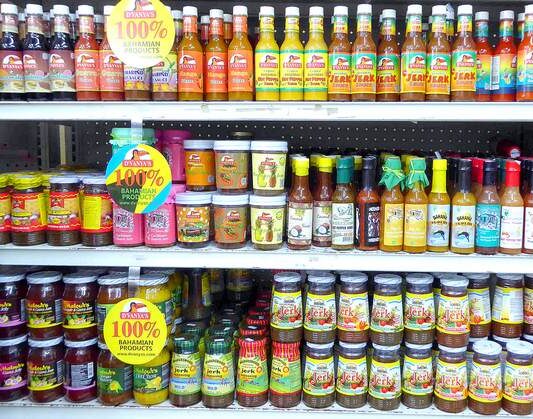
Bayside Food Store (242-323-2911) is located on Frederick Street, just steps from the souvenir shops and high-end jewelry stores on Bay Street. It's the largest supermarket in downtown Nassau. Locals stream in to pick up take-away lunches and shop for the fixings for dinner. The store has a few shelves devoted to products that represent the taste of the islands. For visitors who have come to love Bahamian hot spices and sweet tropical fruits, it's a good place to purchase a few items to bring back home. Best of all, most of the products are seasonings that pump up the flavors of a dish without a lot of effort by the cook. A couple of local companies offer a broad array of products. D'Vanya's Spices...Read More
Graycliff anchors the ages in Nassau

Graycliff anchors the ages in Nassau

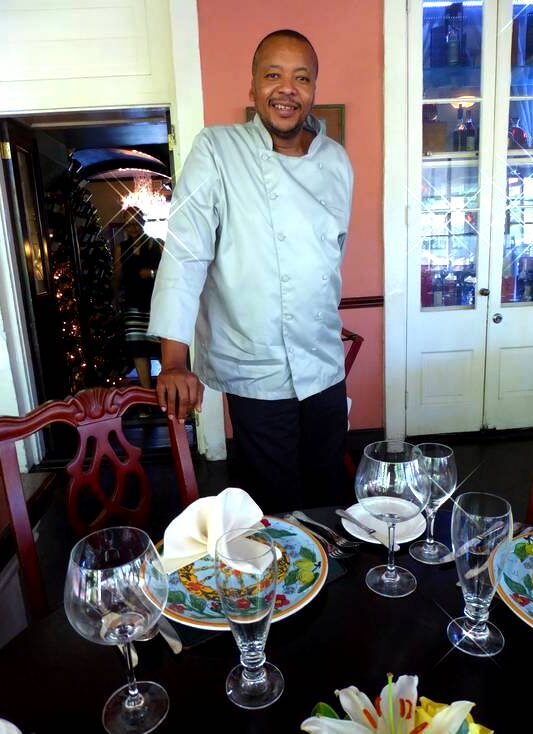
Houses lead big lives in the Bahamas. Graycliff (www.graycliff.com), for example, was built in Nassau in 1740 by notorious pirate John Howard Graysmith. During the American Revolution, the U.S. Navy used the house for its headquarters and garrison. In 1844, Graycliff became Nassau's first inn. Over the years, it's been owned by British nobility and by a woman close to gangster Al Capone. Its latest chapter began in 1973 when the Garzaroli family from Italy purchased the property. Today, visitors can spend the night in one of 18 guest rooms decorated in old world style. They can also watch master cigar rollers from Cuba or buy sweet confections at the on-site chocolatier. Those who choose to dine in the sunlit dining rooms can also tour...Read More
John Watling’s Distillery revives Bahamian rum

John Watling’s Distillery revives Bahamian rum

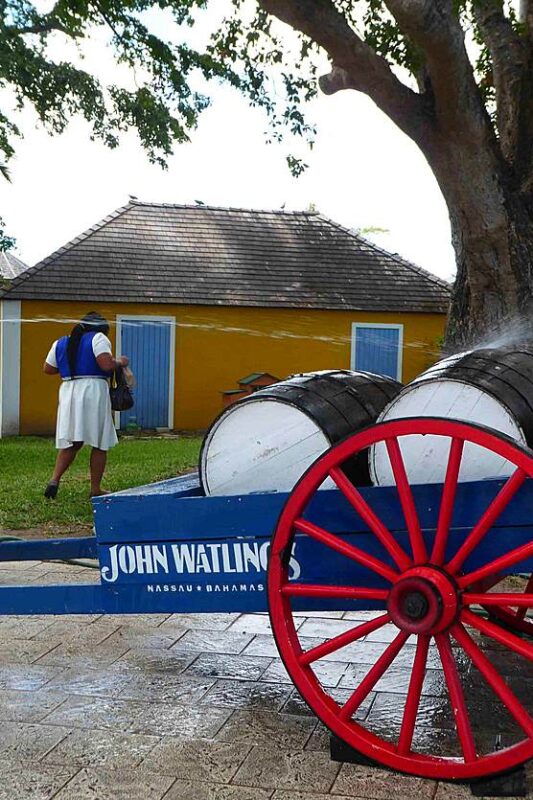
Pepin Argamasilla, co-owner of John Watling's Distillery (johnwatlings.com), comes from a family of Canadian master blenders. Yet he has his own unique way of testing each product. “I call it the hangover test,” he says. “I drink a 250 ml. bottle and see if I wake up with a hangover. I do it with everything I launch.” Argamasilla (right) and his partners opened John Watling's Distillery in 2013 to draw on their expertise from big manufacturing to create a micro-distillery with a true Bahamian spirit. They named their operation after the colorful 17th century pirate John Watling, whose treasure may still be buried on the Bahamian island of San Salvador. And they based their operation in the storied Buena Vista estate in downtown Nassau. The...Read More
77° West establishes New World flavors at Atlantis

77° West establishes New World flavors at Atlantis

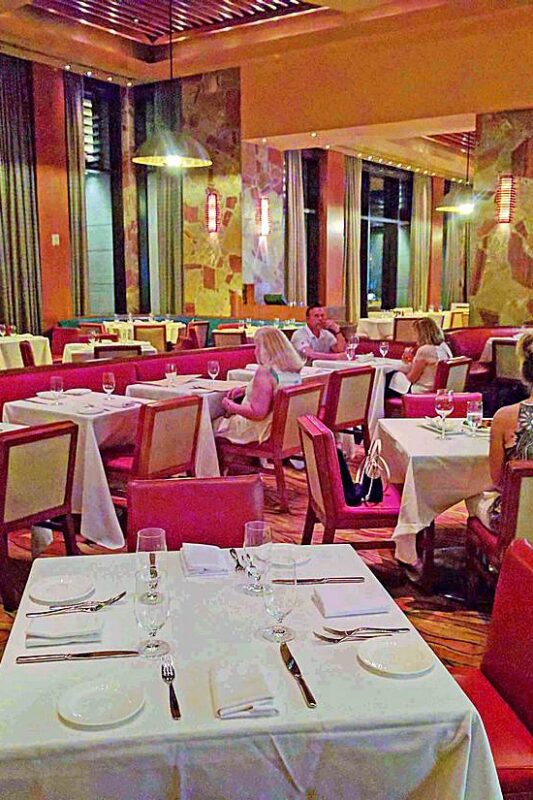
Patti and I had barely sat down at 77° West when a server delivered a bowl of tortilla chips and four salsas to sample while we studied the menu. The combination of pico de gallo, roasted tomatoes, roasted tomatillos, and guacamole telegraphed the kitchen's culinary bent. The chefs at 77° West, the newest fine dining option at Atlantis (atlantisbahamas.com), work in an open kitchen to create dishes that fuse South American and Caribbean flavors and cuisines. My meal felt like a whirlwind tour through South America. For example, I couldn't resist the empanadas starters. The flaky turnovers are among my fast-food standbys when I'm in Spanish-speaking countries. The chefs at 77° West elevated this staple of hand-held cuisine by filling the flaky crust with duck,...Read More
Café Martinique at Atlantis dresses up humble conch

Café Martinique at Atlantis dresses up humble conch

“I trained by watching other chefs,” says Lisa Rolle, who worked her way up through the kitchens of the Atlantis resort (atlantisbahamas.com). Now she's the chef de cuisine at Café Martinique, perhaps the resort's top fine dining establishment. Understated and elegant, Café Martinique nonetheless has an air of mystery and mystique befitting the fanciful world of Atlantis. A birdcage elevator carries guests to the second-floor dining room. The venue recreates the 1960s restaurant where James Bond met his eye-patch wearing arch-nemesis Emilio Largo in the 1965 film Thunderball. Today's Café Martinique is part of the culinary empire of French chef Jean-Georges Vongerichten. Although Vongerichten develops the recipes, Rolle injects local flavors. “The base of a dish is local,” she says. “A lot of the items...Read More
Living the Atlantis fantasy on Paradise Island, Bahamas

Living the Atlantis fantasy on Paradise Island, Bahamas

It takes a certain audacity to create a resort themed to the lost city of Atlantis. Royal Towers was the first hotel built on the 171-acre property of Atlantis (atlantisbahamas.com) on Paradise Island in the Bahamas. It still embodies that fanciful vision of lost glory. Much has been written about Atlantis since it opened more than 20 years ago, but you do have to see it to believe it. It's so over-the-top that it is almost impossible not to be caught up in the tale of the drowned city first related by Plato. The sunny Bahamian weather certainly doesn't hurt, but it was the artwork that drew me in. As soon as I stepped out of a taxi, I was greeted by a gigantic fountain...Read More
Tenderness and restraint are key to pizza love

Tenderness and restraint are key to pizza love

We had always assumed that good pizza required a certain amount of drama. Showboat pizzaiolos sometimes toss the dough into the air, spinning it to stretch to size. In Naples, guys slap the dough around back and forth on the counter as if they were Jack Nicholson working over Faye Dunaway in Chinatown (“she's my daughter, she's my sister...”). That's no way to treat a lady. “No, no, no, no, no, no, no,” says Bertucci's executive chef Rosario Del Nero, “Dough is a living thing. You must treat it gently.” He slips a bench knife under a half pound round of pizza dough and carefully transfers it from the covered proofing box to a bowl of flour. Turning the dough over to coat the surface,...Read More
Perfecting pizza, one ball of dough at a time

Perfecting pizza, one ball of dough at a time

Rosario Del Nero bites into a slice of pizza and savors it for a moment. “It's not Neapolitan, it's not Roman,” he says. “It's rustic, provincial Italian pizza. It's not as wet as Neapolitan, which is what most people have, or as thick as Roman.” He is not even considering the toppings. Del Nero focuses on the dough that cooks up into the crust. It must be just so. “Flour, water, yeast—it's simple,” he says. “But the secret ingredient is time. You cannot rush the yeast.” He pulls out a piece of paper and a pencil and draws a graph. “X is quality,” he explains. “Y is time.” He draws a curve that peaks at about 40 hours. “Anywhere between 36 and 48 hours of...Read More
Cradle of Mexican cuisine, Oaxaca relishes mole negro

Cradle of Mexican cuisine, Oaxaca relishes mole negro

No one escapes untouched by Oaxaca. This lyrical, magical city has been a powerful cultural and trade center for millennia. It is also arguably the cradle of Mexican cuisine. You can always eat well in Veracruz, Mexico City, and Puebla. But in Oaxaca, you feast. Every dish is a taste revelation. Tomatoes and chile peppers were domesticated in northern Oaxaca around 4500 BC—presumably to spice up all those meals based on beans and corn, which the ancient Oaxacans had domesticated 3,000 years earlier. And Oaxaca continued to expand its larder. By the time the high culture of Monte Alban (right) arose around 500 BC, the Oaxaca Valley was a crossroads of trade between South and North America. Foodstuffs poured in from as far north as...Read More