Cochon555 highlights winning tastes of heritage pigs

Roughly five hundred folks feasted on about 1,500 pounds of succulent heritage pork last weekend at the Boston stop on the Cochon555 (cochon555.com) national barbecue competition tour. And they drank a surprisingly broad array of wines, cocktails, punches, and spirits selected by local sommeliers to pair with the cuisines. The winning team opted for a Mexican menu with six different dishes served on two separate plates. Working with a 281-pound Mulefoot hog from Dogpatch Farm in Maine, the “Deporkables” were led by Matt Jennings of Townsman (townsmanboston.com), a brasserie-inspired restaurant on Boston's Greenway. The plate at right included bbq pork head tamales with a thin slice of a pork loin burrito. They were contributed by team member Will Gilson of Puritan & Co. (puritancambridge.com) in...Read More

Natalie’s winning Butter-Poached Lobster recipe

Prepared with grilled maitake and oyster mushrooms along with a corn-parsnip ragout, this is the recipe that won Chris Long plaudits as the 2013 Maine Lobster Chef of the Year. The recipe below and photo above are adapted with permission from Natalie’s Restaurant (nataliesrestaurant.com) at the Camden Harbour Inn (camdenharbourinn.com). (The corn stock directions are ours, so don't blame Chris and Shelby.) Ingredients 1 Maine lobster 1 pound butter at room temperature 2 ounces fresh thyme 1 shallot, minced 1 cup corn stock * 1 cup corn kernels 1/2 cup chopped parsnips 1 lemon salt and pepper to taste 2 ounces wild mushrooms parsnip chips micro arugula basil flowers Directions Boil lobster in salted water, 7 minutes for claws and 3 minutes for tail. Shock-chill...Read More

Natalie’s celebrates lobster on its home waters

Natalie's co-chef Shelby Stevens is a Mainer, but she's not from lobster country. She grew up in Farmington, an inland town where mountain timber meets upcountry lakes. But perched on the hillside over picturesque Camden harbor, Natalie's occupies a prominent spot on the Times Square of Lobster Land. Roughly half of the state's annual lobster catch—130 million pounds in 2016—is landed at Penobscot Bay ports. Stevens and her husband, co-chef Chris Long (pictured above in their official portrait), naturally developed an extensive repertoire of lobster fine-dining dishes to wow the guests at the tony Camden Harbour Inn (camdenharbourinn.com). When the crustacean is in season, Natalie's offers a five-course tasting menu of four lobster dishes and a dessert as one of its menu options. When we...Read More

Popping into Portland’s Danforth for Natalie’s popup

With nine handsome rooms in an 1823 Federal mansion, Portland's Danforth Inn (danforthinn.com) is a nifty hideaway in Maine's biggest city. That's what hoteliers Raymond Brunyanszki and Oscar Verest, owners of the Camden Harbour Inn (camdenharbourinn.com), had in mind when they purchased the Danforth in 2014. Their extensive upgrades included creating Tempo Dulu (tempodulu.restaurant), a fine-dining restaurant focused on Southeast Asian, Indonesian, and Malaysian cuisines. Chef Michael McDonnell recently got a few days off from riffing on rijsttafel. At the end of March, Tempo Dulu hosted a popup of Natalie's (nataliesrestaurant.com), the Camden Harbour Inn's gastronomic showcase. It was a homecoming of sorts. Natalie's co-chefs Shelby Stevens and Chris Long were married at the Danforth last year. (That's a picture of the dining room below.)...Read More

Compelling CARO marries Mendoza and Bordeaux

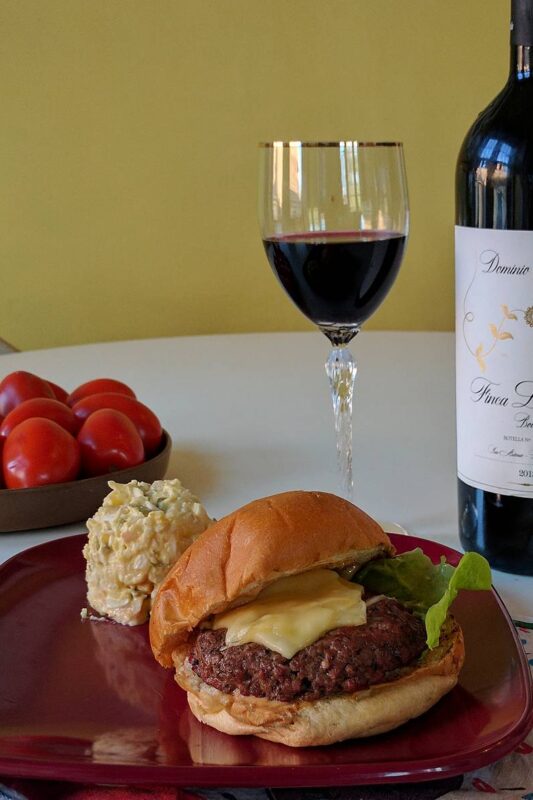
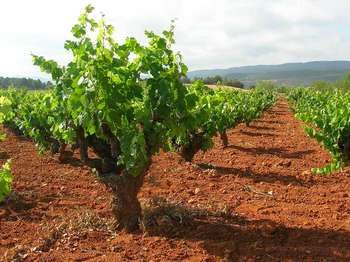
In November, we wrote about the CARO Amancaya blend of Malbec and Cabernet Sauvignon as a bargain big red. (See this post.) On a cold and rainy March weekend, we decided it was time to dust off a bottle of that wine's big brother. The 2013 CARO is a 50/50 blend of Malbec grown in Mendoza's Lujan de Cayo district (above, courtesy of Bodegas CARO) and Cabernet Sauvignon grown in the adjoining Uco Valley. The CARO wines are a joint project between Nicolas Catena and the Barons de Rothschild. In this top wine of the collaboration, intense Argentine fruit meets Bordeaux-style winemaking to great effect. It retails for $50-$60. We pondered what would pair well with such a voluptuous red and decided that grilled steak...Read More
Oceania’s ‘Marina’ features fine dining five ways

Oceania’s ‘Marina’ features fine dining five ways

Experienced cruisers expect a Grand Dining Room—and that's exactly what Oceania Cruises (oceaniacruises.com) calls its spacious and glittering Continental dining venue. It has the requisite fine linens and crystal chandeliers. A full armada of water and wine glasses gleam on the tables. The menu borrows a little from Italy and a lot from France. It includes a few Jacques Pepin signature bistro dishes (steak-frites, roast chicken, poached salmon). Or diners can go fancier with lobster bisque and venison medallions. The menu even proffers spa-inspired “healthy living choices,” such as steamed artichokes, chicken consommé, and simple roasted fish. In short, there's a little something for everyone in a very pleasant and lively room with excellent service. Although the GDR is larger than most other restaurants on...Read More
Jumping ship for a taste of the port

Jumping ship for a taste of the port

When Oceania Cruises (oceaniacruises.com) culinary director Kathryn Kelly designs the culinary shore excursions for Marina and her sister ships, she asks herself one essential question. “Where would I like to go if I had one day in this port?” she says. In Europe, the answer might be a visit to a winery or a three-star restaurant. In the western Caribbean, culinary expeditions are more likely to focus on local foods and foodways. Arboretum looks to future of Roatán food We joined Kelly for the “Honduran Farm & Ocean to Table Experience.” This shore excursion on the island of Roatán starts at the Blue Harbor Tropical Arboretum (blueharbortropicalarboretum.com). The plantings on this 160-acre property represent most of the economically significant plants of the growing zone, including...Read More
When life gives you lemons, make limoncello cakes

When life gives you lemons, make limoncello cakes

Executive chef Kathryn Kelly (above) tells her culinary class aboard the Marina that lemon is as important to a chef as a knife. Instead of adding salt to food to enhance the flavor, “use acid." Kelly is such a believer in gastronomic acids that she builds an entire cooking class around the signature tart fruit of the Mediterranean: the lemon. She calls the class “Amore—Love of Lemons,” and it's a zinger. In two hours, up to twenty-two students learn to make egg-lemon soup, limoncello, preserved lemons, fennel salad with preserved lemon, lemon risotto, chicken scallopine al limone, drunken limoncello cakes, and lemon-basil gelato. When Oceania Cruises (oceaniacruises.com) decided to make food the centerpiece of their voyages, the founders knew they needed more than good fine-dining...Read More
Cruising with an appetite on Oceania Marina

Cruising with an appetite on Oceania Marina

Despite an industry-wide upgrade to shipboard dining in recent years, few cruise lines dare to make the culinary experience a brand signature. But Oceania (oceaniacruises.com)—the middle sister in the Norwegian-Oceania-Regent family—has embraced the plate. We sailed the western Caribbean aboard Oceania's Marina in February and can report that it was a tasty trip. The Marina's galleys were designed before the rest of the ship. With a capacity for 1,250 passengers, she has the largest number of square feet of galley space per passenger of any comparably sized vessel afloat. That translates into a massive central galley and smaller galleys for each of the individual restaurants and for cabin service. Marina was originally planned at 54,000 gross tonnes, but the finished galleys pushed her over 60,000....Read More
Vino Nobile di Montepulciano re-emphasizes terroir

Vino Nobile di Montepulciano re-emphasizes terroir

Judging by the wines from the nine producers who visited Boston, Montepulciano winemakers have returned to native Tuscan blending grapes. DOCG rules permit up to 30 percent non-Sangiovese grapes in Vino Nobile. In truth, more than half the wines I tasted were more than 90 percent Sangiovese. And those producers blending in other grapes have largely stopped using Merlot. Instead, they opt for Canaiolo (which softens the acidity of Sangiovese), Colorino (which provides color and structure), and Mammolo (which gives a velvety violet note). Since each producer presented three to five wines between the technical tasting and a dinner, my full tasting notes would be overkill here. Suffice it to say that Montepulciano superstars Boscarelli (poderiboscarelli.com), Dei (cantinedei.com), and Poliziano (www.carlettipoliziano.com)—along with Antinori-owned La Braccesca—continue...Read More