Archive for the ‘Wine’Category

Burgundy eggs in red wine sauce

Of all the wonderful food in Burgundy, I have a special soft spot for the bistro staple known as oeufs en meurette. The dish is hearty and warming on a cool autumn night and it is a classic in the region. Maybe I like it so much because sauce meurette is very similar to the sauce in coq au vin. Despite its rich flavors, French cooks usually pair meurette with mildly flavored proteins, like poached eggs or a poached fish. Restaurants in Burgundy often feature this dish as a first course (one egg per person) because everything but the eggs can be prepared ahead and re-heated, making it a quick dish to assemble.

POACHED EGGS IN RED WINE SAUCE


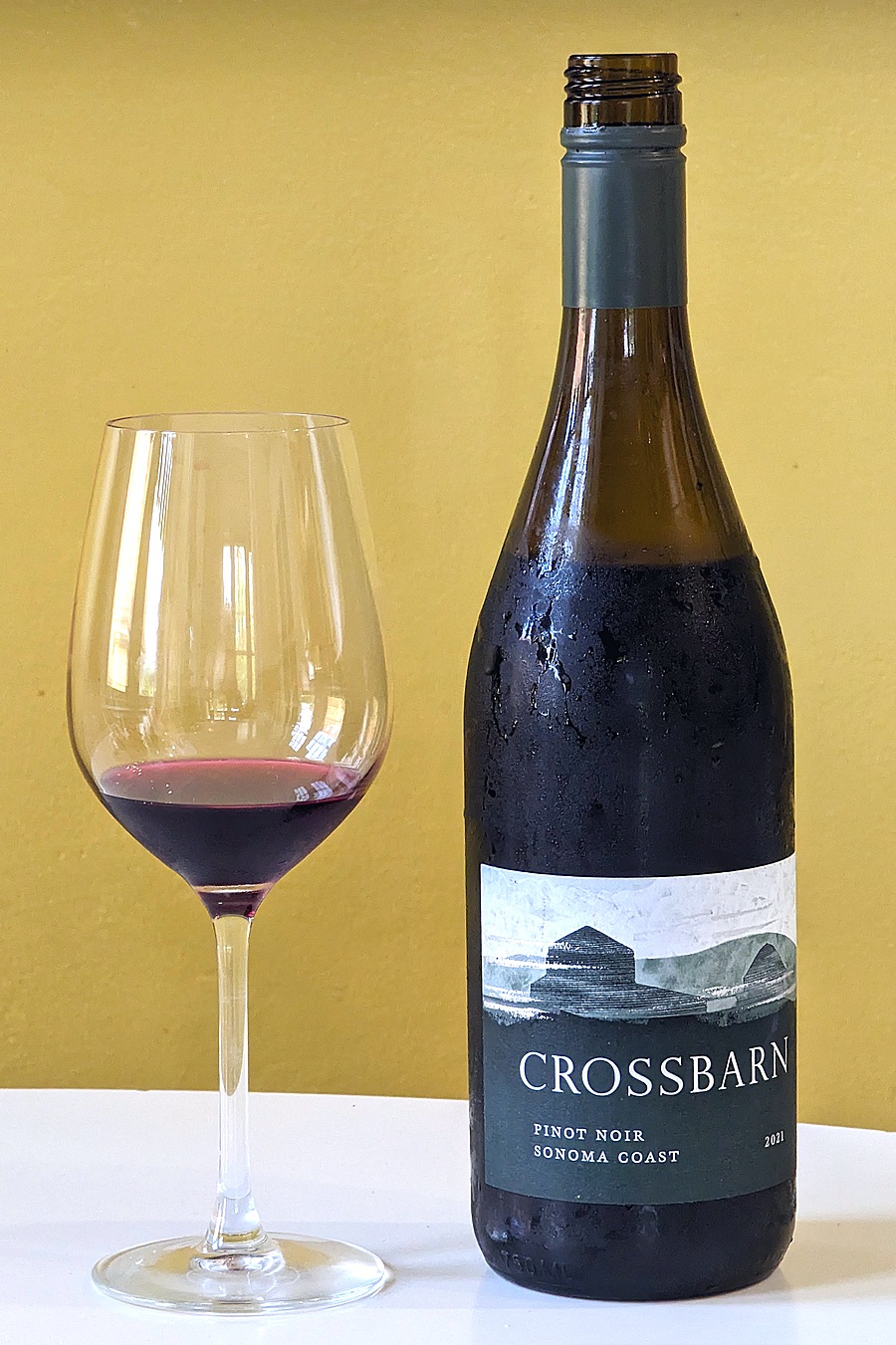
Most of the ingredients for this dish are readily available in the U.S., though a light pinot noir from Oregon or Washington can be substituted for the Burgundy. And, in a pinch, so-called “Italian bread” will substitute for a pain de campagne. The key, though, is to use great eggs – ideally from free-range hens. The yolks have a deeper color and the eggs are easier to poach without making a mess of them. This recipe serves two as a main dish, or four as an appetizer, with a little extra sauce to go around.

Ingredients

For the sauce
1 bottle (750 ml) light red wine (a simple négociant Burgundy)
2 cups strong homemade chicken stock
1 onion, thinly sliced
1 carrot, thinly sliced
1 celery stalk, thinly sliced
1 garlic clove, minced or grated
a bouquet garni of parsley, thyme, and bay leaf
1/2 teaspoon black peppercorns
2 tablespoons butter
2 tablespoons flour
salt to taste

For the garnish
2 tablespoons butter
1/4 pound mushrooms, sliced
1/4 pound piece of bacon, diced
12 baby onions, peeled

For the toast
4 diagonal slices of white country loaf
2 tablespoons olive oil

4 fresh eggs

Preparation

1. Add wine, stock, onion, carrot, celery, garlic, bouquet garni, and peppercorns to a large shallow pan. Bring to boil, reduce heat, and simmer until reduced by half (about 20 minutes).

2. While sauce is reducing, prepare garnish and toast. Melt 1 tablespoon of butter in saucepan, add mushrooms, and sauté until tender (about 3 minutes). Remove mushrooms and add remaining tablespoon of butter and bacon. Fry until bacon browns. Remove bacon to drain on paper towels. Add onions to fat and sauté gently about 10 minutes until tender and lightly browned all over. Remove and combine with mushrooms and bacon. Pour off excess fat from garnish pan (used in Step 2), then deglaze pan with some of the simmering wine. Return liquid to the wine/sauce.

4. Meanwhile, trim crusts from bread, making each slice about the size of a poached egg. Heat olive oil in small frying pan and fry bread until browned on both sides (about 1 minute per side). Drain on paper towels and set aside.

4. When wine-stock mixture is reduced, strain and return sauce to pan over low heat. Taste and add salt if necessary.

5. Blend 2 tablespoons each of flour and butter in a small bowl with a fork to form a soft paste. Whisk paste a little at a time into hot sauce. Stir constantly until all butter-flour mixture is incorporated. Bring sauce to boil, stirring constantly, until thickened (about 5 minutes).

6. Poach eggs for 4-5 minutes — until whites are set but yolks are still runny. Place two toasts each in shallow bowls and top with eggs. Spoon on sauce and add mushroom-bacon-onion mixture.

Serve with a glass of Burgundy.

Share This Post
Tags: ,

13

07 2010

The tang of Burgundy’s other signature taste

You literally walk on wine in Beaune, the center of Burgundy’s wine trade, because the town is honeycombed with cellars dug by the monks who were Burgundy’s first vinters. Millions of bottles sleep their way to perfection under the cobbled streets, and millions more are tucked into the cool, dark recesses of the town’s 15th century fortified walls. The rough streets, old stone buildings, and a profusion of statues of the Virgin Mary (including one where she holds the infant Jesus in one hand and a bunch of grapes in the other) make Beaune undeniably picturesque. But it’s even more fun to taste Beaune than to look at it. As close as I can tell, there are no statues of Mary hefting a bag of mustard seeds, but there should be.

Fallot moutarderie In the Middle Ages, mustard was made everywhere in France. Today the Burgundy region is best known for mustard, especially the Maille firm in Dijon, 25 miles/40 km north of Beaune. But Beaune’s own family-owned La Moutarderie Fallot (31, Faubourg Bretonnière, 011-33-0380-221-002, www.fallot.com) holds its own against the bigger, slicker operation. The last moutarderie in Beaune, Fallot began stone-grinding mustard seed in 1840 and still uses stone wheels to make mustard paste, which is still stored for 24 hours in wooden barrels before bottling. Tours are sometimes arranged through the tourist office (port Marie de Bourgogne, 6 boulevard Perpreuil, 011-33-0380-262-130, www.beaune-burgundy.com).

Fallot mustards Given the French fixation with terroir, I was surprised to learn that most French mustards are made with seeds from Canada. Within the last couple of decades, the French have started to replant mustard, but the mustard fields can only meet about 5 percent of the demand. If you’re a purist, look for mustard labeled “made with mustard from Burgundy.” It is also made with white Burgundy wine (Aligoté) instead of vinegar to blend with the seed, water, and salt. Most processors also make flavored mustards — tarragon, cassis, gingerbread, etc. — but Burgundians far prefer the unflavored “natural” product.

Cheeses at Alain Hess I always bring home a few jars for the pantry, but some of Beaune’s mustard delicacies are best enjoyed there. I can’t visit the town without stopping at Alain Hess Fromagerie (7 Place Carnot, 011-33-0380-247-351), an affineur (cheese-ager) who also produces his own Delice de Pommard, a soft cow’s milk cheese rolled in mustard bran. It’s great first cheese for a picnic, ideally followed by a Cîteaux (a semi-soft cheese that Hess procures from a 12th century Cistercian monastery) and finally a spectacular Époisses de Bourgogne, a soft cheese whose rind is washed with Marc de Borgogne. The great epicure Jean Anthelme Brillat-Savarin called it the “king of cheeses.” To drink? A modest Burgundy, of course.

No surprise — the wine is also good with chocolate. Chocolatier Bouché (1 Place Monge, 011-33-0380-221-035) blends mustard seed into chocolate ganache, then enrobes the pieces in dark chocolate. Called Le Sénevé, the morsels combine a complex sweetness with bitter and salty undertones.

Share This Post
Tags: , ,

07

07 2010

Black pepper, red wine, and strawberries

The conjunction of strawberry season with this series of blogs about French cooking takes us back to our first introduction to lightened French cuisine, which was not in France at all but in the second largest French-speaking city in the world, Montreal. Les Halles opened in 1971 as a grand Escoffier-like townhouse palace of dining in a city best known to that point for its great baked beans with salt pork. When Dominique Crevoisier took over as chef in the early 1980s, he skillfully blended the haute with the nouvelle to create magical meals that didn’t give the patrons gout. He gave us the best idea of what to do with leftover red wine: Turn it into a peppered syrup to serve on strawberries! He added his own touch by tossing the berries with grated lime zest, which is a surprising complement to the black pepper. Alas, Les Halles closed five years ago, but the dining revolution launched by Les Halles has made Montreal one of the great restaurant cities of North America. And every strawberry season Crevoisier’s red wine-black pepper syrup lives on.

RED WINE-BLACK PEPPER SYRUP

Ingredients

2 cups intense red wine (cabernet sauvignon, syrah, etc.)
2 Tablespoons black peppercorns
1/4 cup sugar

Directions

1. Combine ingredients in large skillet and bring to a boil. Reduce heat to simmer and cook, stirring frequently, until reduced to 1/3 cup of syrup.

2. Strain to remove peppercorns.

3. Cool and serve with sliced strawberries tossed with lime zest and a small scoop of vanilla ice cream.

Share This Post

30

06 2010

Friuli has the right wine for asparagus


Asparagus is notoriously difficult to pair with wine because sulfur-bearing compounds in the stalks produce a chemical bouquet that clashes mightily with the tannins in red wine or in whites aged in oak. Eat asparagus and drink your average pinot noir or barrel-aged chardonnay and the wine will literally taste like garbage.

The French solve the problem by pairing asparagus with Loire Valley whites or white Sancerre-wines based on Sauvignon Blanc that never see a whiff of oak. But just as Friuli grows some of the best asparagus in Europe (see If it’s asparagus it must be Friuli), the northeast corner of Italy also produces the best wine to pair with it. Since 2008 it’s been on the market as Friulano, though in Friuli some people still call it Tocai Friulano. (The Hungarians got all huffy about “tocai,” so the Italians had to change the name.)

Recent genetic research reveals that Friulano is first cousin to Sauvignon Blanc and is the grape known in France as Sauvignon Vert or Sauvignonasse. In France, it makes a thin wine with a “green” taste. In Friuli, where it’s considered a native grape, it makes a noble, forthright, steely white wine that is the perfect match to asparagus. (The acids also cut nicely through unctuous sauces like hollandaise).

Although Friulano is considered one of the best white wines in all of Italy, it is little known in North America. But I’m beginning to find some examples in better liquor stores near my home in Cambridge. The most intense and steely Friulano comes from the Colli Orientali region on the far eastern edge of Friuli-Venezia Giulia. My favorite is produced by Giorgio Colutta and sold under the Colutta label as Friulano Annata (about $16). Joe Bastianich (son of chef Lidia) also makes a very good version for around $1 more. Both are widely distributed.

Share This Post

15

05 2010

Tips for packing food and wine in a suitcase

bubble wrap packing for wineWhen we posted What to buy in an Italian grocery store and What to buy in a Spanish grocery store, we neglected to mention how to get those delicacies home. International airline security restrictions limiting liquids, gels, and pastes (including most soft foods) to 3 ounces in carry-on luggage means entrusting your goodies to the gorillas who slam around checked luggage.

Leaving home, we try to fill our checked bags only halfway, taking up the extra space with bubble wrap and really large plastic bags. (A friend once suggested we have a bag fetish.) Hefty One-Zip 2 1/2 gallon bags are ideal. A few 1-gallon sliding zipper plastic bags are also handy. Small items like jars of anchovies, truffle oil, or pistachio butter from Sicily can go in the gallon bags after each is padded with some bubble wrap (the smaller the bubbles the better).

Bottles of wine and olive oil are a little trickier, since they’re bigger and make an unholy mess if they break. We haven’t had a suitcase ruined, but we did manage to saturate a Spanish rental car trunk with two liters of Núñez del Prado olive oil.

We tend to wrap each bottle in a plastic laundry bag (thank you, hotel), then in bubble wrap before inserting into a Hefty. Each of these mummy-wrapped bottles is packed strategically in the suitcase padded by lots of dirty clothes. Practically speaking, this means no more than 3-4 big bottles per suitcase to stay under the airlines’ increasingly strict weight limitations.

If you’re flying an airline that allows two pieces of checked baggage, you can also ship wine in its own box. Ideally, that would be a box with styrofoam shipping inserts (sometimes called a “wine shipper”), but we’ve had good success with a standard wine case and lots of bubble wrap (limiting you to about 8 bottles per 12-bottle case). Attach a secure handle, which can be made from strapping tape, and pray you’re not flying Alitalia, which requires you to sign a waiver before they will accept the box as checked luggage. (They won’t guarantee safe arrival–or even arrival at all.)

Share This Post

30

12 2009

Making grilled asparagus risotto

Grilled asparagus risotto

Grilled asparagus risotto

Before we bought a pressure cooker, asparagus risotto was one of the few risottos we would bother to make because it’s smoky, luscious, and deeply satisfying. It also pairs nicely with a crisp white wine like a Vermentino from Sardinia. It had become one of our go-to quick dishes, in part because every time we light up the backyard grill, we grill some asparagus, making sure we have enough for dinner and enough left over to chop into salads and to make grilled asparagus risotto. This 2-serving recipe evolved rather radically from the version of non-roasted, non-pressure-cooked asparagus risotto made by Fanny Singer that we found in a 2003 issue of Food & Wine. Cooking time is about 10 minutes—quick food, not fast food.


Ingredients

olive oil
1 medium onion, finely diced
1/2 teaspoon dried thyme or 1 teaspoon fresh thyme finely minced
1 cup arborio rice
1/3 cup white wine
1 1/4 cups strong chicken stock
1/2 pound leftover grilled asparagus, cut into 1-inch lengths
2 cups chopped baby spinach leaves (about 3 oz.)
2 oz. Pecorino Romano cheese, finely grated (about 3/4 unpacked cup)
balsamic vinegar for drizzling


Directions
1. In medium-sized pressure cooker, heat oil and sauté onions and thyme until onions are soft. Add rice and stir well to coat.
2. Turn heat up to high and add wine, stirring constantly until nearly absorbed (about 90 seconds).
3. Add chicken stock and stir well. Secure lid on pressure cooker and bring up to pressure. Cook for 7 minutes before quick-cooling pot to remove lid.
4. Place pot back on low heat and stir. (The risotto should be soupy and the rice slightly too firm. Add asparagus and spinach. Stir to mix thoroughly and continue stirring over low heat 90 seconds-2 minutes.
5. Remove from heat and stir in the cheese, blending well..
6. Divide risotto into two 16-20 ounce shallow bowls. Drizzle with balsamic vinegar and serve.

Share This Post

11

11 2009