Pat and David

World on a Plate: When in Rome…

World on a Plate: When in Rome…

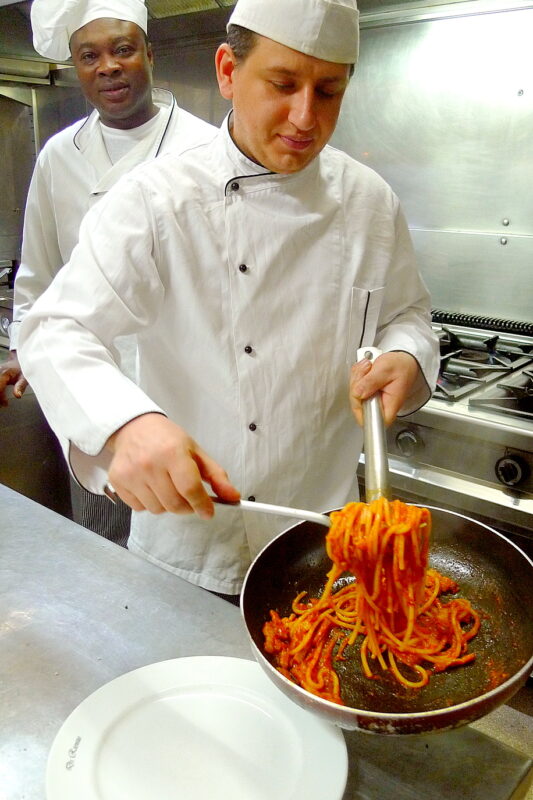
While nothing quite compares with eating big plates of pasta at an al fresco table with the Pantheon in the background, we remain eternally grateful to the chefs at Ristorante-Caffe di Rienzo (Piazza del Pantheon 8/9, 06-686-9097, www.ristorantedirienzo.it) for teaching us two of the basic Roman dishes made with dried pasta. They are both in the photo at right—bucatini all’amatriciana in the foreground, and cacio e pepe behind it. In fact, we can almost hear the light jazz of the street musicians on the Piazza del Pantheon. If you'd like the recipes for the two dishes as the DiRienzo chefs taught us, see these two posts: hungrytravelers.com/learning-roman-pastas-1/ and hungrytravelers.com/and-then-there-was-amatriciana/. Both dishes remain among our favorites that we turn to when need a delicious but quick...Read More
Simple roasted asparagus, a Diana Henry gem

Simple roasted asparagus, a Diana Henry gem

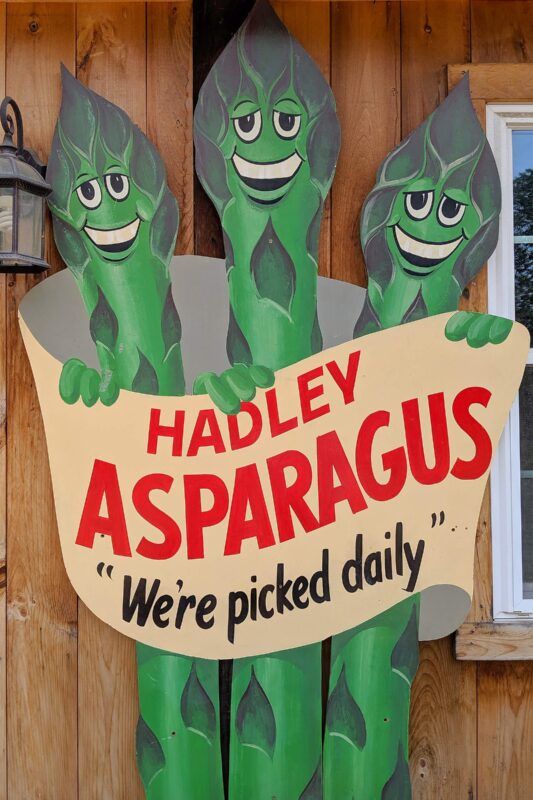
Every year about this time we work our palates into a state of frenzy trying to enjoy the fleeting season of local asparagus. The farm at the head of the post is one of those legendary growers along the banks of the Connecticut River in Hadley, Massachusetts. Until verticillium blight struck after World War II, Hadley grew much of the country's best asparagus. Good tillage practices and more resistant varieties have helped revive the asparagus industry in the Pioneer Valley, though it's never going to be what it was. It does mean that even 90 miles east in greater Boston, we enjoy a surfeit of the noble spears for a short time each year. And granting that one cannot live on asparagus risotto alone (hungrytravelers.com/remembering-italy-3-asparagus-prosciutto-risotto/),...Read More
World on a Plate: Chile en nogada

World on a Plate: Chile en nogada

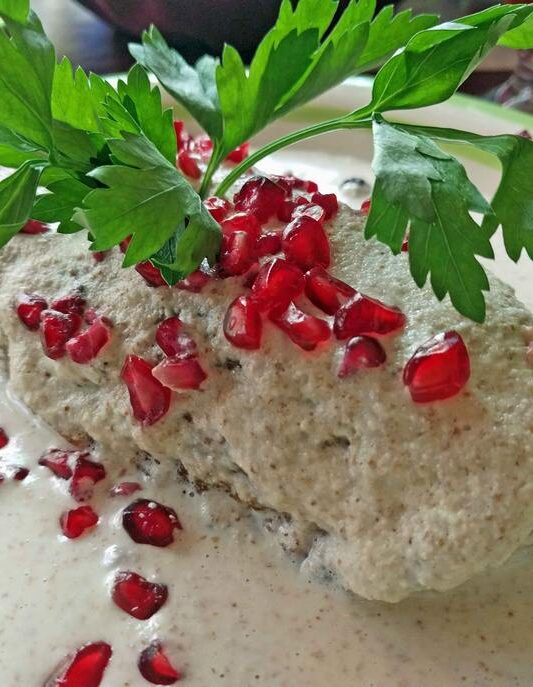
Memory is as haunted with tastes and smells as with sights and sounds. When we recall one of those senses, the others often follow. Just looking at a dish can transport us back to a moment in the Before Time when we still roamed far and wide. We can then close our eyes and taste and smell the dish and hear the clatter of plates and buzz of conversation in the restaurant where we ate it. HungryTravelers is devoted to bringing the taste of travel back home, but as long as physical travel is constricted, we thought we'd revisit some of those moments in food photos we'll post weekly. Since the dishes come from all over, we're calling them ‶world on a plate.″ With its...Read More
Enjoying the sheer immersion of a Mexican food market

Enjoying the sheer immersion of a Mexican food market

Diego Rivera (see last post) wasn't the only one obsessed with Mexican food markets. It's funny that Americans think of Mexico as a place where all the meals are based on dried corn made into a bread (tortillas), dried chiles made into sauces, or dried beans made into burrito fillings. Given their druthers, most Mexicans eat fresh fruits and vegetables as their dietary mainstays. True, they do love to grill and deep-fry some foods, but the key to the Mexican table is fresh food. That could include some pretty exotic stuff. The basket of small gray stuff in the left pane above is huitlacoche—fresh corn infected with what American farmers call ‶corn smut.″ It's a fungus that makes the kernels ooze with an inky, musky...Read More
Diego Rivera’s food paintings lay bare Mexico’s soul

Diego Rivera’s food paintings lay bare Mexico’s soul

Now that we've run out of other tidying projects, we've been sorting and cleaning up our files of travel photos. We're using Zoner Photo Studio X (zoner.com) for sorting purposes because it lets us tag large groups of photos with key words. Then we can look at related photos together. One thing that jumped out at us was that Diego Rivera obsessed about food almost as much as we do. As we looked at our photos of Rivera murals in Mexico City, we were struck that bread, tortillas, and tropical fruits all turned up even more often than the hammer and sickle of the Communist Party. His sympathies may have been with Marx and Lenin, but his truest devotion was to home cooking. The large...Read More
The quintessential burger for Memorial Day

The quintessential burger for Memorial Day

We still get a chuckle when we think back to an exhibition at London's Victoria & Albert Museum that sought to summarize national cultures in a single object. The curators clearly had a sense of humor. (In a self-deprecatory moment, they chose the W.C. for the English.) We Americans were boiled down to … the hamburger. It is, after all, ‶mass-produced, cheap, efficient, but essentially juvenile.″ The curators forgot to mention that, properly done, the hamburger is also delicious. Americana in the heart of Texas In our part of the country, Memorial Day launches the grilling season. Mind you, we'll be in our back yard, at least six feet from anyone, and there will just be the two of us. Since the celebration is rather...Read More
Learn Japanese home cooking from Rika Yukimasa

Learn Japanese home cooking from Rika Yukimasa

Since 2011, Rika Yukimasa has hosted ‶Dining with the Chef,″ which is a big hit on Japan's own NHK and appears on some PBS stations in the U.S. Many of her more than 50 cookbooks have been translated into Chinese and Korean. But as far as we can tell, Rika's Modern Japanese Home Cooking (Rizzoli, New York, 2020; $40) is her debut in English. (By the way, she went to college at the University of California/Berkeley before returning to Japan to work for advertising giant Dentsu.) The book came out at the end of March, but we've been distracted and just got around to it. Our loss! Here's the link to buy it on Amazon. Yukimasa's subtitle for the book is ‶Simplifying Authentic Recipes.″ She's...Read More
No yeast? Treat yourself to Irish brown soda bread

No yeast? Treat yourself to Irish brown soda bread

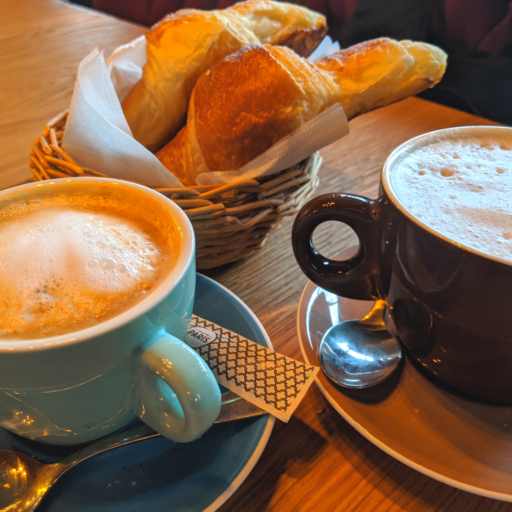
We confess to scoring a half-cup of instant yeast last week when we were walking past our ‶sales-by-pickup-only″ neighborhood butcher shop, Savenor's. (Yes, the one where Julia Child bought her chicken, ducks, and breast of veal.) That should keep us going until we're out of flour. But a lot of folks aren't so lucky, so we'd thought we'd post one of the all-time great bread recipes that doesn't require yeast. It's for an Irish brown soda bread, as served on the breakfast buffet at the Marker Hotel in the hip Docklands district of Dublin, Ireland. Seeds in brown bread are nothing new, though the classic recipes only call for oat groats to add texture. This version adds the perfect balance of sesame, sunflower, and flax...Read More
Pasta fazool, for the immigrants we have all become

Pasta fazool, for the immigrants we have all become

We've never eaten pasta e fagioli in Italy. We've never even seen it on a menu there, though a reliable source (Michele Sciocolone) tells us it is Neapolitan. (That's why we posted the Neapolitan chef and food vendor miniatures above. They're masked for Carnavale and sold on the same street as Christmas creche figures.) The dish—‶pasta fazool″ in the Neapolitan dialect—has an Italian-flavored familiarity that marks it as real comfort food. Turns out that it's known mainly in Italian-American cuisine. It's from that branch of cooking born when immigrants made do with canned and dried commodities rather than the fresh ingredients they knew in the old country. We're all immigrants now to the world of social distancing and staying indoors. We're making do with canned...Read More
Patatas a la riojana feeds the pilgrim body and soul

Patatas a la riojana feeds the pilgrim body and soul

We have all become pilgrims, if only in spirit, during our days of worldwide plague. The sign above marks a bar in Plaza del Rey, San Fernando in Burgos, Spain, named ‶The Pilgrim.″ The insignia above the name shows the scallop shell of Santiago (St. James) on a field of blue—the universal marker along all the variants of the Camino de Santiago. We say ‶variants″ because there are innumerable paths that lead finally to the cathedral in Santiago de Compestela in Galicia, just as there are a multitude of paths to any form of enlightenment. One of the most popular routes of the Camino is the French Way across northern Spain from Roncevalles (where the Basques repulsed Charlemagne's forces led by Roland in 778) west...Read More