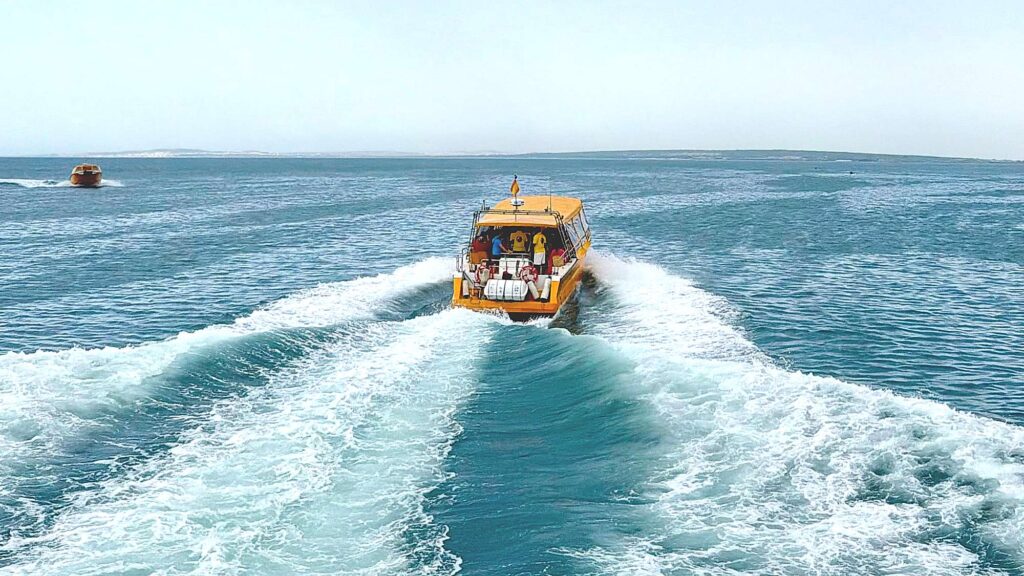
Halfway between Elche and Alicante, the fishing village of Santa Pola is the jumping-off point for the 5-nautical-mile trip to Isla de Tabarca. It’s both the largest island in the Valencian region and the .smallest permanently inhabited island in Spain. About 50 people live here year-round, but on a nice summer day, the population is closer to 1,000. Those extra 950 come by boat from Santa Pola to spend the day sunning, swimming, diving in the marine reserve, and clambering over the ruins of an old Spanish fort. Mostly, though, they eat and drink.
Feasting on ‘caldero tabarquina’
Tabarca has evolved its own classic fish stew that brings together the strands of its cultural history. The island was long a stronghold of North African pirates. They used it as a base for pillaging the coast and taking slaves to be sold in Tunisia and Libya. In 1760, Carlos III of Spain ordered a fort built on the island and installed a marine garrison to fight off the pirates. In 1770, when the fort was complete, Carlos resettled it with a group of shipwrecked sailors from Genoa, Italy.
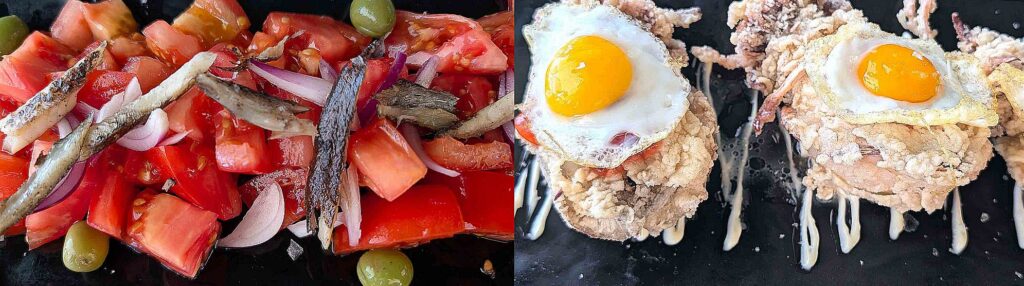
The signature dish borrows from the cuisines of northern Italy, Spain, and North Africa. It’s a family-style meal, which I enjoyed with a table of fellow travelers at Mar Azul (facebook.com/p/Rest-MarAzul-100063576063102/). To tease our taste buds before the main event, we started with a salad of tomatoes, onion, and anchovies and followed with calamari topped with allioli and a fried egg (below). The brisk local white wine made from Moscatel and Macabeo poured freely.
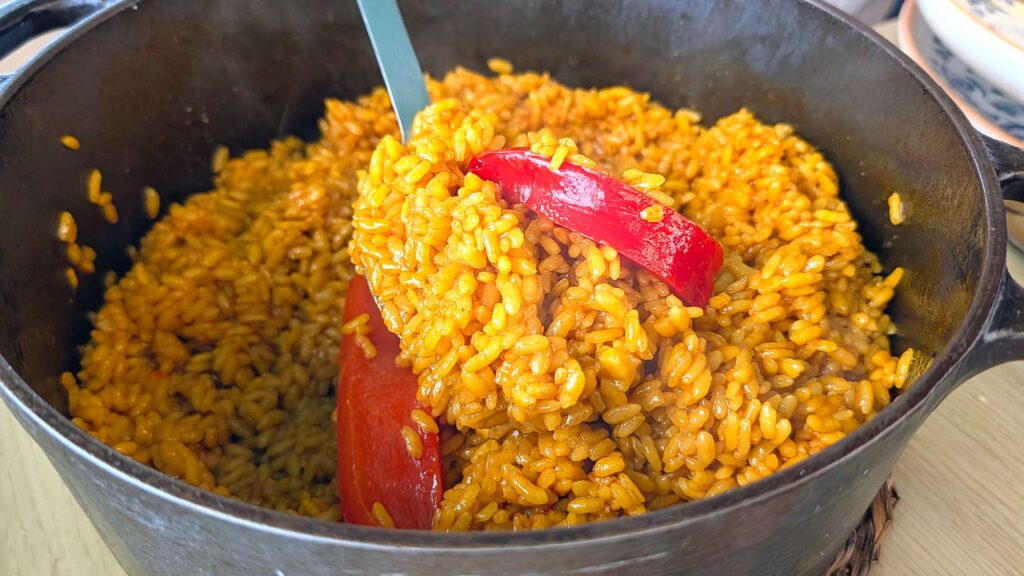
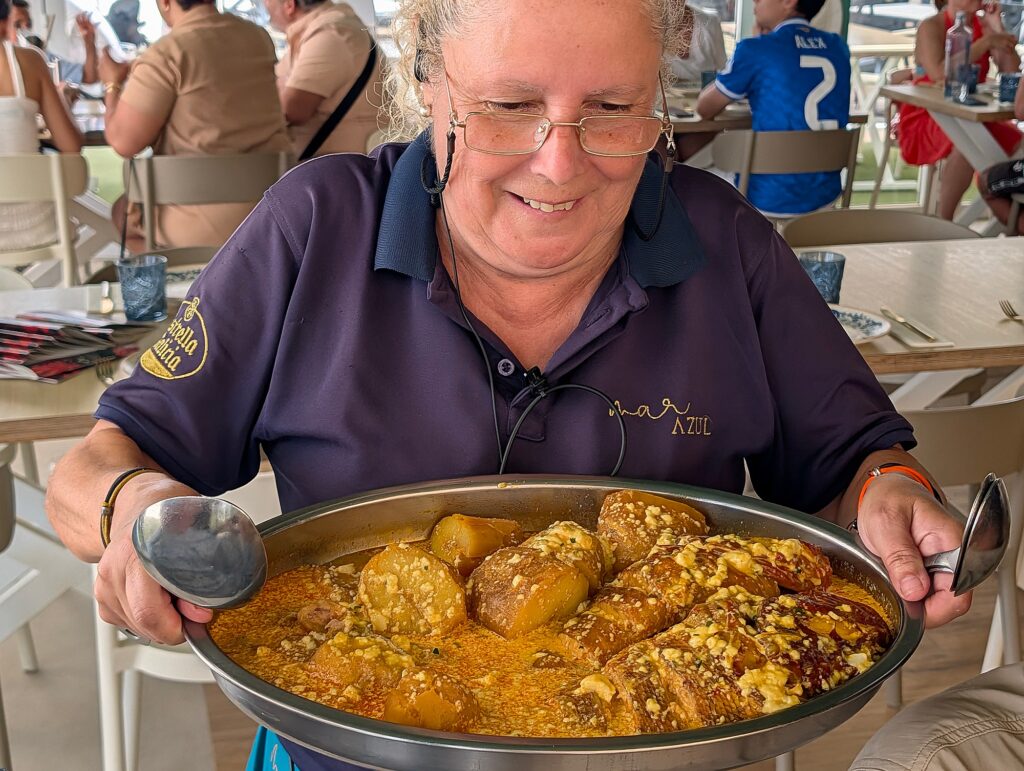
The caldero tabarquina arrived in two courses. The first, served by the lady above, was a cauldron of boiled fish fillets with quartered potatoes with drizzles of allioli on top. The rockfish, which could have been any of a number of species, had a strong fresh taste of the sea. The second course was served a little later. The kitchen used the tasty broth from the first dish to prepare a Spanish rice dish, also redolent of saffron, pimentón, and fresh red pepper slices. The rice, of course, was a classic Valencian short-grained variety, probably Bomba from the nearby marshes of La Albufera. (Much more on that subject to come.)