Ask most non-Spaniards what Spain’s most famous food is, and those who don’t say gazpachowill likely cite paella. Ask them what’s in paella, and they’ll likely say rice, chicken, and chorizo. [Sound of obnoxious buzzer.]There’s a movement in Valencia to correct this widespread misconception. Witness the T-shirts that show a chorizo in a circle with a line through it. Chorizo, Valencianos say, is a Rioja thing.
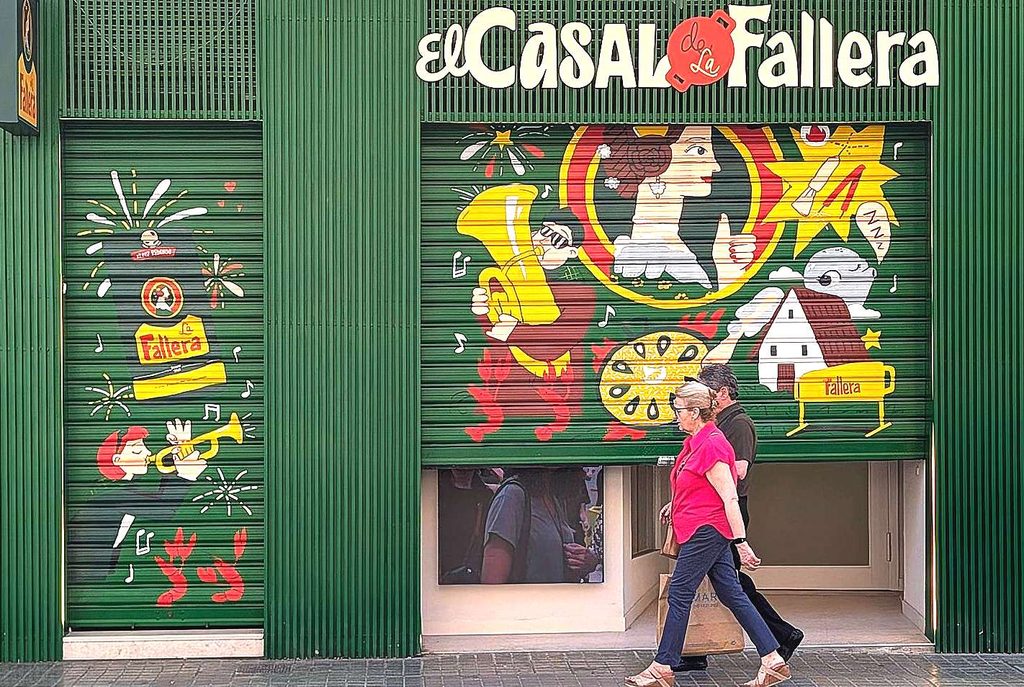
Having been guilty of preparing arroz con pollo y chorizo for many years, I determined to get a lesson once and for all in the Valencian way. Fortunately, the Valencia Club Cocina offers cooking classes at Casal de la Fallera (c/ Cirilo Amorós, 12, Valencia; valenciaclubcocina.com). They start at €69 per person.
The full class has several options, including a shopping trip to the market to buy ingredients. My abbreviated class was simpler. We made a tortilla española to eat while the paella was cooking. Our instructor. Guillermo Micó (below), was funny. gregarious and professional.
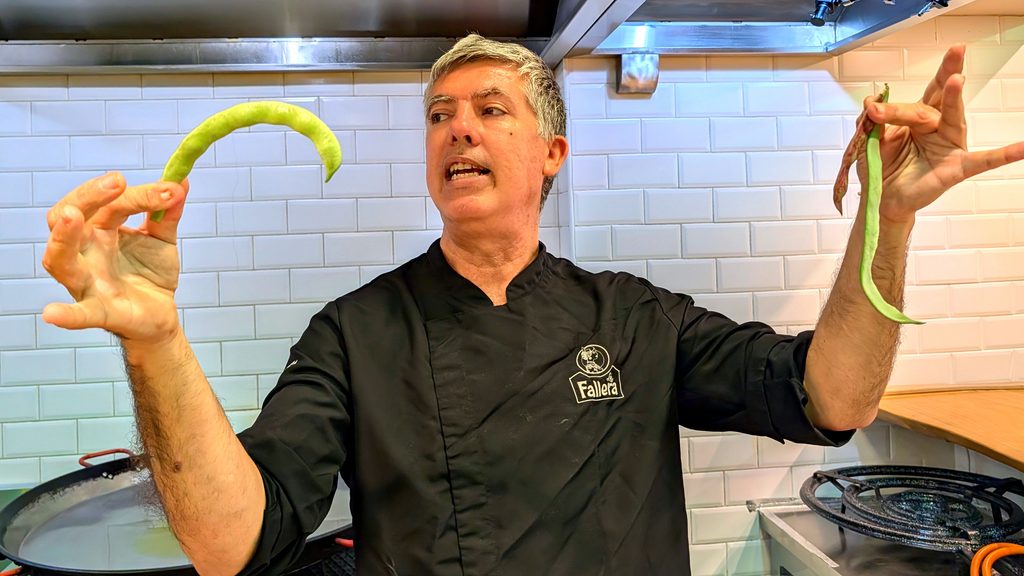
Paella ingredients are simple but essential
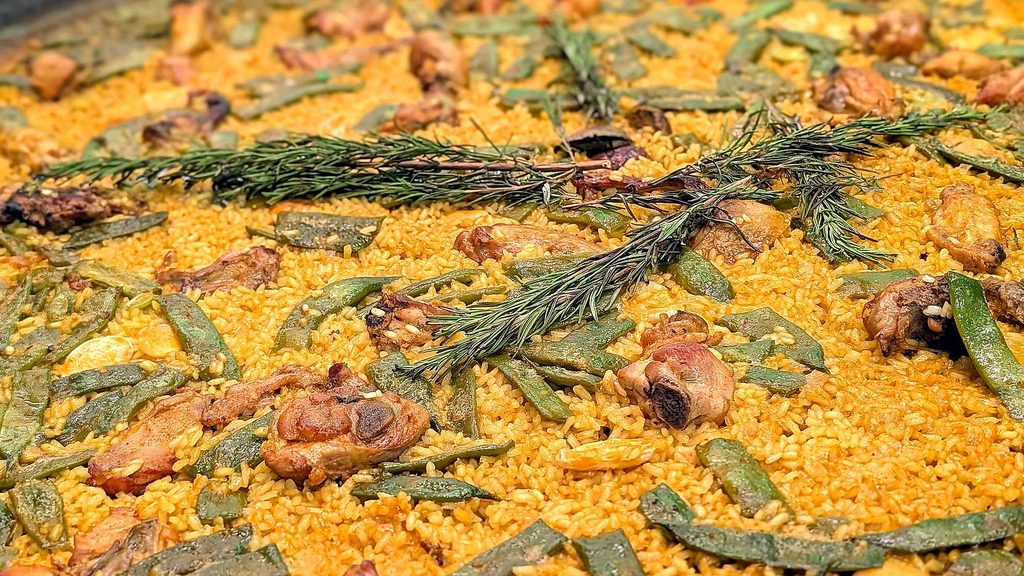
Guillermo is holding one of the key ingredients in the photo above: bajoqueta beans. They wide, flats pods of this green bean are more tender than the pole beans we get in the US. A second kind of bean, garrofó, is also traditional. It resembles a butter bean or a large lima bean (middle below). Traditional paella usually has pieces of chicken and rabbit (left below).
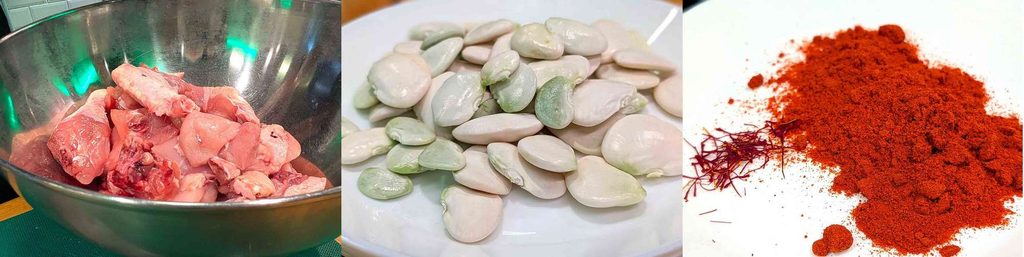
The rice is key. Valencian rice comes in many strains. Bomba is the most prized because it can absorb more liquid than other rices. This being a venue sponsored by the rice merchant La Fallera, our class used that company’s brand of bomba rice. The essential seasonings include copious quantities of sweet Spanish paprika, a generous pinch of saffron (right above), and grated tomato at about half the volume of the rice. A finishing garnish of rosemary sprigs is optional. Being Spain, all the cooking is done with fragrant olive oil and it never hurts to toss a glass of wine into the liquid.
Cooking paella is a matter of sequencing the stages
Traditionally, paella is cooked over an open wood fire in a large flat steel pan. But most chefs today use large gas burners with three rings of fire to control the heat better.
Guillermo set the pan on a high central heat and added a few generous glugs of olive oil. When he guessed it might be hot enough, he tossed on a single small piece of chicken or rabbit. When it fried quickly, he added the remaining meat, stirring to brown it on all sides before pushing the pieces to the cool edges of the pan, Next up were the bajoqueta beans, which class members had trimmed and snapped in pieces the length of our index fingers. As they began to soften, he added the garrofó beans. Once slightly cooked, the beans joined the meat at the edges.
Under Guillermo’s tutelage, the sofrito for paella is very straightforward. Turning up the heat a little, he fried the chopped garlic before stirring in the grated tomato. Working quickly, he incorporated the paprika and saffron, scraping and stirring so the tomato and spices absorbed the oil. “The flavor is now!” he exclaimed.
He deftly pulled the meat and beans from the edges and tossed them to coat with the sofrito. In went the glass of wine, sending off a gush of heady steam. Stirring to blend everything, he poured in the water (three times the volume of the rice) and brought it all to a boil before stirring in the rice.
At this stage, the paella remains over high heat to bubble and boil for about 10 minutes. The bubbling stock tumbles the rice. Here is how it looks:
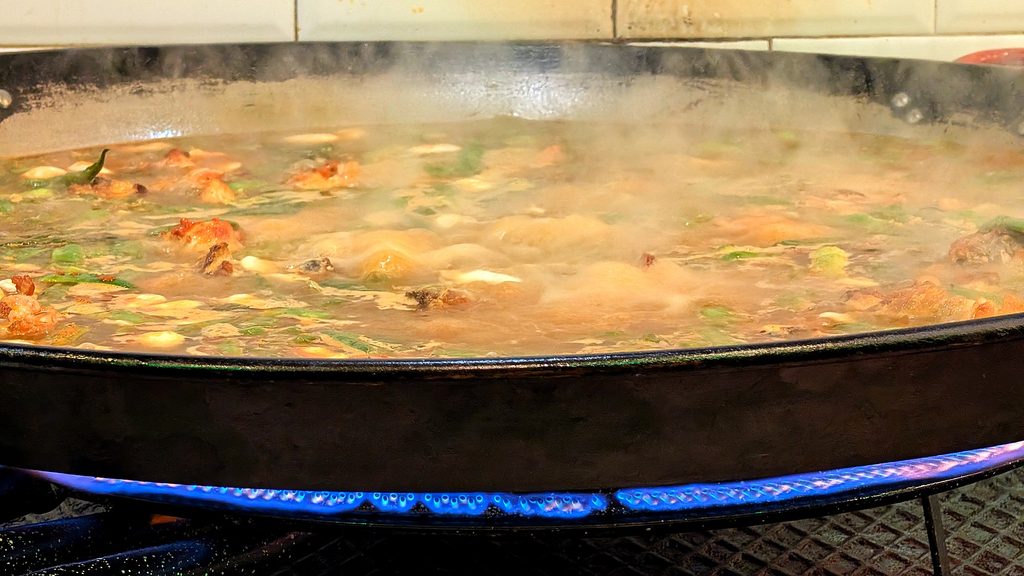
Putting the finishing touches on a paella
After 10 minutes, the rice needs to simmer as it absorbs the stock. He turned down the heat under the pan to low and let the dish cook undisturbed for about 8 minutes. By the end, the liquid had sunk below the level of the rice.
A true paella, though, is not just steamed rice. It needs to have a bottom crust. Guillermo added rosemary sprigs to the top for aroma and then turned up the gas ring to medium high for a couple of minutes. This is when you have to listen to the paella. It will begin to crackle and you should smell the toasted grain. The socarrat, or crisp bottom layer, is ready.
It’s time to pour more wine and dig in.