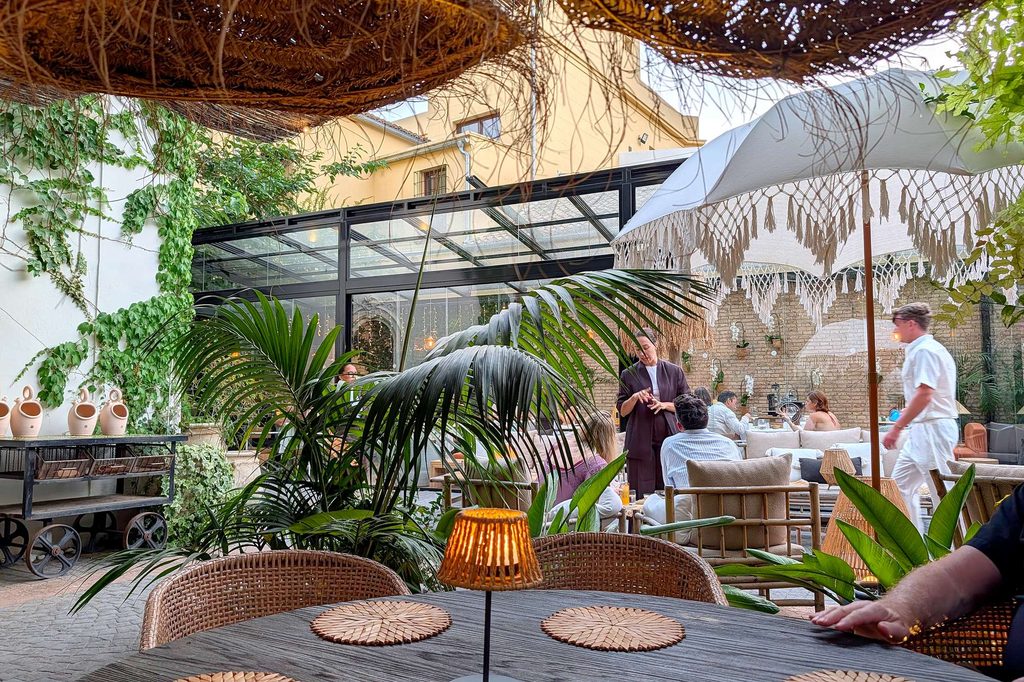
After a final Valencia dinner at La Salita (c/ Pere III El Gran, 11B, Valencia; +34 609 330 760; anarkiagroup.com), I’m convinced that it’s Begoña Rodrigo’s world and we’re just living in it. The name of her restaurant translates as ‶the living room.″ And Rodrigo does her utmost to make her diners feel at home.
Set in an 18th century mansion in the Ruzafa neighborhood, La Salita seats guests in the outdoor garden (at top) for cocktails and the initial bites of the prix fixe menus. My group had pre-selected her fish and seafood option, though Rodrigo is also known for her mastery of vegetarian cooking. (She was named ‶Best Vegetables Chef in the World″ in 2024 by the We’re Smart® Green Guide, among other awards.)
To accompany our cocktails (I ordered a Mostagroni — cava with aged local vermouth), the kitchen sent out an array of four one-bite appetizers. They introduced us to Rodrigo’s penchant for confounding expectation. The eel berlin (eel in herb sauce with potatoes) was not a small casserole. It was the filling for a thumb-sized profiterole. The oyster in the ‶oyster salad″ was an oyster foam in a minuscule tart crust. The ‶hare bonbon″ was rabbit meat and shredded radish, also in a tart pan. The ‶crisp seaweed and spicy tuna″ came closest to its literal description. It was essentially chile-pepper-spiked tuna ceviche rolled in nori crisped by a quick dip in hot oil.
Small bites move into small plates with wit and aplomb
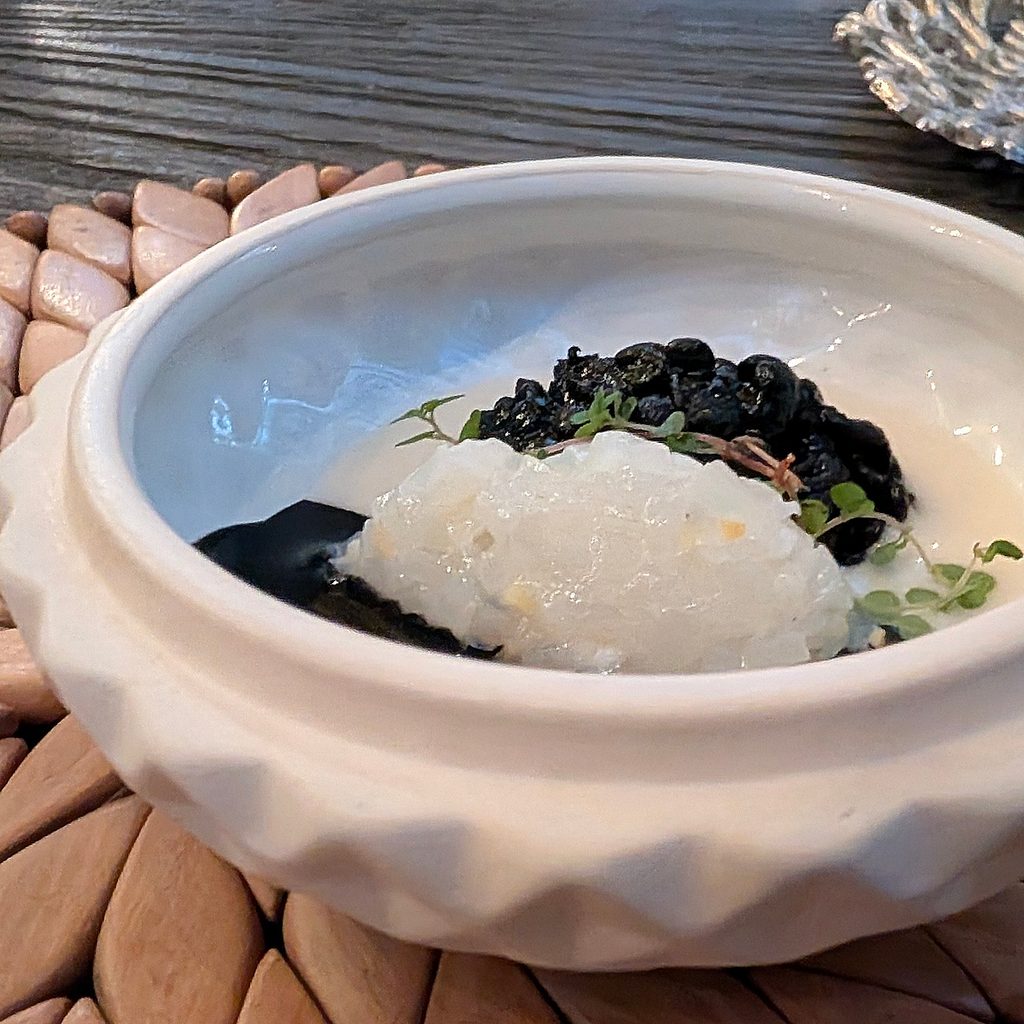
Honestly, those were exactly the kind of sure-handed teasers I had expected from a Michelin one-star. (Rodrigo earned hers in 2019.) Clever, Surprising. Intense. And just the beginning. Rodrigo had one more dish to confound us before we adjourned inside. She called it ‶Beach squid, white and black curry.″
After more than a week in the Costa Blanca, I had eaten more than my share of squid. I had eaten it fried, stewed, and grilled. Some had been tough, some tougher, some practically vulcanized. My dish at La Salita was my first squid tartare. It was tender and delicious. Cut finely and deeply chilled, it tasted of the sea and played perfectly off the earthiness of the black lentils. The ‶curry″ was a curry leaf sauce, citrusy and just slightly bitter to set off the unctuous squid. A real home run. I was excited to go inside for the next courses.
Ascension to dining room heights
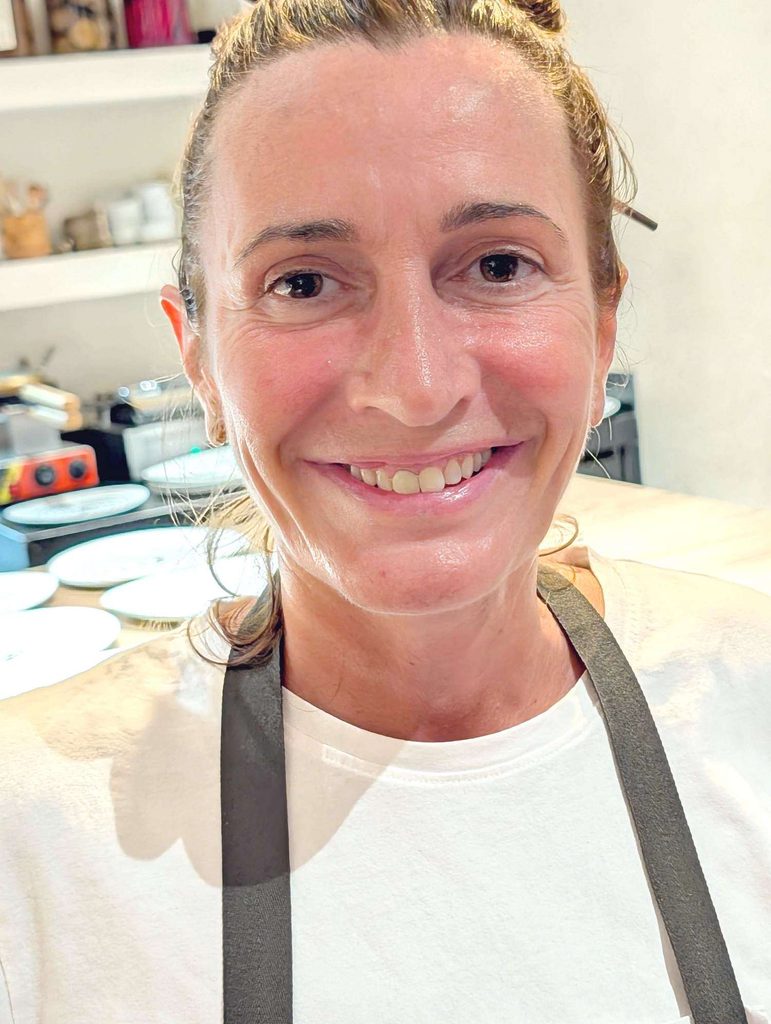
As a group of eight, we were shown to a private dining room on the second level of the mansion. We marched right past the kitchen, where a brigade of cooks in high toques was scurrying around. Cap off, Begoña Rodrigo herself was expediting and smiling at everyone who entered. Tempting as it is to describe every dish and post a photo, I’ll limit my comments to those that surprised and delighted me.
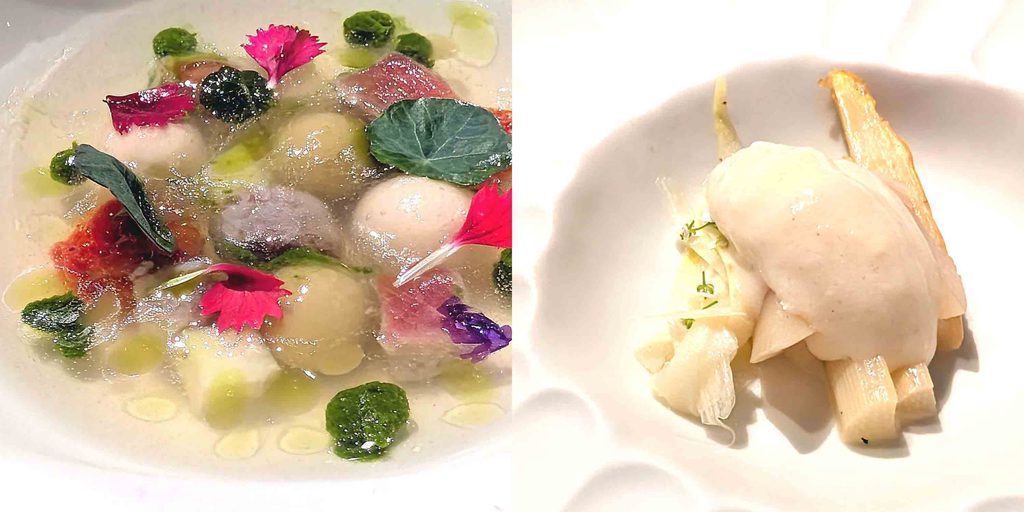
Even apart from the beautiful flower petal garnishes, the dish at left above was shimmeringly stunning. Was it a salad or a soup? Pieces of tomato, tuna belly, and whole olives swam in what looked like aspic but tasted like the gelée from a fresh tomato. It was like eating a garden in the ocean — absolutely perfect as a first course for a sea-themed menu. At right above is one of the chef’s signature dishes. Called ‶the bride″ (it’s all in white), it’s a marriage of thinly sliced raw scallop with quickly cooked, extremely phallic white asparagus coated in cream. The joke would be obscene if it weren’t so beautiful and delicious.
Elevated twists on dishes of the people
Valencia boasts several restaurants with Michelin stars, but most of them favor ultra-refined ‶autor″ cuisine. I have great respect for chef-driven creativity, but my own preference runs to dishes born of generations of traditional cookery, then delicately re-interpreted.
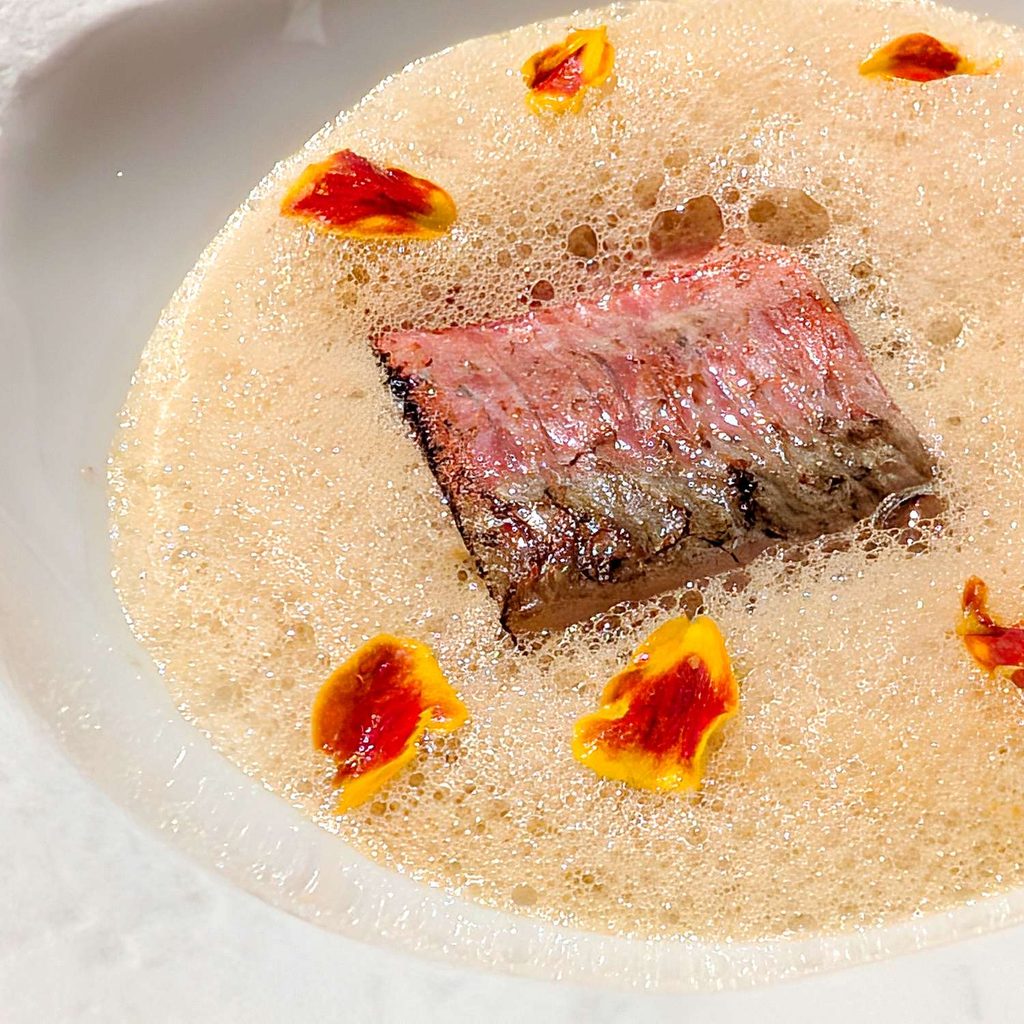
For example, all the regions that speak a version of Catalan language — Catalunya, Valencia, the Balearic islands — cherish the fishermen’s stew called suquet. Traditionally it’s a stew of the day’s catch with potatoes, garlic, tomatoes, and a pinch of saffron. The picada that finishes a suquet is a paste of roasted almonds, garlic and fried bread.
Enter La Salita’s dish of ‶red mullet, with its suquet and aniseed″ (right). Rodrigo takes the dish into another dimension. Yes, the mullet is crisply pan-fried, That’s traditional for this flavorful fish with a strong umami flavor. The stew, however, is a creamy base made with the mullet liver and a foam flavored with clementines and aniseed. (I suspected that there might also be some fennel in the foam to give it a starch structure that can sustain the bubbles.) The combo of the fish, cream, and foam was multi-dimensional.
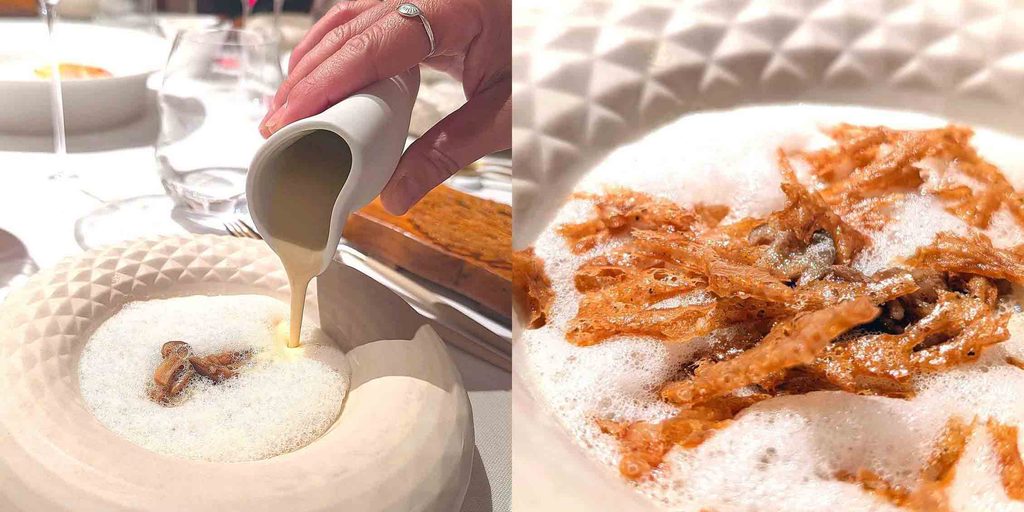
Labor-intensiveness is a key element in Michelin fine dining. The ‶ravioli of ‘Olla Serrana’ with rotisserie chicken sauce″ was a perfect case in point. Pastas were filled with elements of the mountain stew of white beans, pork belly, and blood sausage. Another foamed sauce enveloped them, this time a form of chicken gravy. Servers poured on the sauce at the table (above left), then gave us lavish heaps of crunchy sprinkles — the crisped skin from the roast chieken (above right). It was both tasty and fun to eat.
Rounding out the meal with cheese and dessert
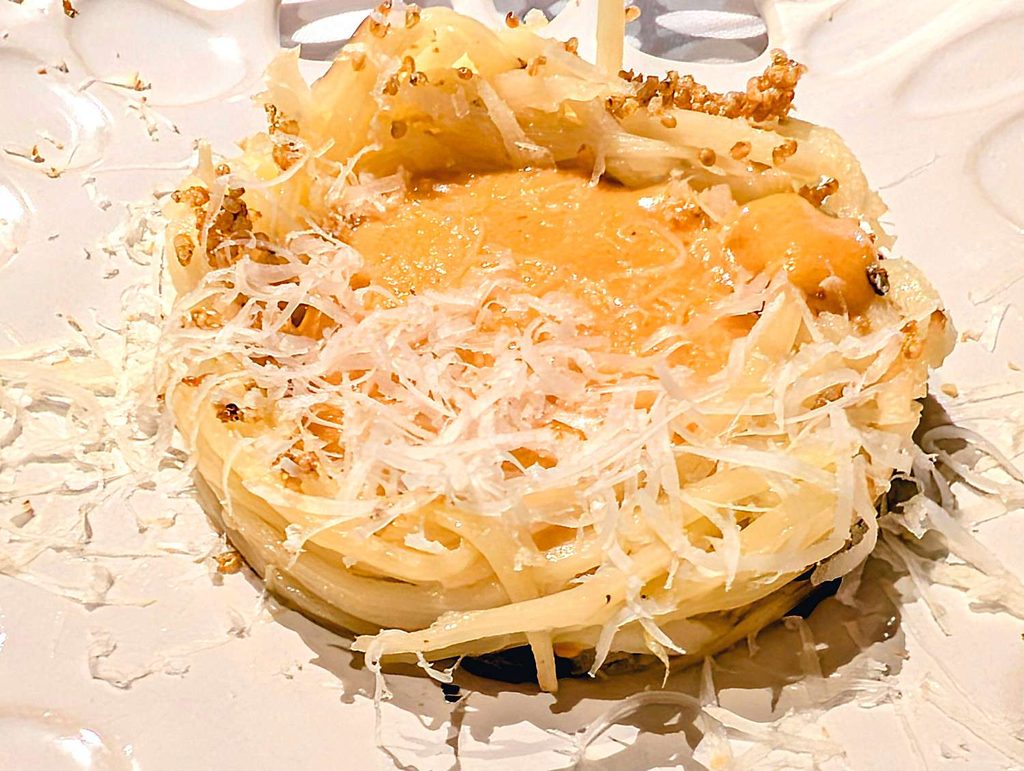
It’s been a long time since I’ve enjoyed a fine dining menu that included a cheese course, let alone a cheese course that celebrated local terroir and did something more creative than laying out slices with crackers. Identified as ‶parsnip, ‘Tot de Poble,’ and fermented cabbage cream,″ the La Salita cheese dish (right) is built around an artisanal sheep’s milk cheese from the village of Les Coves de Vinromà in the Castellón province of Valencia.
Tot de Poble (queseriatotdepoble.com) is a relatively young cheesemaking operation, but it has quickly built a following for its sheep milk cheeses. For this dish, Rodrigo made a nest of shredded parsnip that she filled with a mildly tangy sauerkraut cream and topped with grated hard cheese. I wouldn’t swear to it, but the cream tasted like it also contained melted cheese. Served hot, the dish evoked the sweet brown butter and caramel flavors characteristic of top sheep’s milk cheeses.
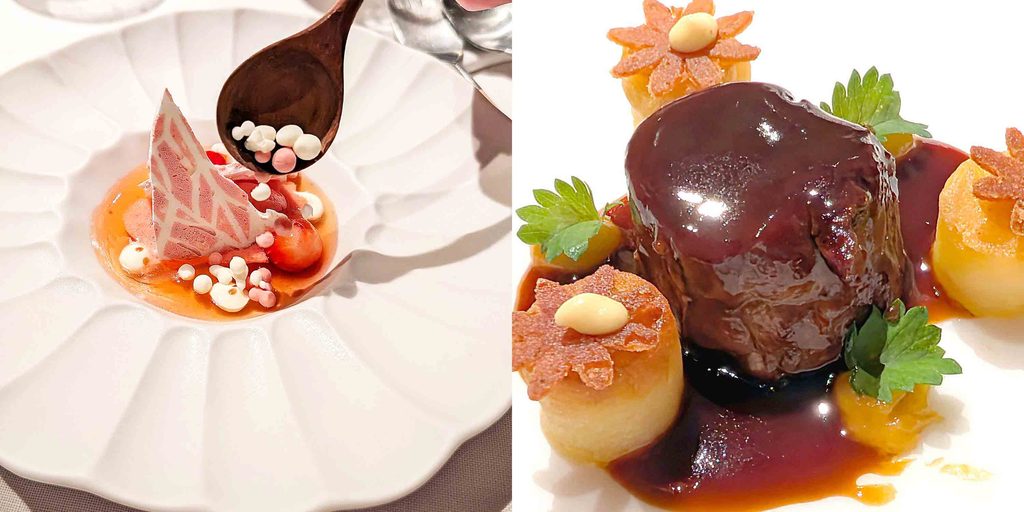
Rodrigo departed from her printed menu for the desserts, but I was hardly complaining. On the left below is a summer fantasy of a sailboat. The sail is a thin, crisp meringue floating on a sea of strawberries. The “bubbles” (as in bubble tea) defy expectations with the textural contrast. All in all, an elegant confection!
The chocolate ‶bonbon″ (below right) is actually a dark chocolate sauce over a goat cheese semifreddo. Ice cream with chocolate sauce satisfies the child in every diner.