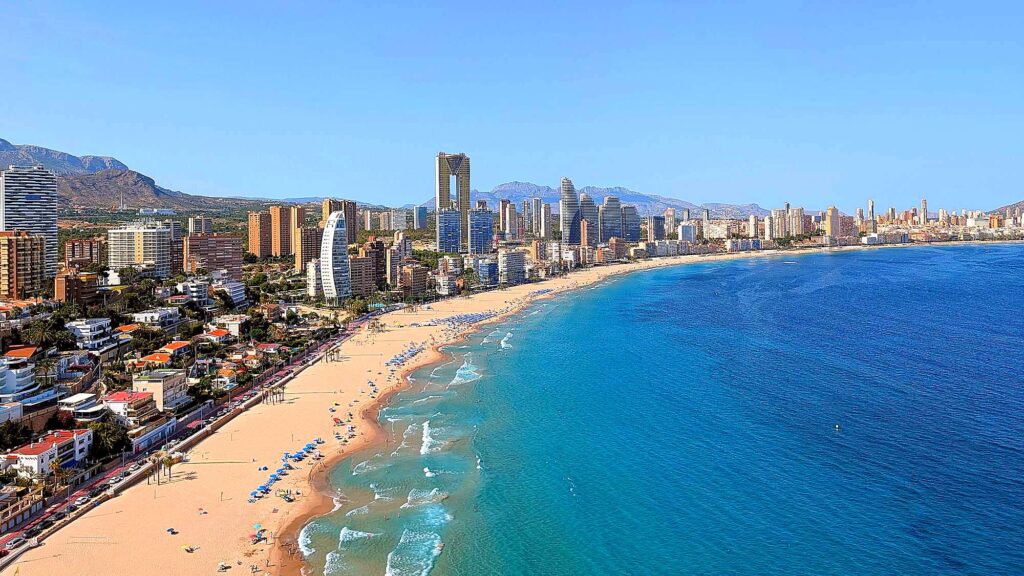
This is a tale of confounded expectations.
Once a quiet fishing village, Benidorm became the poster child for affordable mass tourism. Back in the 1950s, it was the first village in Spain to defy Franco’s ban on bikinis. In the decades since, the bathing suits have only grown smaller and the high-rise hotels taller. Admirers of the spires affectionately call Benidorm the Manhattan of the Mediterranean. Much of the year, its broad sandy beaches are practically paved with sunburned northern Europeans, especially English men and women.
There is no denying Benidorm’s breathtaking natural beauty. A green valley spreads out between the beach and the surrounding high mountains. A sightseeing Jeep ride or a rental electric bike (marcopoloexp.es/en/) can take you to the heights (see top of post). Or you can book a table at one of the many rooftop terrace restaurants.
Chef Fran Burgos offers a transporting dining experience
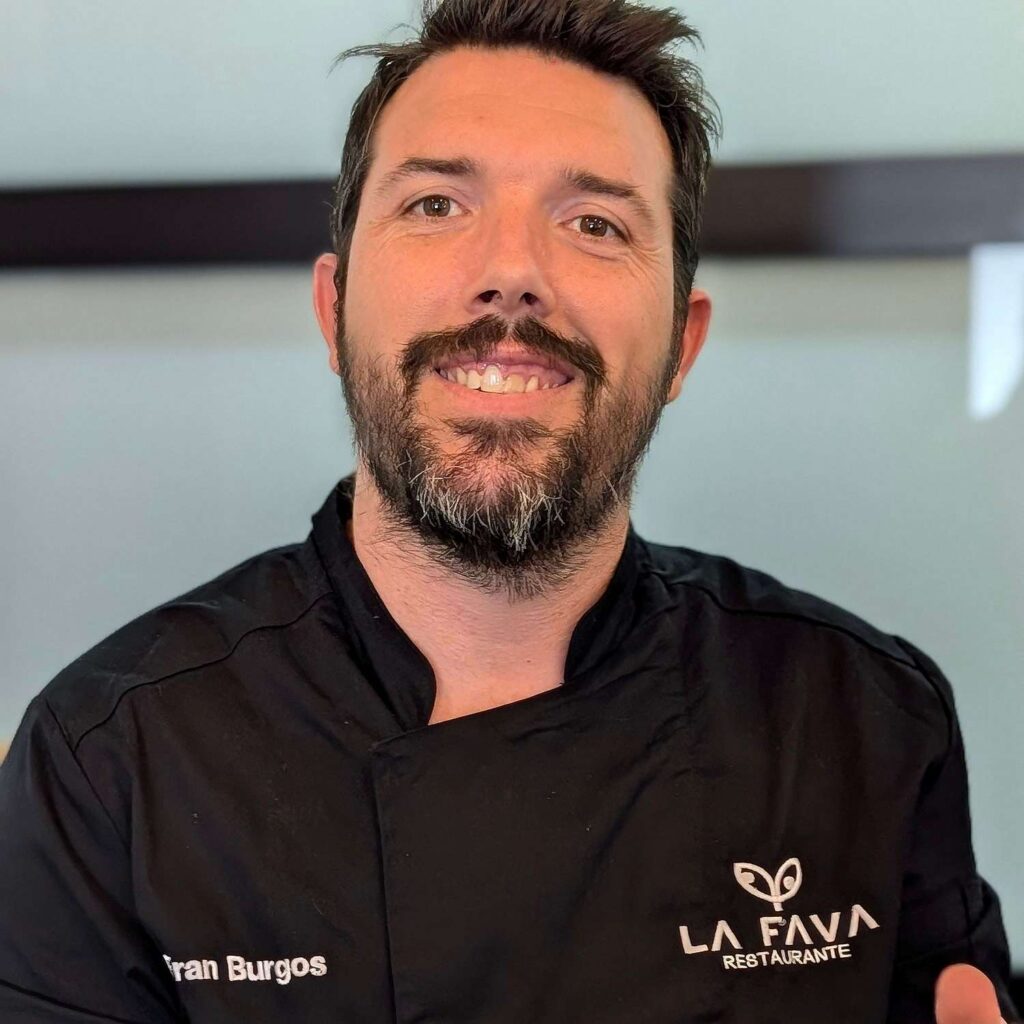
But views aren’t everything. One of my best meals on the Costa Blanca was in the down-to-earth restaurant La Fava (c/La Palma, 41; +34 672 062 424; lafavabenidorm.com). Chef Fran Burgos (left) runs both front and back of the house at this tiny 10-table establishment. His motto is ‶tradición y vanguardia″ (roughly, ‶tradition and innovation″). And he advertises ‶home-cooked food within everyone’s reach.″
Burgos constructs his dishes around the best available local ingredients. Each dish pays homage to something a home cook might make. (He says that he draws inspiration from his grandmother.) But few home cooks can bring such finesse to the traditional cuisine of Benidorm. The marriage of the region’s gastronomic legacy with the chef’s mastery of contemporary techniques reminds me why I was ever inspired to write about food. La Fava is a showcase of gentle genius. Burgos is not just interested in making ‶wow!″ plates. He’s interested in making plates that satisfy both the palate and a deeper hunger for beauty and harmony — at a price that many people can afford. (A tasting menu is €50-60. A la carte dishes are all under €20.)
Bite by bite, a journey through the Costa Blanca larder
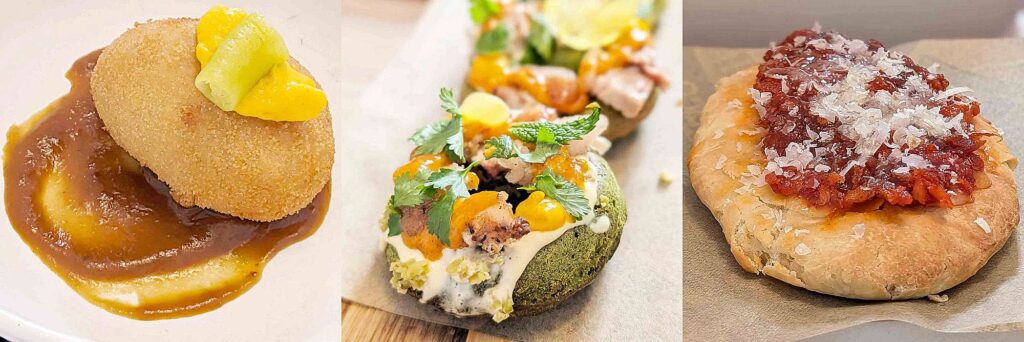
Burgos started our dinner party off with a cocktail mixed largely with Puig Campana vermut. The citrusy vernouth with a wormwood bitter note is made in the hills outside Benidorm. He then served each diner a single blanquet croqueta. It is a chef’s joke of sorts. Playing off the French blanquette dish of veal in cream sauce, the meat in the croquette is another kind of blanquet — sausage made of pork shoulder. Here it’s coated with béchamel, breaded, and deep fried. The humor is the contrast between the lowly croqueta and the fancier French dish. But Burgos made it special. He presented it beautifully on a jus of roasted onion and topped it with carrot cream and a thin roll of pickled yellow hot pepper. (See left photo above.)
Croquetas are a classic of budget Spanish home cooking. Their presence on the menu is Spanish shorthand for budget prices and mama’s kitchen. My mother, raised by her Spanish grandmother, sometimes made them using bits of leftover chicken or turkey — but never with such flair. I immediately felt at home at La Fava, and knew I was in the hands of a kitchen master.
The menu of tapa-sized portions immediately grew even more local.
The right photo above is a coca — a kind of flatbread found all along the Costa Blanca — topped with sobrassada (a spreadable sausage) mixed with honey and topped with grated sheep’s milk cheese. In the middle is Burgos’s complex prizewinning tapa. It’s a pallet bread roll containing Benidorm mountain herbs. On top are bits of fried pork belly and lightly pickled sea bass along with an herb emulsion and some fried mint. (His competition version used octopus rather than sea bass.) It was sweet and savory at once, bursting with explosive flavors.
Two different tunas and a sensational take on winter stew
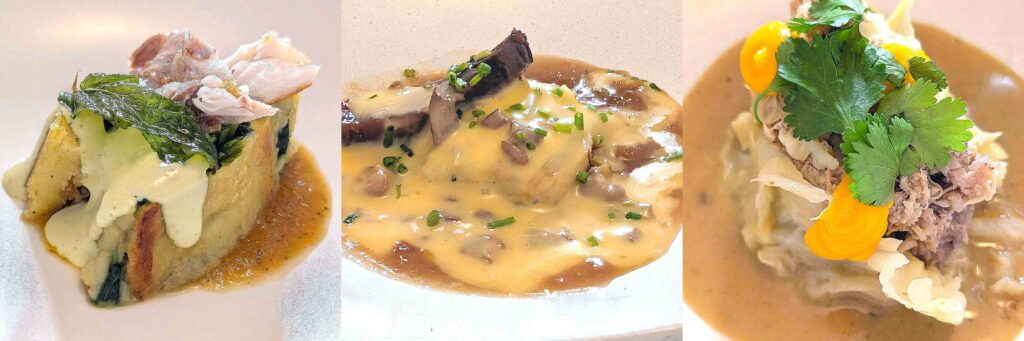
Tuna fishing is a major industry along the Costa Blanca. Burgos highlighted both the most exalted and the humblest members of the tuna family. The photo at left above features a bite of pricey bluefin tuna on a seafood carbonara sauce and a reduction of roasted chicken stock. The middle photo is a brilliant pairing of flame-grilled eggplant and inexpensive seasonal frigate tuna (a small, oily tuna much like mackerel) in Parmesan cream with chopped chives.
The final savory tapa (at right above) harked back to his grandmother’s kitchen. The local version of a savory stew of mixed meats and root vegetables is known as putxero in the Valencian language. Traditionally, it’s a family Sunday meal. When the stew dwindles at the end of the week, the cook of the house might mince up the mixed meats and veggies to fill some pasta. Burgos re-invented the homey dish of leftovers by adding a green curry sauce and wrapping his cannelloni in curly kale with fresh cilantro on top. In effect, he stacked flavor on flavor on flavor. It was a dizzying tour de force, yet fully recognizable as ‶home″ cooking.
Sweet endings likewise go high and low
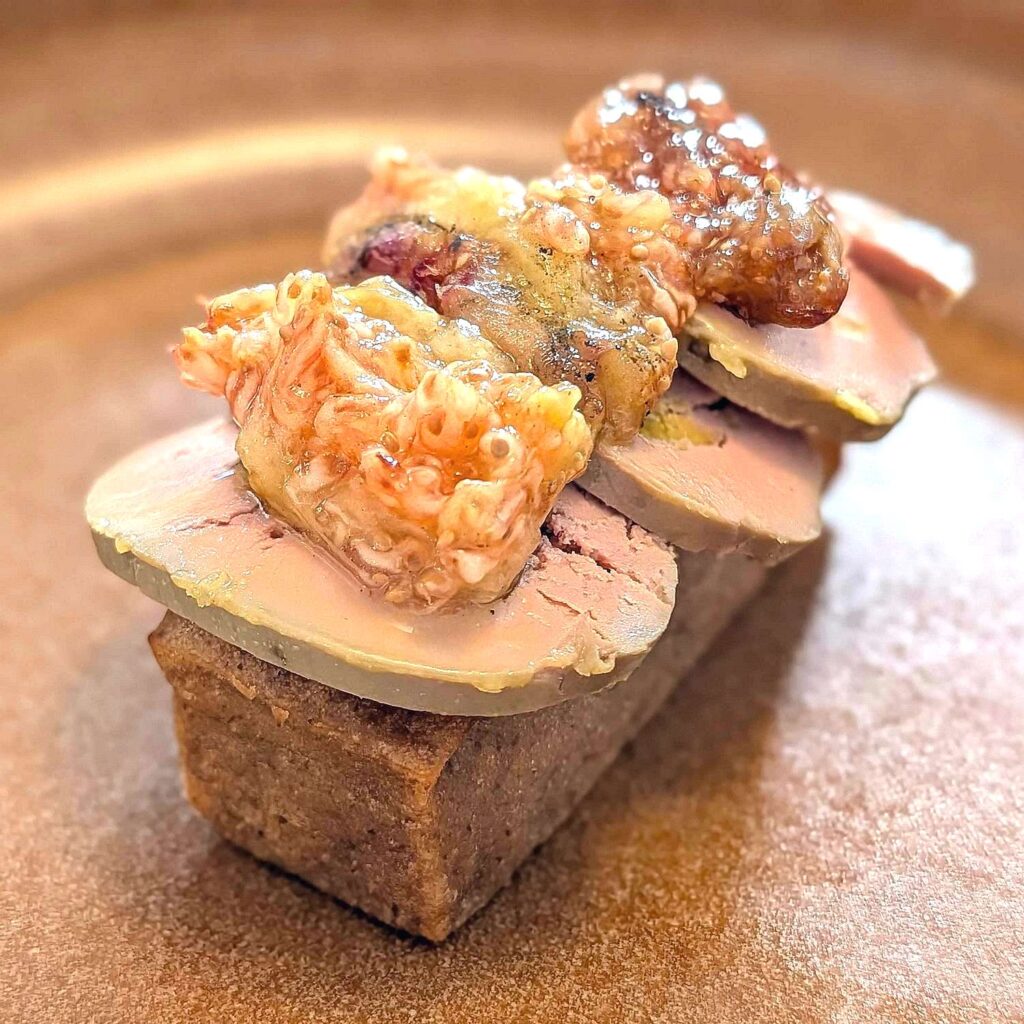
I have never thought of foie gras as dessert, but when Burgos presented little slices of it atop a dense raisin bread, I immediately exclaimed ¡Claro que si! (or ‶of course!). He gilded the lily, so to speak, by adding roasted fresh figs. The shift in expectation was both jarring and delightful. Lots of desserts are fatty and sweet, I realized. Ice cream. Pudding. Ganache. Why not foie gras cooked sous vide and chilled? Besides, Burgos only billed it as a ‶pre-dessert.″ Admittedly, it was fancy stuff that I couldn’t imagine getting at a home dining table.
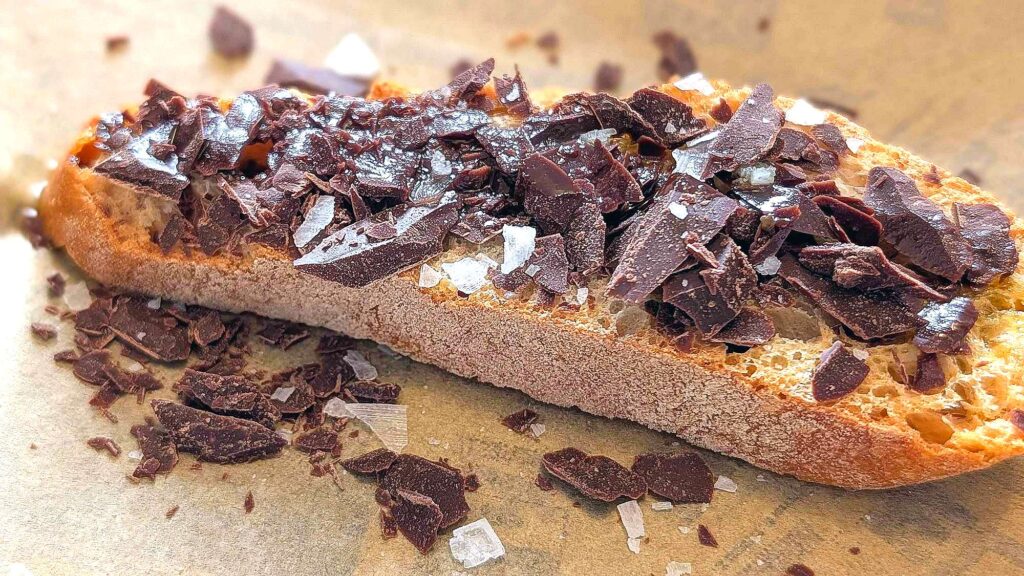
But then he followed up with the most elemental of Spanish treats — bread, chocolate, salt, and olive oil (see below). This true dessert literally came from his own childhood — breaking dark chocolate over airy pan de cristal. sprinkling it with flakes of sea salt, and drizzling it all with olive oil. It was the perfect conclusion of a journey through the Benidorm larder. If you’re ever in town, don’t miss La Fava.