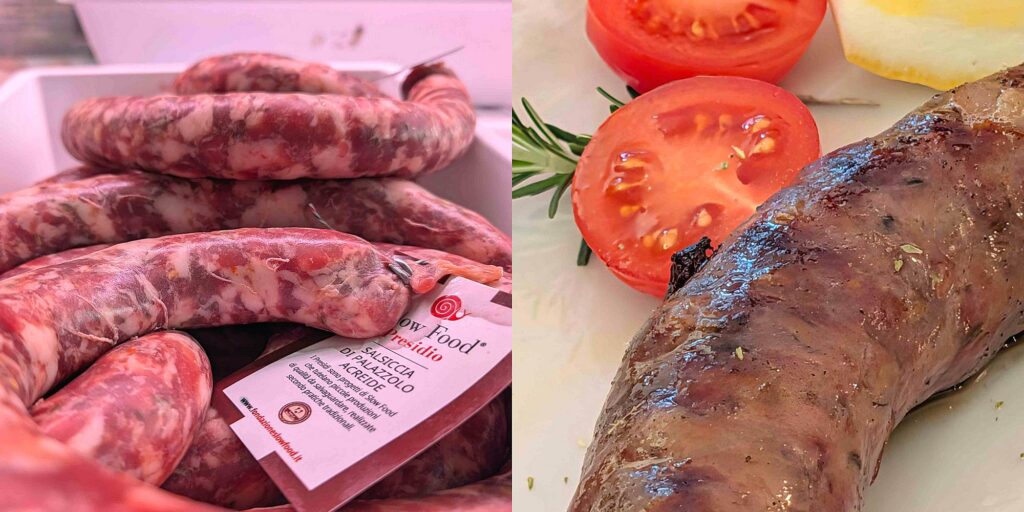
Good things happen when you follow your stomach. In our reading about Sicily we came across an intriguing gastronomic nugget. The traditional sausage of the mountain town of Palazzolo Acreide was one of more than fifty specialty foods of Sicily celebrated by the Slow Food Foundation. Only a handful of butchers still made the sausage, and only a few places in the town served it on their menus. In the interest of gastronomic preservation, we decided to pay a visit and do our part in keeping the tradition alive. It was, after all, only a 45-minute drive from elegant Noto, where we were staying in a guest room in the Liberty-style Villa Nicolaci (nicolacisuites.it/en/). Moreover, we hoped against hope that the 7th century BCE sanctuary devoted to the cult of the earth mother goddess Cybele would be open.
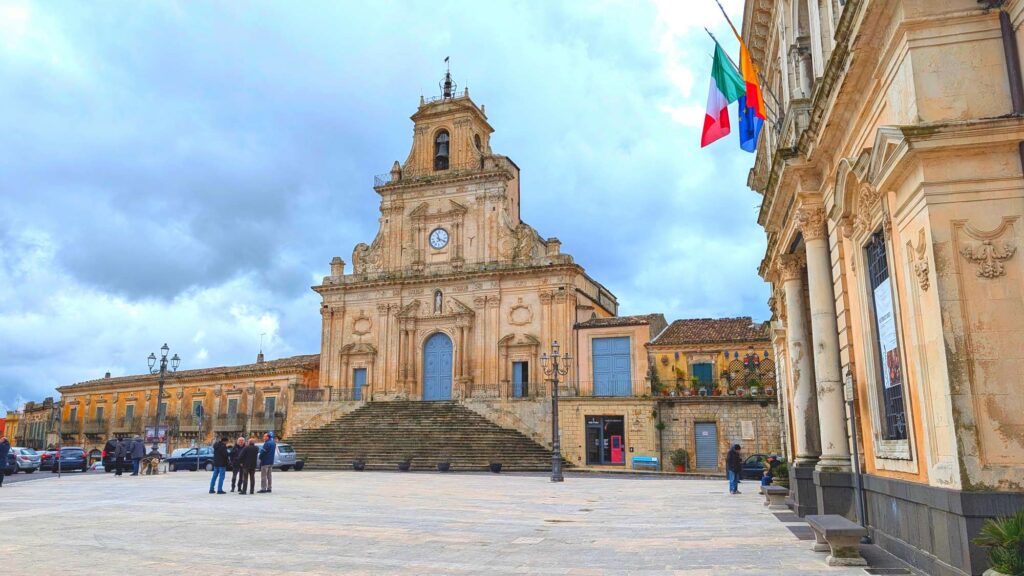
What we had not counted on was that Palazzolo Acreide is one of I Borghi più belli d’Italia, or ‶the most beautiful villages of Italy.″ Directly above is the main piazza, looking toward the Duomo.
As is our custom in ancient mountain towns with medieval streets, we parked at the edge of town and walked, wending our way through narrow passages lined with pastel buildings with fading, sometimes crumbling stucco walls.
Suddenly we emerged onto the broad main street of Corso Vittorio Emanuele. Although Palazzolo Acreide was a Greek city 2,700 years ago, its modern demeanor is largely Baroque with a touch of Liberty (Art Nouveau) here and there. The 1693 earthquake took down many of the medieval buildings, leaving the town (like so many others) to rebuild in the golden age of the Italian Baroque style. The Art Nouveau touches reflect a surge of mercantile wealth in the late 19th century.
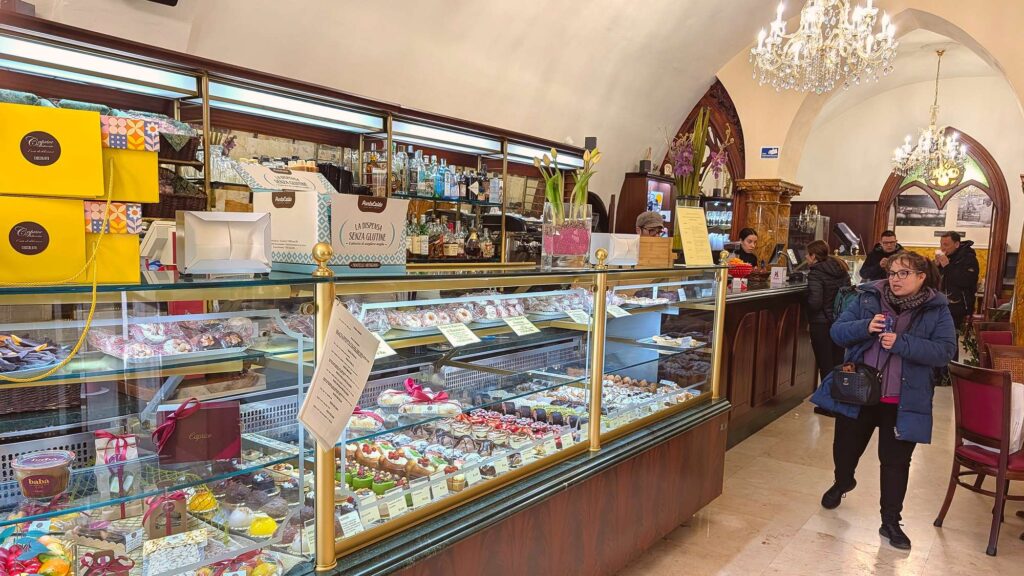
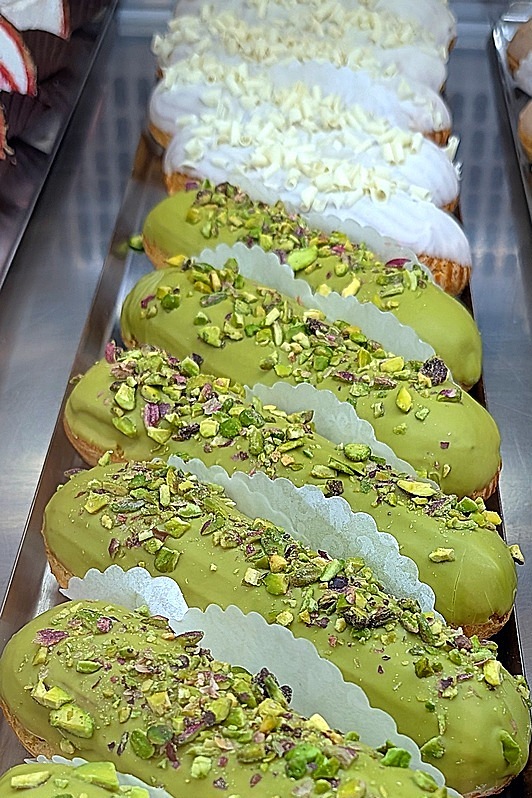
We had hardly walked 100 steps before we encountered the elegant Pasticceria Caprice (Corso Vittorio Emanuele, 21, Palazzolo Acreide; +39 0931 882846; pasticceriacaprice.com). Unwittingly, we had stumbled onto a pastry shrine. The late Pippo Caprice set the standard for Sicilian pastry here and several of his employees became the leading patissiers of Italy. We couldn’t resist a pistachio eclair. It was like buying a Mona Lisa for just 2 euros.
Back on the sausage trail
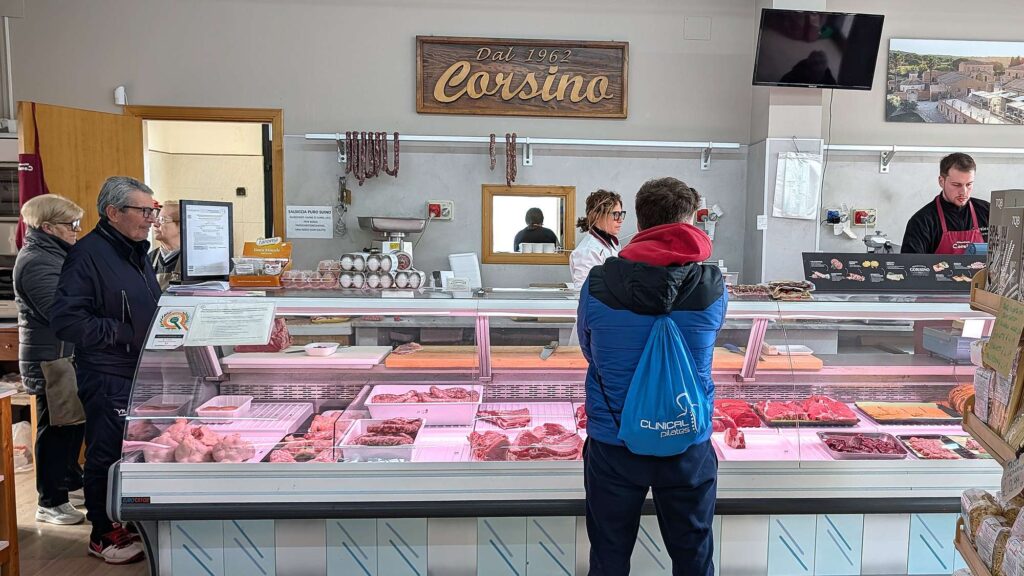
Still on our quest for the traditional sausage, we found our way to one of the few butchers still making it: Marcelleria Corsino (Via Antonello da Messina, 2; +39 0931 881568; macelleriacorsino.it ). The sausage is made of nine cuts from the local breed of black pigs. Corsino’s swine and cattle graze at its organic farm and woodland. The meat is coarsely chopped by hand and packed into natural casings. Fat is limited to a quarter of the volume, and the sausage is flavored with salt, black pepper, a pinch of hot red pepper, wild fennel seeds, and Nero d’Avola red wine. Since we had no cooking facilities, we didn’t buy any of the traditional sausage, opting instead for a slab of aged pecorino cheese and about 400 grams of cured salami.
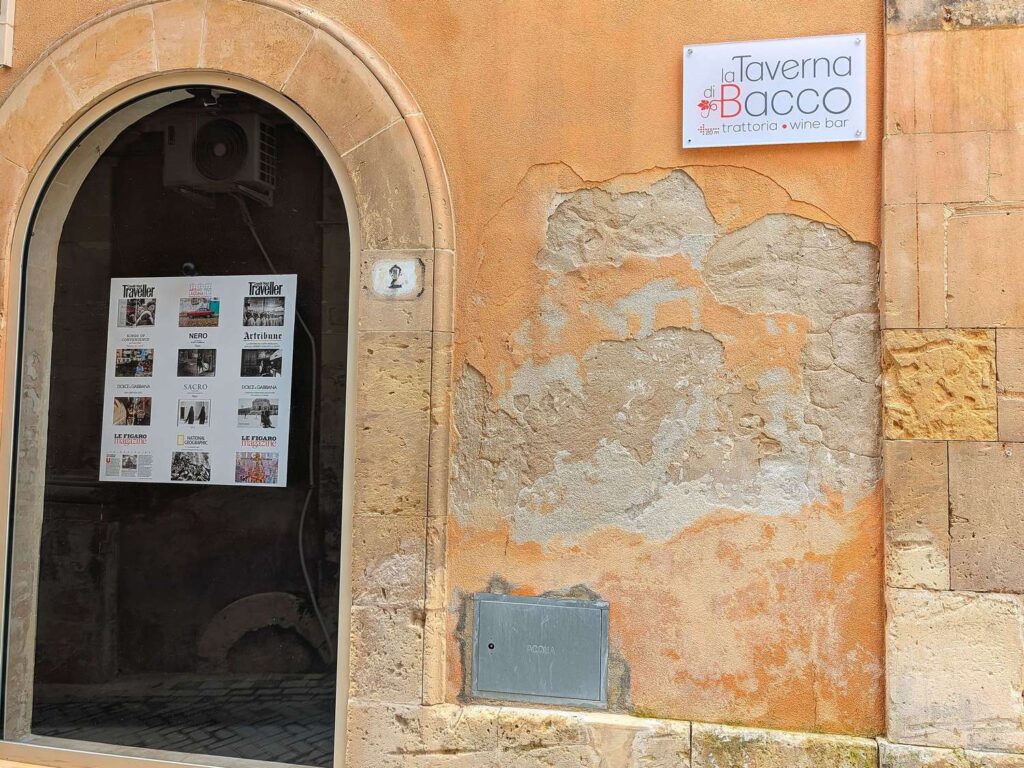
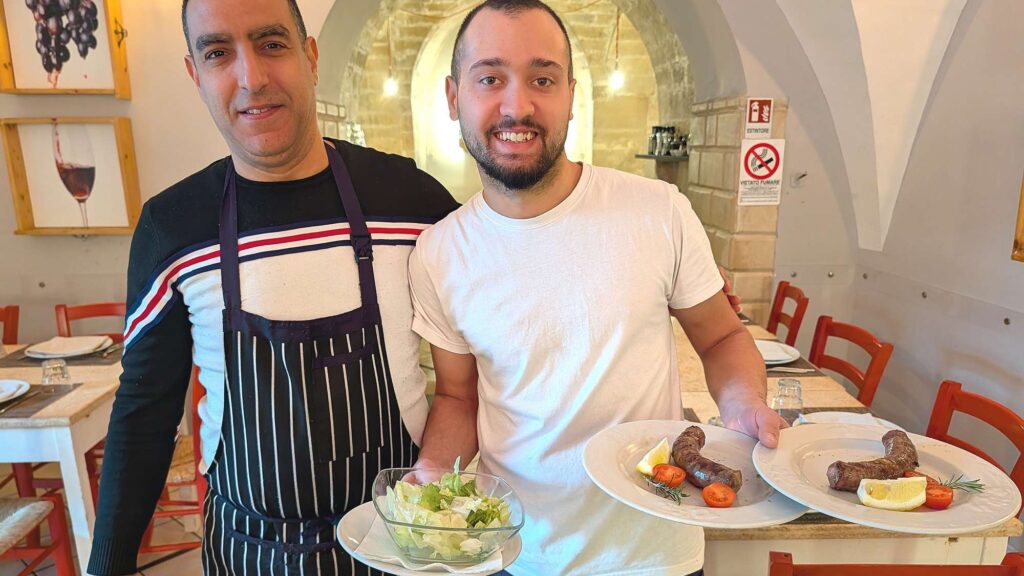
Having tramped around town for a couple of hours, it was finally time for lunch. We made a beeline to La Taberna di Bacco (Ronco pisacane, 9, Palazzolo Acreide; +39 320 644 2851; trattorialatavernadibacco.com), just a few steps off the town’s main piazza. We’re always a little confused about Italian designations for eating places. Bacco claims to be a trattoria, a restaurant, and a wine bar. True to its name, it does have a broad selection of local wines.
Our needs, however, were simple. We wanted to try the traditional sausage of Palazzolo Acreide with a green salad on the side and a half liter of the house white. The wine was bracingly cold and fresh (a blend of Grillo and Insolia, we think); the green salad was crunchy and almost sweet. The grilled sausage (below) was salty and hearty. The coarse chop of the meat gave the sausage a distinct toothiness. With a small squeeze of lemon, it was pork heaven — well deserving its Slow Food recognition.
As for the archaeological park and the old gods…. On the way back to our car, thunder suddenly crashed around us and we were pelted with hail. We took it as a sign. Cybele and her cohorts said no, they weren’t receiving visitors that day.