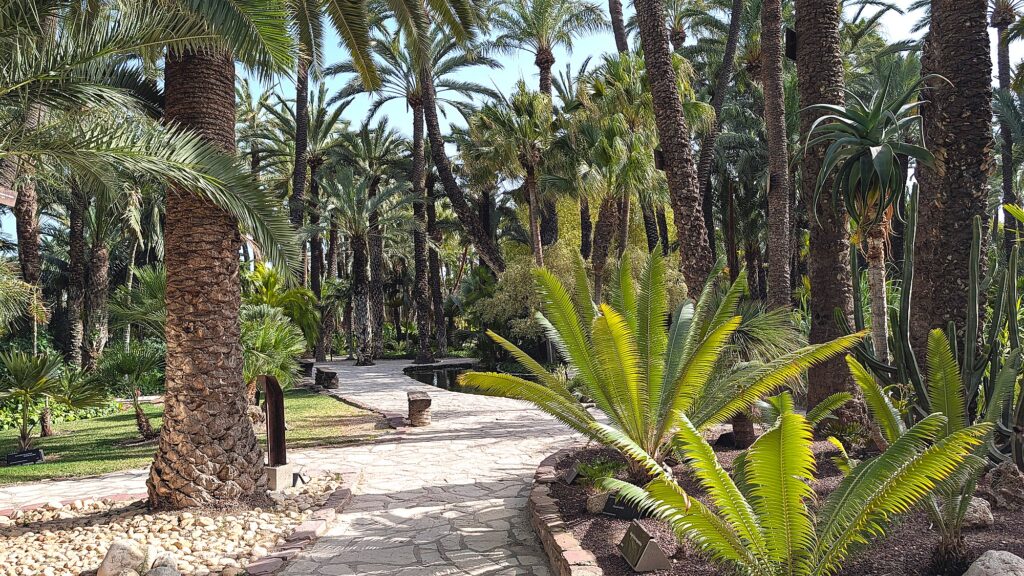
Elche’s airport (ELX) is the gateway to the Costa Blanca. Don’t just rent a car and head out. The city deserves a little exploration. Its massive palm grove (a UNESCO World Heritage Site) was established more than a millennium ago by the Moors. Their innovative irrigation systems turned Elche into a green oasis at the edge of a desert. But the city long predates the Moors.
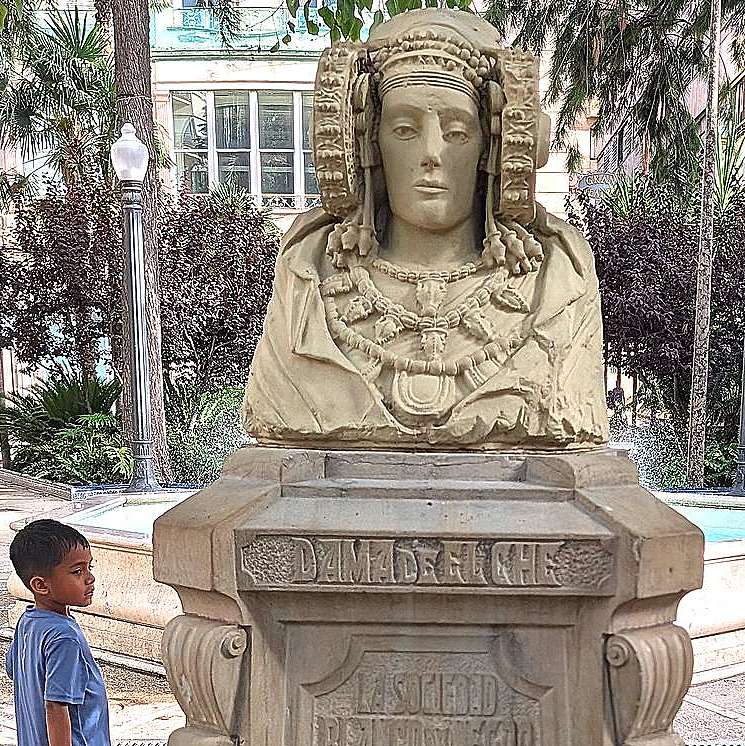
In 1897, archaeologists unearthed ‶La Dama de Elche,″ a 4th century BCE sculpture, on the outskirts. The original statue sits in a Madrid museum, but the lady’s image is inescapable throughout Elche. It’s a mystery why, but modern Elche is the center of the Spanish footwear industry. The true mystery of Elche, though, is the Mystery Play (Misteri d’Elx), a medieval ritual musical drama that enacts the death, Assumption, and coronation of the Virgin Mary. UNESCO recognizes the play as a ‶Masterpiece of the Oral and Intangible Heritage of Humanity.″ The people of Elche built the Basilica de Santa María as a theater as much as a church.
Elche’s Mediterranean port abounds with fresh fish
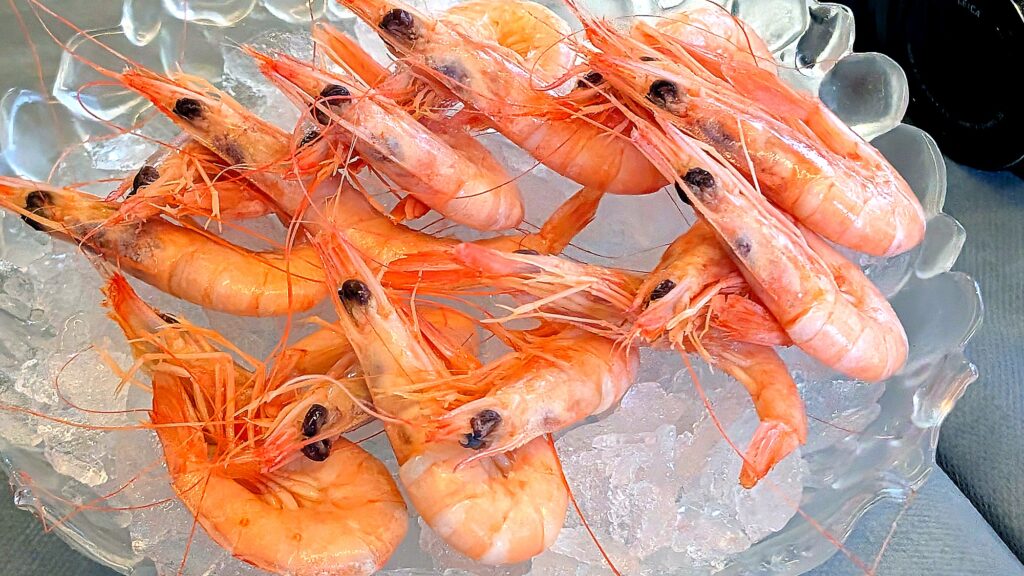
But this is truly the Costa Blanca, even though Elche’s port is about 15km from the industrial city. It is a marvelously modest working port but its fishing boats bring in a steady catch of everything from shrimp (above) to tuna to hake to boatloads of anchovies and small squid.
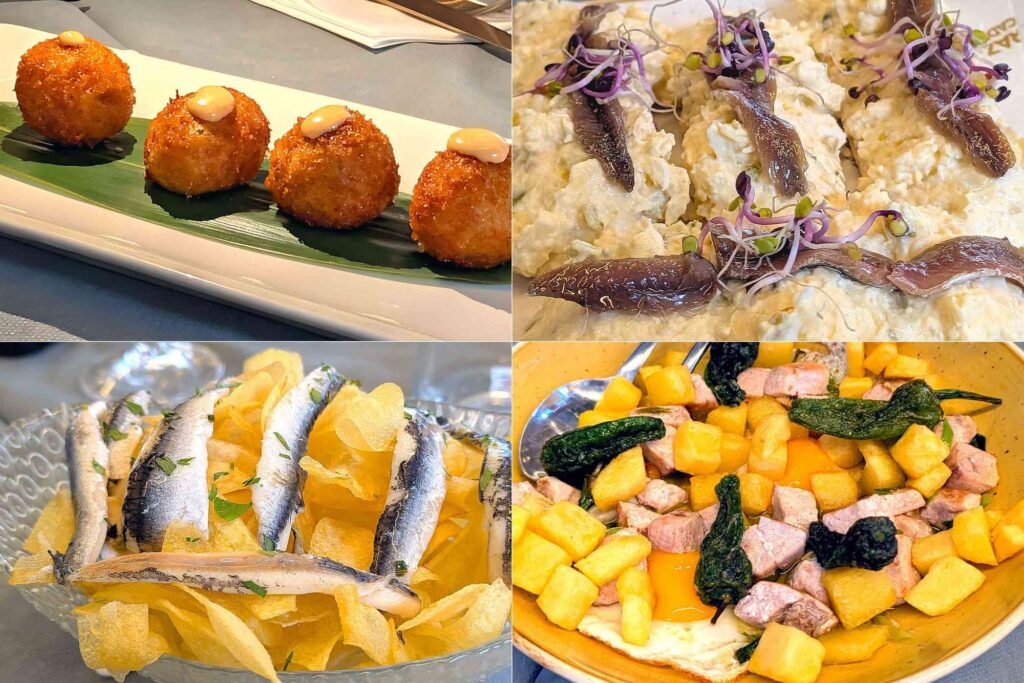
La Terraza de la Pescadería (Porta de la Morera, 5, Elche; laterrazadelapescaderia.com) serves them all. The restaurant’s motto is ‶from sea to plate.″ My Costa Blanca welcoming meal (below) took full advantage. Every dish tasted as if dipped from the sea — even the hake in the fritters, upper left. Upper right is an ensalada rusa, the Spanish version of potato salad, but topped with boquerones, or tinned anchovies preserved in olive oil. The dish at lower left features the fresh version of the same fish, this time marinated in vinegar, gracing a pile of potato chips hot from the oil. It reminded me of Québecois salt and vinegar potato chips.
On the bottom right is the most quintessentially Spanish dish of all. Cubes of fried potato topped with blistered piquillo peppers and mixed with pieces of tuna sit atop some fried eggs. Use your cutlery to toss the plate so the runny yolks make a delicious sauce. It’s Spanish comfort food by the sea.