As my parents told it, I narrowly escaped being named ‶John.″ Only my grandmother’s insistence that I be named after my father (Lionel) resulted in a compromise. Instead, my parents gave me the middle names of my grandparents’ siblings. I became ‶David William.″ But I was always acutely aware of how close I came to being ‶John″ because I was born on June 24. That date is the nativity of John the Baptist in the Catholic tradition. The feast of St. John is the Christian way to mark the summer solstice.

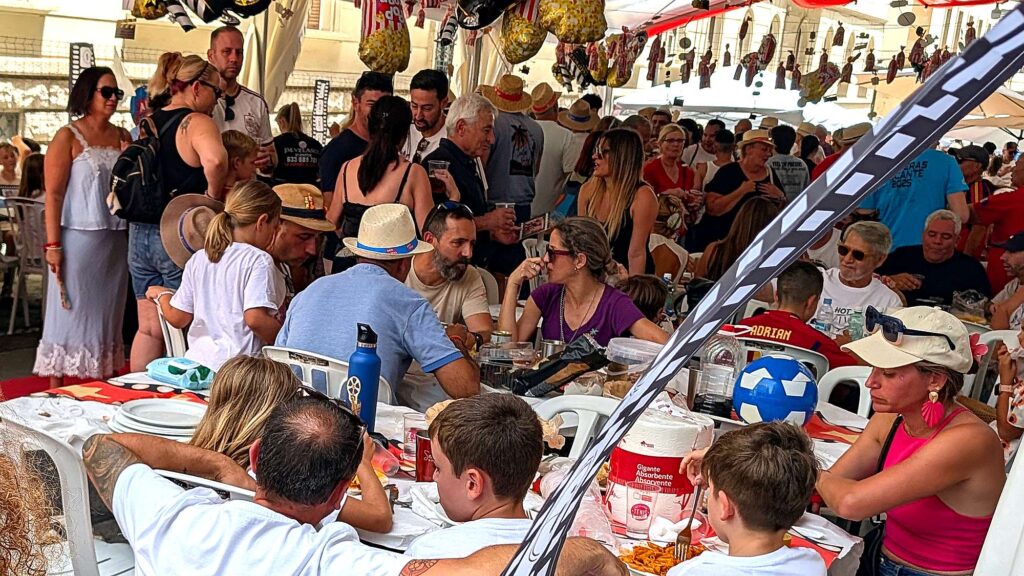
Eastern Spain throws all caution to the wind in celebrating that feast day. Parades in 18th century costumes, random loud explosions, and fireworks punctuate the daylight hours of the 23rd. After dark, the flames of bonfires leap up in city squares and on the beaches. They burn satirical statues — and slips of paper where people write their sins or regrets. The fire cleanses. Celebrants drink and eat, then eat and drink some more. At midnight, many of them plunge into the sea to emerge reborn, as if newly baptized. I had to see the spectacle for myself. So this year I spent a week on the Costa Blanca and in Valencia.

To one degree or another, St. John’s fires are traditional across Europe. But it’s my theory that they rise to special fervor on the south and east coasts of Spain due to centuries of conflict between North Africa and the Iberian peninsula. Ruins of watchtowers and crumbling fortresses line the Costa Blanca from its southern tip at San Pedro del Pinatar northward past Alicante and Benidorm to Dènia. They continue up the coast all the way past the great port city of Valencia. Whoever held those communities — Christians or Moors — was always on the lookout for an invasion by their adversaries.
Costa Blanca cuisine celebrates the Moorish legacy
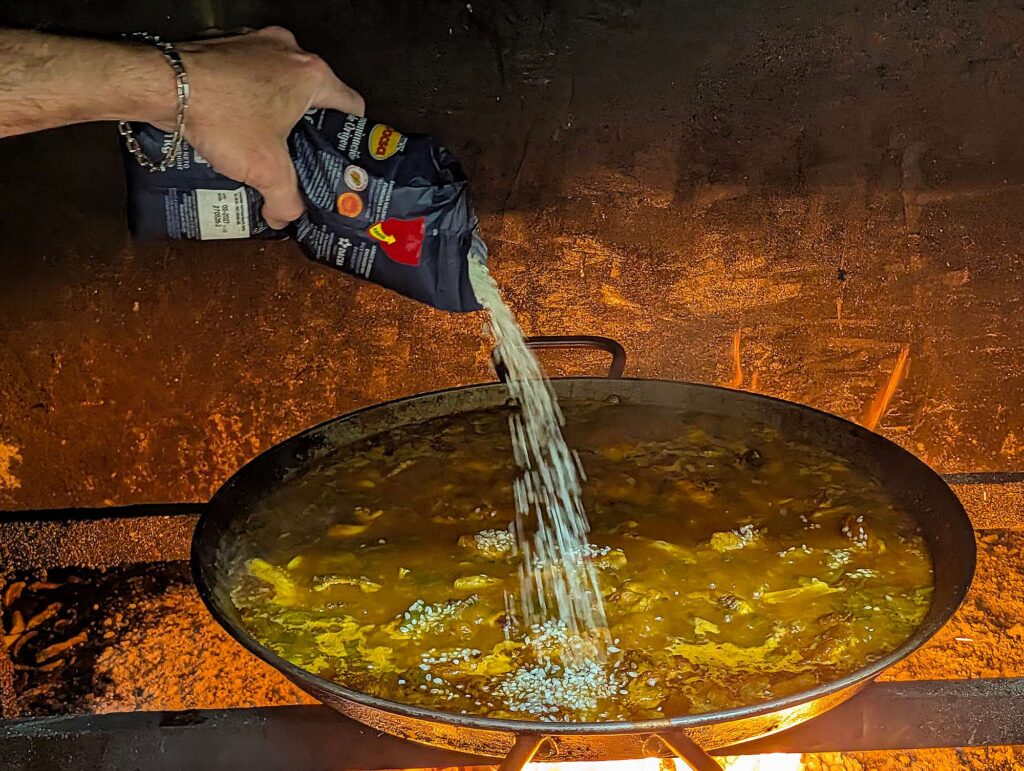
The purge of Muslims in Spain is a nasty bit of Iberian history. In historical retrospect, it seems churlish to have all but obliterated a people who did so much for Spain. But the Moorish presence lingers still through the language (every place name that begins ‶al″) and definitely in the cuisine. The Moors brought oranges and lemons and limes to Spain. Even more significantly, they brought rice.
The Levante (the East) is the birthplace of paella and more than 300 other arroces, or rice dishes. Stay tuned for much, much more about the great food of Costa Blanca and Valencia.