Lucky Valencia! The city owns two Spanish food delicacies. The first, of course, is paella. Less well known outside Spain, the second is horchata, or ‶tiger nut milk.″ Called orxata in Valenciano, the refreshing, nutritious drink is made of a small, locally grown tuber and water. Sometimes a sweetener (cane or date sugar) is added. It tastes like a milkshake.
Horchaterías — cafes specializing in horchata — abound in Valencia. Two of the most beautiful and historic are Santa Catalina (horchateriasantacatalina.com) and Daniel (horchateria-daniel.es). In addition, Món Orxata kiosks seem to be set up in every major square. They sparked my curiosity, so I decided to go to the source.
Espai Món Orxata (c/Teixidors, 7, Alboraia, Valencia; monorxata.com/en) in a rural suburb of Valencia offers tours and tastings at its factory and museum. The name translates as ‶space devoted to world of horchata.″ The Món Orxata company is relatively recent (founded in 2003) but has a deep appreciation of history. Their factory makes all the horchata distributed to the street kiosks. It does double duty as a museum of tiger nut farming and horchata commerce.
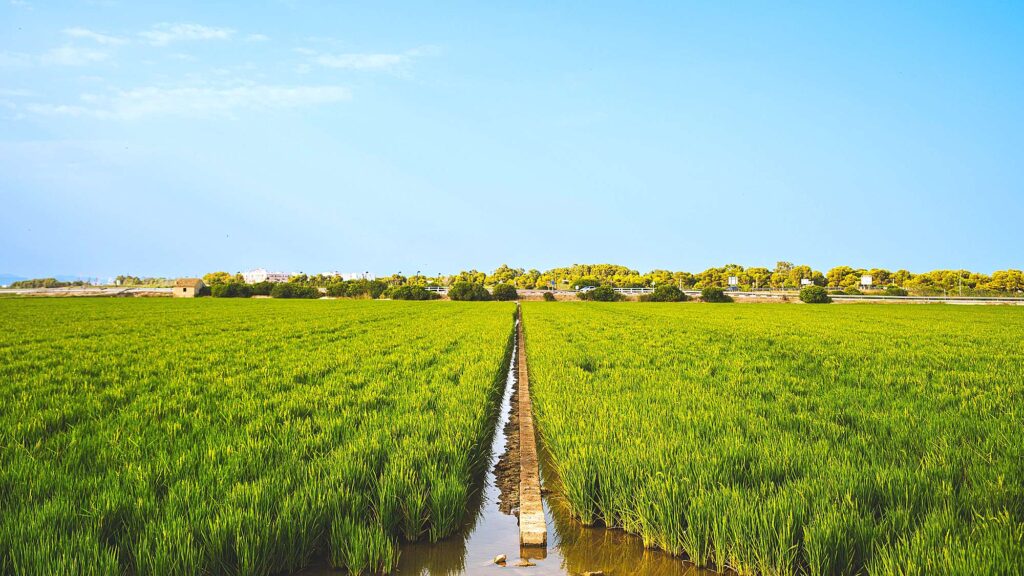
The tiger nuts grow as tubers on the roots of a plant that looks like a clump of grass. Valencian photographer David Roti captured the immense stretch of heavily irrigated fields of chufa better than I could. His photo is used at the top of this post by permission. Those fields are steps from the Món Orxata factory.
Delving into the long history of Valencian tiger nut milk
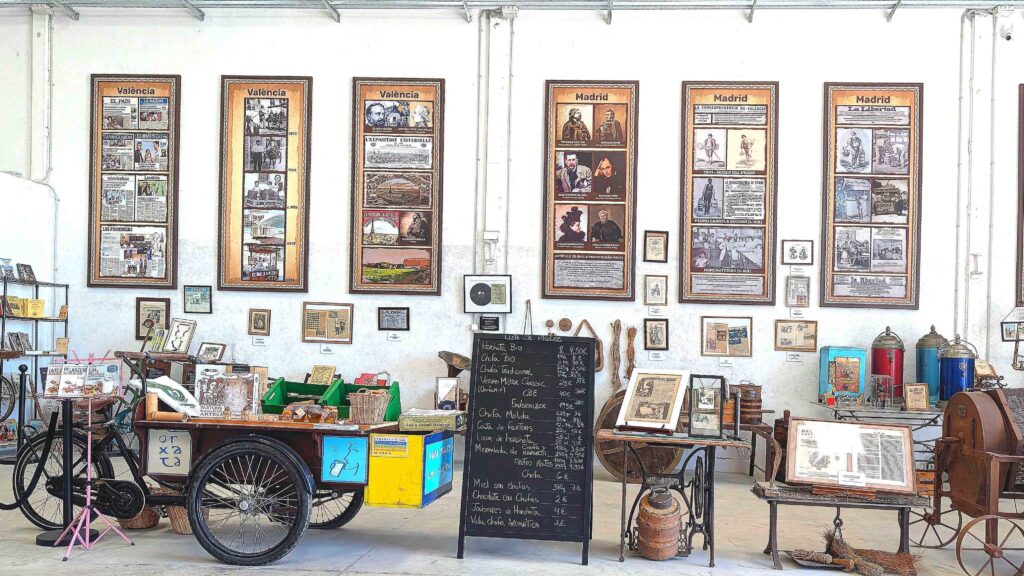
Part of the tour includes the opportunity to walk through the fields, being mindful to stay on the raised paths to keep your feet dry. Inside the Espai, a staffer recites the history of horchata. She also invites visitors to examine historic farm equipment and peruse promotional materials from the last 150 years.
The museum at Espai Món Orxata is mostly the private collection of co-founder Andoni Monforte. Narrative panels tell the story of tiger nut milk in Spanish culture. Monforte also saved many agricultural implements from centuries of cultivation. (North Africans introduced chufa to the region about the same time they introduced rice — in the 8th century CE.)
Reflecting on a gastronomic history
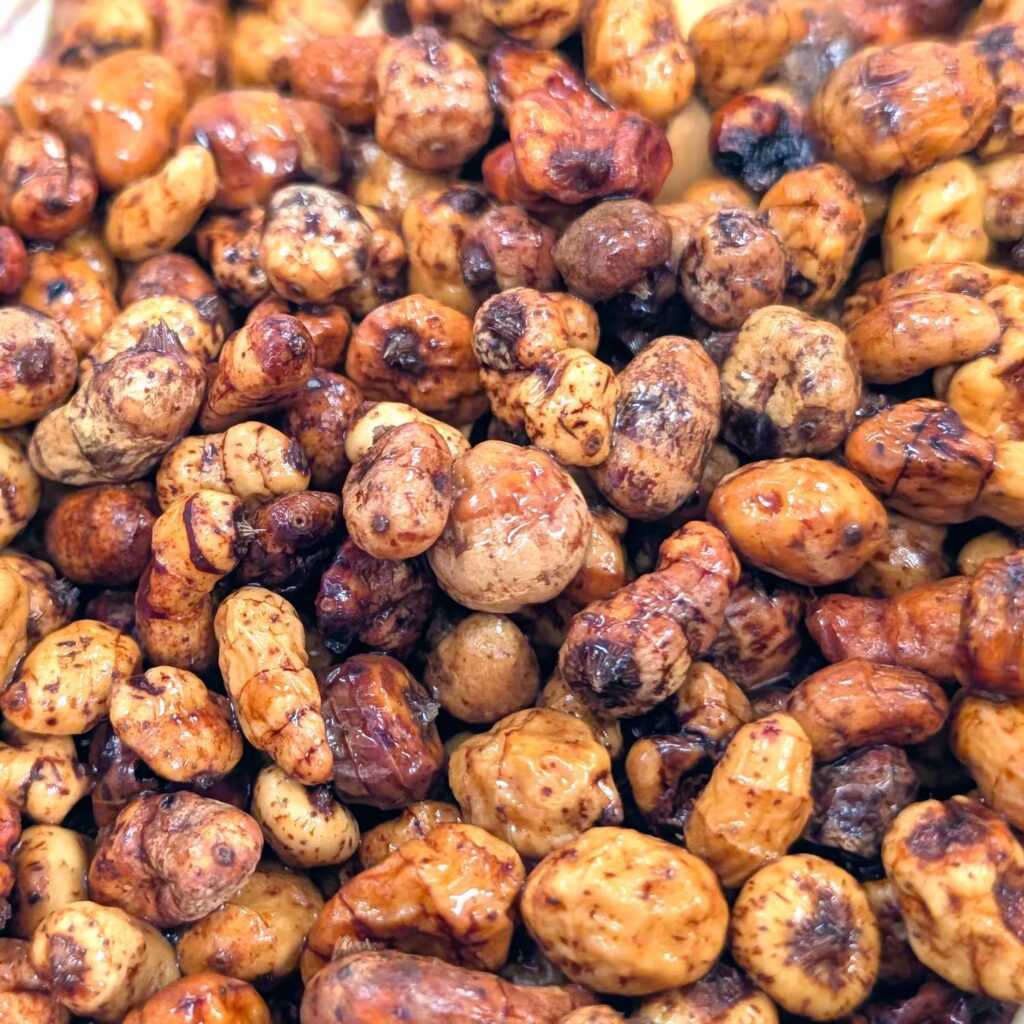
The tour includes sampling the raw tiger nuts, which taste like a cross between a water chestnut and a blanched almond. The actual factory portion of the tour is astonishly simple. One machine grinds up the washed tiger nuts and another churns the ground nuts with water to create the emulsion known as horchata.
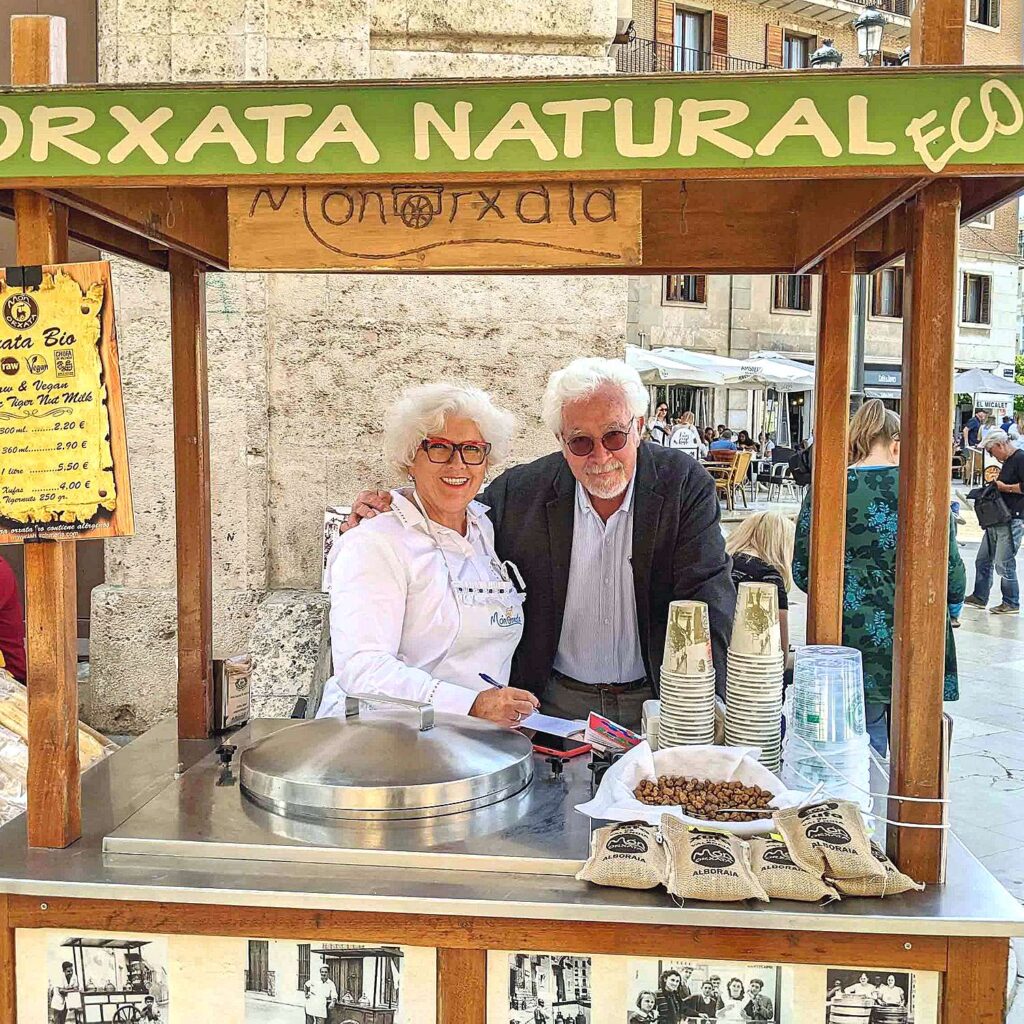
The horchata carts themselves are a 400-year-old tradition that had almost disappeared at the end of the 20th century. Món Orxata has brought them back. They are leased to individual operators who, in turn, buy their fresh horchata from the company. Here’s one of the classier kiosks in Valenica city, where I’m posing with the vendor.
Món Orxata offers a range of sizes in its vending vats, and many of the vendors (like this one) build more elaborate structures to surround what is essentially a refrigerated stainless steel vat. A highly perishable organic product, horhchata keeps no more than five days, even at near freezing temperatures. Part of the charm of buying from a street vendor, I think, is the contrast of the cold, soothing drink with the genuine warmth and charm of the vendors.