
Guinness opened its first brewery in the United States in Long Island City in 1949, but it only lasted five years. In 2018, the Dublin-based company decided to give the United States another chance and opened the Guinness Open Gate Brewery in Baltimore, Maryland (guinnessbrewerybaltimore.com). It was the first experimental Guinness facility in America.
Many Baltimore residents are of Irish heritage, but that probably wasn’t the deciding factor in selecting a location. “The area has a good water source,” beverage manager Rob Callahan told us. “The reservoirs are of such high quality that the water doesn’t have to be treated.” Moreover, Guinness occupies the historic site of the Calvert distillery, the first to open in the U.S. after the repeal of Prohibition.
Three brewers work Monday through Friday in the 10-barrel brewery and daily tours alternate between history and the beer-making process. Referencing the thriving American craft beer market, Callahan noted that the brewery “exists to break the mold. We have our own flavor and our own way of doing things.” Brewers are encouraged to come up with new ideas. “Only one beer has not made it to the tap,” he said.
Everything but the stout
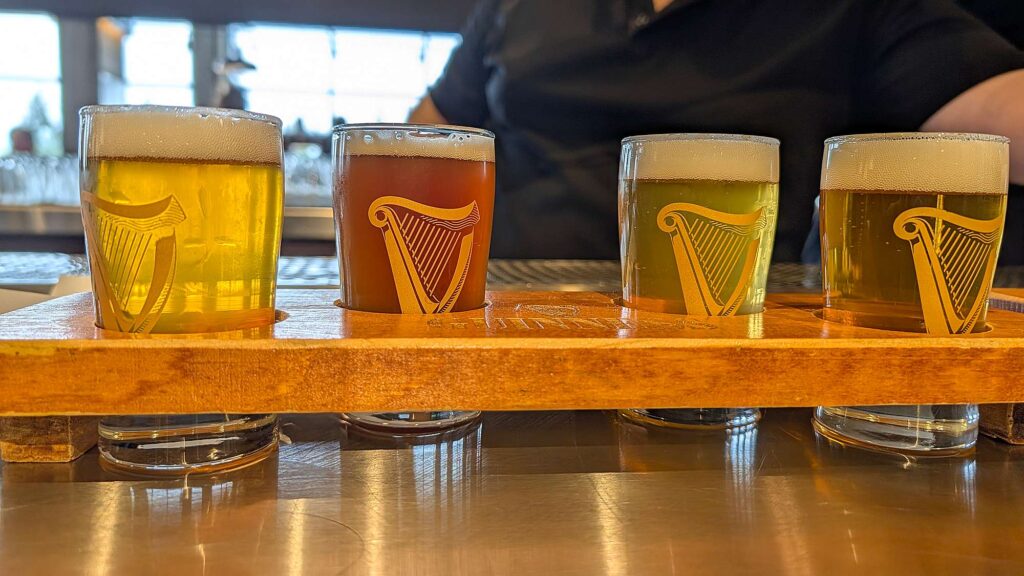
The vast majority of the production is a crisp American lager that Guinness calls Baltimore Blonde. But the taproom is awash in small-batch beers. One of the most popular is El Dorado Amber. It’s a medium bodied auburn colored beer with roasted caramel overtones and a citrusy hops. Like many microbreweries, Guinness Baltimore makes a range of beers that include several IPA variants, an Irish red, and a brown ale.
The Taproom also has an extensive food menu. Some of the more unusual offerings, such as Reuben egg rolls filled with a combination of corned beef, Guinness braised sauerkraut, fontina and gruyere cheeses, and 1000 Island dressing, are actually inspired rather than merely trendy. Of course, diners can also find a homey plate of bangers and mash with onion gravy and roasted asparagus. It’s served with a thick slice of Guinness brown bread and a big pat of butter.
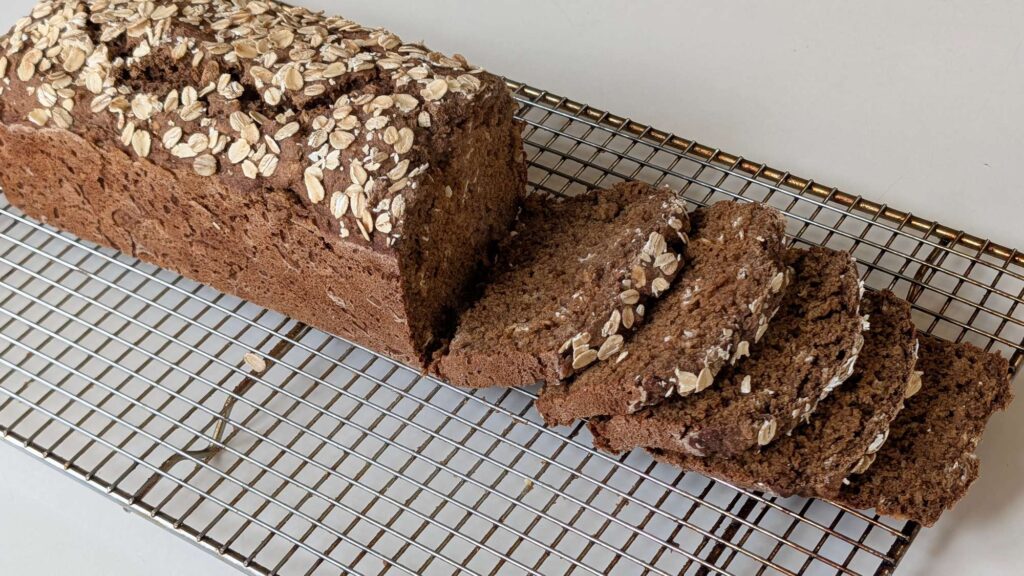
The Dublin website for Guinness (www.guinness-storehouse.com/en/eat-and-drink/guinness-recipes) offers an extensive list of recipes — but no brown bread. That could be because Irish brown bread made with Guinness is such a standard that the company doesn’t feel the need to tell people how to make it. Here’s our version, which looks and tastes just like the bread we ate at the taproom.
Guinness brown bread
Guinness brown bread is a traditional Irish quick bread raised with baking soda and buttermilk. Using a can of Guinness and whole-wheat flour, it features a hearty, rustic texture and a deep, subtly sweet, malty flavor. The true Irish version uses a whole meal flour that is somewhat coarser than the American standard. To get the true Irish texture, try King Arthur’s Irish-style wholemeal flour. The bread is best served warm with salted butter.
Ingredients
- 400 grams whole wheat flour
- 100 grams rolled oats plus extra for the top of the bread
- 6 grams salt
- 10 grams baking soda (2 teaspoons)
- 330 milliliters Guinness stout (an American can)
- 165 grams buttermilk
- 2 tablespoons melted butter
- 2 tablespoons molasses
Set oven to 350°F. Butter a 4×10-inch loaf pan and dust it with flour.
In a large bowl, whisk together the whole wheat flour, oats, salt, and baking soda. Using spatula, make a well in center.
Pour in Guinness, buttermilk, melted butter, and molasses. Stir until just combined.
Spoon batter into prepared pan. Smooth top evenly and sprinkle with rolled oats.
Place pan in oven. Bake for a total of 48 minutes. To ensure even rising, rotate a quarter turn each 12 minutes. Interior of loaf should measure 195°F-200°F on an instant-read thermometer.
Let the bread cool in the pan until sides begin to separate. Then turn it out onto a wire rack to cool completely before slicing.