It’s probably been a decade since we first tasted a Nova Scotia wine at a dinner hosted by Canada Tourism. It was an excellent cold-climate Chardonnay — steely dry but full of characteristic fruit. We filed that tidbit for future reference.
Then this summer we finally drove to Cape Breton Island, a trip we’d planned years ago before COVID closed the border. We also had the chance to stop in the Annapolis Valley along the way for a snapshot of Nova Scotia’s fast-maturing wine industry.
We’re glad we did.
We half expected a slew of fruit wines (and there were some) and a lot of wines made from French-American hybrid grapes bred for cold climates. (There were some of those too.) What we didn’t expect were expansive vineyards of European vinifera varietals and sophisticated wine-making that’s the equal of any place in the world. We also didn’t expect Tidal Bay, a regional wine appelation based on cold-climate hybrid grape varietals. Most Tidal Bay is made from a blend that includes at least 51 percent L’Acadie blanc, a Ontario-bred grape that thrives in Nova Scotia and shows no hint of North American ‶foxy″ grapes in its family tree.
Enjoying the pleasures of Domaine de Grand Pré
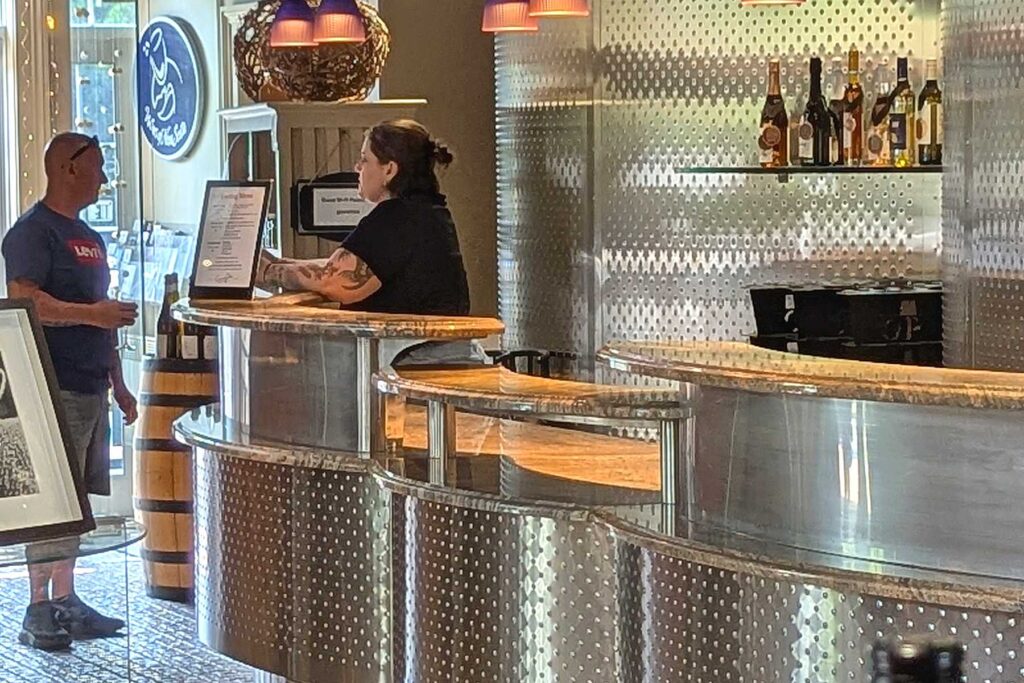
We won’t go into the nuances of Tidal Bay, other than to note that 14 wineries produce a version. Suffice it to say that it’s a low-alcohol (maximum 11%) white wine meant to complement Nova Scotia seafood. It is to Digby scallops what Muscadet is to French oysters. We tasted several Tidal Bays and found our favorite at Nova Scotia’s oldest commercial winery, Domaine de Grand Pré (11611 Highway 1, Grand Pré; 902-542-1753; grandprewines.com). Grand Pré makes Tidal Bay as an off-dry blend where the Vidal Blanc and Ortega additions to the L’Acadie backbone create zesty overtones of fresh peach. We bet it’s great with fresh bluefin tuna during the brief fall season.
Domaine de Grand Pré is an impressive compound that includes an elegant fine dining venue, Le Caveau (902-542-7177), where the four course chef’s tasting menu is only CAD $80 (about US $58). The adjacent Inn at Grand Pré Winery (902-713-5015) has six spacious suites for overnight stays. It was tempting, but we were moving on.
The conjunction of place and personality
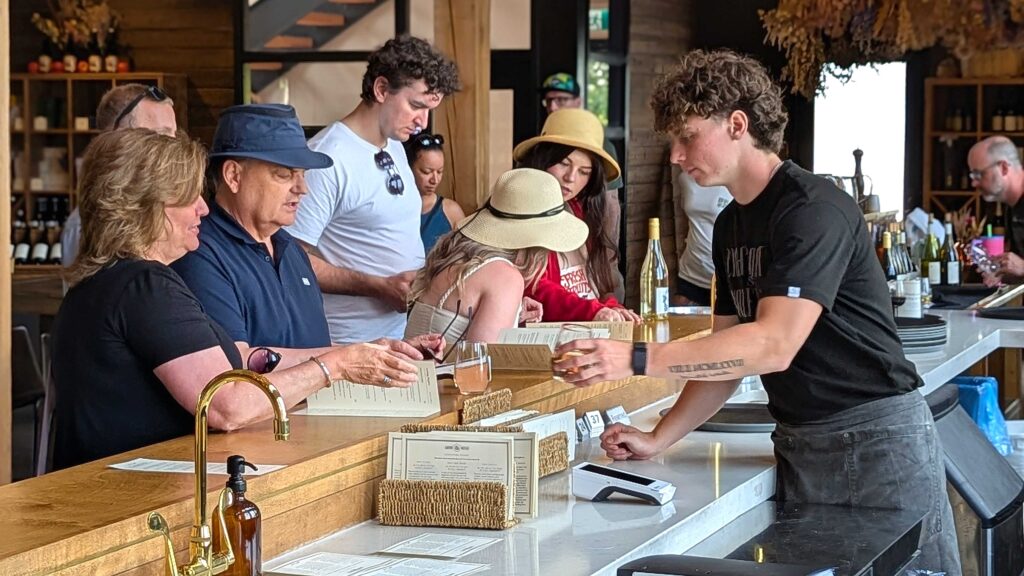
But not before we visited Lightfoot & Wolfeville (11143 Evangeline Trail, Wolfeville; 902-542-7774; lightfootandwolfville.com). To be honest, we had homed in on this winery because it serves brick oven pizza at its restaurant adjacent to the vast tasting room. It seemed a good meal to sandwich between bouts with the excellent local Nova Scotia fish.
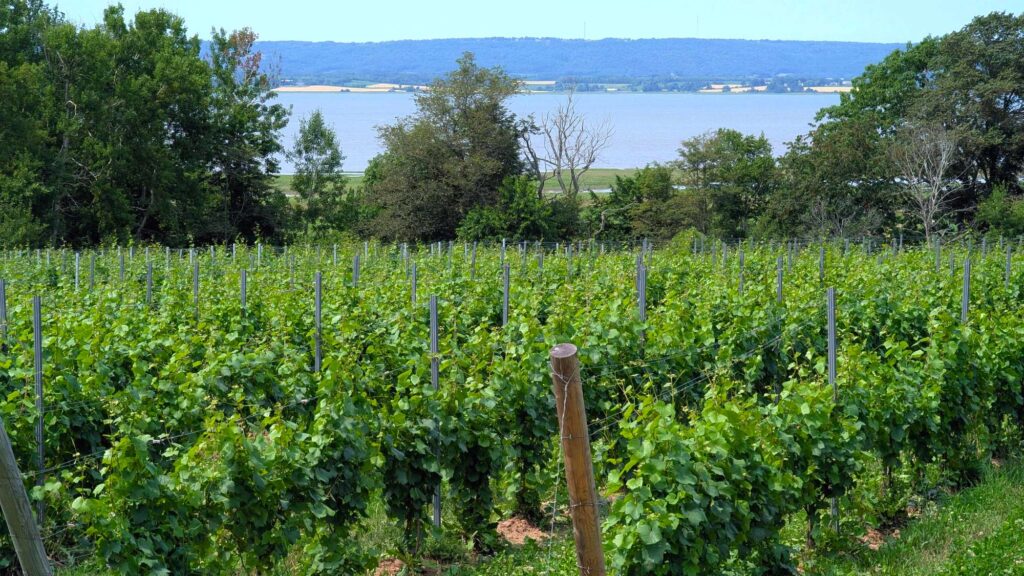
Michael and Jocelyn Lightfoot (he a 7th generation Annapolis Valley farmer, she a sommelier) have crafted a winery compound that would be at home in Napa, Sonoma, or B.C.’s Okanagan Valley. Its bright and vigorous vineyards were backed up by grand vistas. A cooling breeze blows off the nearby Bay of Fundy. The oldest vineyards date from 2009, which suggests that they’re just now reaching their mature potential. The mix of grapes includes both cold-hardy hybrids like Geisenheim 318, L’Acadie, Seyval Blanc, and Marquette, as well as classic Pinot Noir, Chardonnay, a super-intense Riesling, and the Central European red grape Kékfrankos. We were surprised to discover that the winery is strictly biodynamic and Demeter-certified. Many of the wines are fermented with wild yeasts.
We’ve been cautious about biodynamic wineries, finding that many sacrifice quality on the altar of ecological purity. Not here. To say that we were blown away by the consistent quality of the wines is almost an understatement.
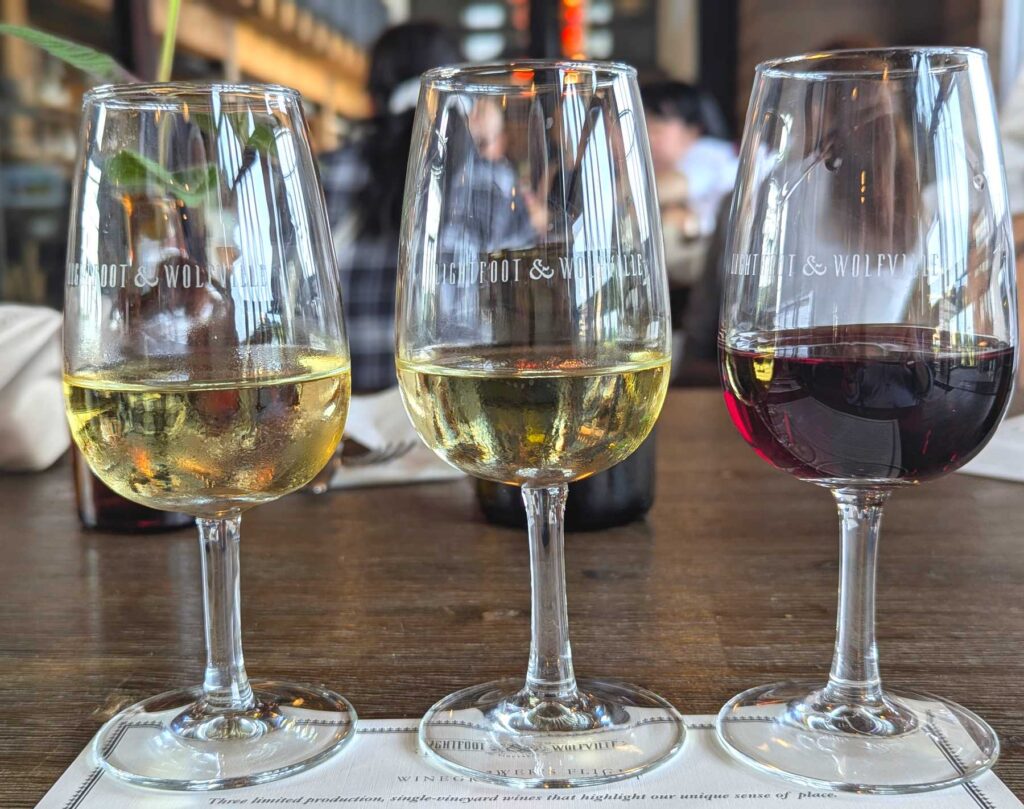
We elected to have two tasting flights — the Signature Flight of popular, soft blended wines and the Winemaker’s Flight of single varietals. Flora led off the Signature flight with sweet, jucicy fruits and a floral nose. A bit of acidity gave the wine some structure, but it’s definitely a sipper rather than a wine for meals. The L&W Rosé had a more refreshing acidity combined with structure contributed by the Pinot Noir and Frontenac Noir in the blend with L’Acadie and Seyval. It would be a good general-purpose food wine. Fauna was a lusty and luscious red blend toned down by the cool climate. Made from a blend of several hybrid grapes (mainly Léon Millet, Marquette, and Petite Pearl), it reaches a higher alcohol content (12%) but tastes light because its components are light on tannins.
The wines in the Winemaker’s Flight are super food-friendly and very sophisticated. We tasted a dry 2021 Ancienne Riesling fermented with wild yeasts in oversized Austrian oak vessels. Honestly, it was unlike any other Riesling we’ve tasted, with notes of orange peel and marzipan on the nose and hints of honeycomb and golden apple on the palate. Nine months on the lees also added a delicious note of toasted bread to the finish.
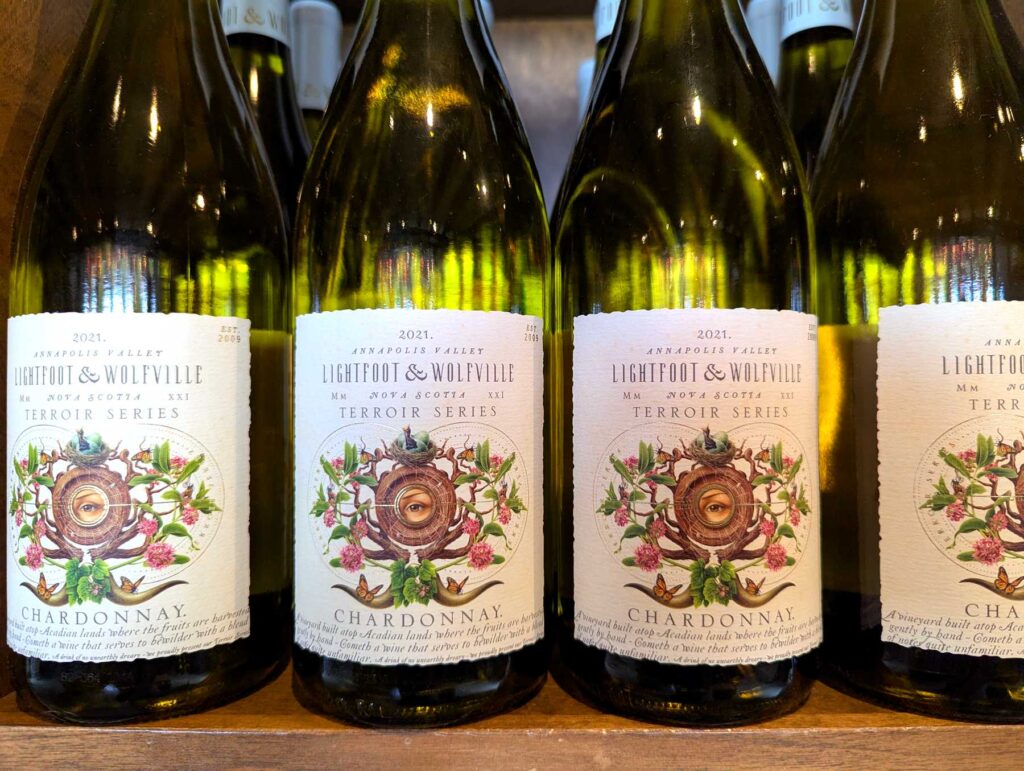
The 2021 Ancienne Chardonnay received a similar treatment — wild yeasts and fermentation in used French oak followed by 20 months on the lees. Canadian winemakers have become very adept at cold-climate Chard with great minerality, and this example was an exemplar of the style. The toasted hazelnut tones (probably from time on the lees) provided a nice counterpoint balance to the intense fruit and acidity.
Rounding out the flight, a 2022 Terroir Series Kékfrankos was fascinating to try. The vines are the Hungarian clone of a grape that goes under many different names, including Lemberger and Blaufränkisch. It originated somewhere in the old Austro-Hungarian empire. Modern genetics show it shares a parent (Gouais Blanc) with Pinot Noir. Lightfoot & Wolfeville planted its first block in 2013, and the winemakers use it to craft a pinot-style wine with a vivid ruby color and a nose that suggests black cherries. On the palate, there’s even a hint of violets, a flavor we otherwise associate with a young Nebbiolo. We could probably drink this wine all day. It’s a spectacular red for fish.